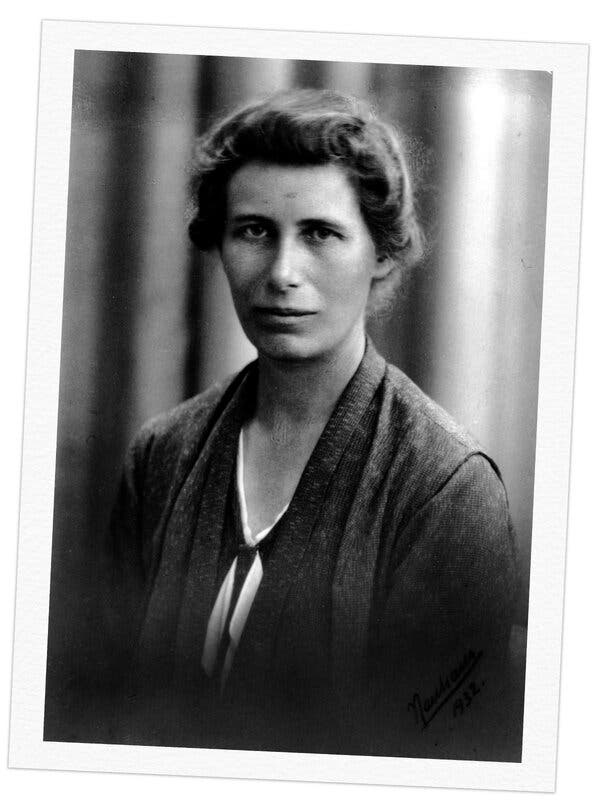
In a groundbreaking revelation in 1936, Danish seismologist Inge Lehmann transformed our understanding of the Earth’s structure by proposing the existence of a solid inner core. Her work, published in a French scientific journal under the cryptic title “P’,” challenged long-held beliefs about the planet’s interior, which had been thought to consist solely of molten material.
Revolutionizing Seismology
At a time when the field of seismology was predominantly male-dominated, Lehmann’s contributions were remarkable not only for their scientific significance but also for her personal dedication to her career. Choosing to remain unmarried and pursue her research in Copenhagen, she often worked independently, laying the groundwork for her revolutionary theories.
Lehmann’s pivotal moment came while analyzing seismic data from a 1929 earthquake in New Zealand. Her meticulous examination revealed anomalies in the seismic waves that prompted her to reconsider the Earth’s internal structure. She identified two primary types of seismic waves: primary waves (P waves), which are capable of traveling through solids, liquids, and gases, and secondary waves (S waves), which can only pass through solids.
Her observations led to a startling conclusion: the Earth must possess a solid inner core made of a denser substance than previously believed. This was a significant departure from the existing understanding that the Earth’s interior was entirely molten.
Impact and Legacy
Lehmann’s research, detailed through nearly 30 pages of calculations, graphs, and tables, provided a new lens through which scientists could view the Earth’s geology. She meticulously presented evidence that supported her theory of a distinct inner core, which has since been confirmed and expanded upon by later research.
“The existence of a solid inner core has become a fundamental element in our understanding of geophysics,” noted a researcher from the American Geophysical Union.
The implications of Lehmann’s work extend beyond the realm of seismology, influencing various fields such as geology, geophysics, and even planetary science. Her legacy serves as a reminder of the importance of perseverance and innovation in scientific inquiry, particularly for women in science.
Even decades after her publication, Lehmann’s contributions are celebrated as a cornerstone of modern geophysical research, underscoring the vital role she played in unveiling the complexities of our planet’s interior.