Research from Heriot-Watt University reveals that a significant portion of vessel traffic in Scotland’s Marine Protected Areas (MPAs) is going undetected, posing a considerable threat to marine life. The study indicates that around 64% of vessels operating within these designated areas do not broadcast their positions via the Automatic Identification System (AIS), leaving much of their activity invisible to standard monitoring methods.
The findings, published in the journal Ocean and Coastal Management, raise serious concerns about the effectiveness of current management strategies aimed at protecting vulnerable species such as dolphins, whales, seals, and basking sharks. Researchers collaborated with the Whale and Dolphin Conservation (WDC) and the Hebridean Whale and Dolphin Trust to conduct the study, which highlights the urgent need for improved monitoring of maritime traffic.
Significant Gaps in Monitoring
According to Dr. Emily Hague from the School of Energy, Geoscience, Infrastructure and Society, the reliance on AIS data means that only about one-third of vessel traffic is being accurately tracked within MPAs. “This underestimation of human activity could lead to increased disturbances or even harm to some of Scotland’s most sensitive marine environments,” she stated. Previous research has shown that the presence of smaller vessels can significantly disrupt marine mammals, potentially altering their behavior and habitat use over time.
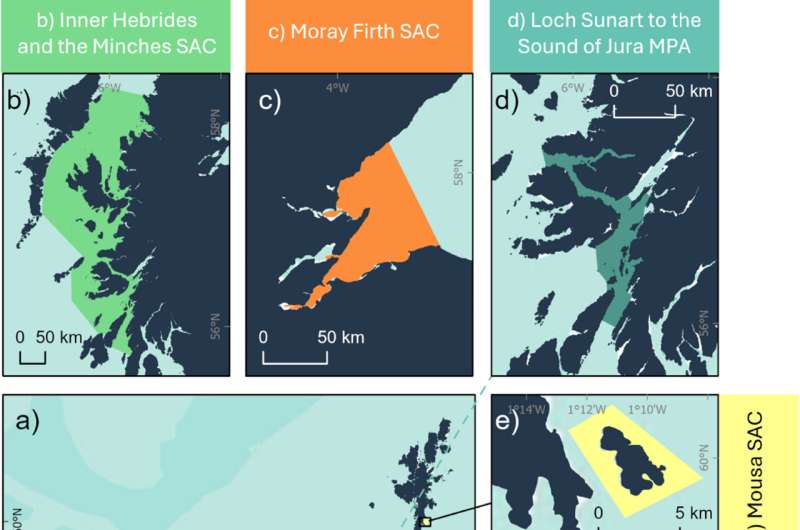
The study focused on six MPAs, including Moray Firth, Mousa, Inner Hebrides, Loch Sunart to the Sound of Jura, Sea of the Hebrides, and Lamlash Bay, which is part of the South Arran MPA. The extent of undetected traffic varied significantly across these sites. For instance, Lamlash Bay reported that only 6% of vessels were detected by AIS, while Mousa and the Sea of the Hebrides had higher detection rates of approximately 50–56%.
High-Speed Vessels and Regulatory Gaps
The study revealed that over half of all recorded vessels were traveling at medium to high speeds (greater than 7.5 knots), with many of these vessels not transmitting AIS signals. Dr. Hague emphasized the implications of this gap in monitoring: “If two-thirds of the vessels posing risks are not included in our datasets, we are missing vital information on noise pollution and collision risks.”
Despite the critical findings, only two of the six MPAs studied have specific vessel-related restrictions, both of which pertain solely to fishing activities. The lack of regulations for other vessel types calls into question the adequacy of current management plans. Dr. Lauren McWhinnie, co-author and associate professor, advocates for a comprehensive reevaluation of monitoring practices. “To effectively protect the species and habitats these areas were designed to shield, we need a more integrated approach that combines AIS data with other monitoring tools, such as underwater acoustics, satellite imagery, and visual surveys,” she noted.
The research team proposes the development of advanced monitoring networks that incorporate multiple data sources, as well as real-time alert systems to notify mariners when they enter sensitive ecological zones.
The Role of Citizen Scientists
Citizen science has played a crucial role in this study, with volunteers from the Scottish Vessel Project, WDC Shorewatch, and the Hebridean Whale and Dolphin Trust contributing over 1,800 hours of observations across Scotland’s coast. “We are extremely grateful to all of our volunteers for their dedication in collecting data that demonstrate the volume of traffic passing through these protected areas,” Dr. Hague remarked.
She emphasized the importance of finding a balance between enjoying Scotland’s stunning coastlines and protecting the marine species that inhabit them. The findings underscore the necessity for more effective management strategies to ensure that Scotland’s MPAs fulfill their intended purpose of safeguarding marine ecosystems.
For further details, refer to the research by Emily L. Hague et al., titled “AIS underrepresents vessel traffic in Scotland’s Marine Protected Areas,” published in Ocean & Coastal Management.