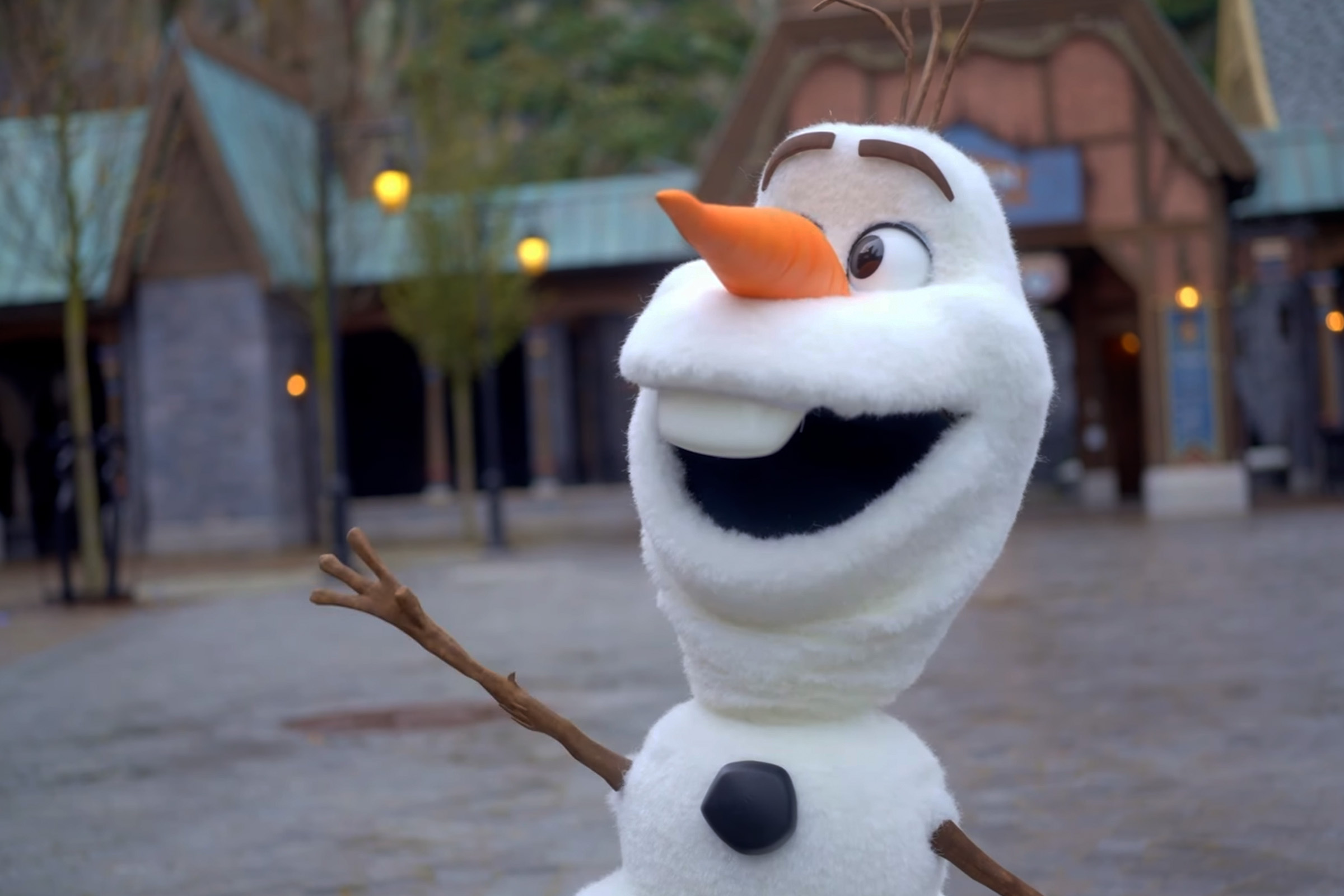
Disney engineers have successfully developed a walking robot replica of the beloved character Olaf from the animated films Frozen. This innovative creation was detailed in a recent paper published by the Disney Research Hub. The robot’s lifelike movements have garnered attention, both for their technical achievement and for the uncanny nature of its appearance.
In a demonstration video, the robot Olaf can be seen moving through a Disney park and the lab, accurately reflecting the character’s size and mannerisms. Its ability to mimic Olaf’s signature waddle and expressions raises fascinating questions about the intersection of technology and character animation. Viewers may find the experience both delightful and unsettling, as the robot embodies a character that originated in a purely animated world.
Engineering Challenges and Solutions
Creating a robot that captures the essence of Olaf presented unique challenges. The team had to reconcile the character’s oversized head, which is proportionately larger than its torso, with its minimal leg structure. The engineers cleverly concealed most of the robot’s lower limbs within its snowball-like body, leaving only its feet visible. This design choice allowed the robot to walk in a manner that closely resembles Olaf’s animated movements.
To achieve a fluid walking style, the engineers focused on perfecting the robot’s gait. They implemented a heel-to-toe walking pattern, enhancing its realism. The team used a method called reinforcement learning to train the robot’s AI, rewarding it for successfully achieving specific movement objectives in thousands of simulations. This approach allowed the engineers to fine-tune the robot’s movements, resulting in a more natural appearance.
Noise Reduction and Thermal Management
Attention to detail extended beyond movement to the sound produced by the robot. The engineers aimed to reduce the noise level of its footfalls, which initially registered at nearly 82 dB. After implementing impact reduction techniques, they successfully lowered the volume to just 64 dB. This achievement highlights the team’s commitment to creating an immersive experience for viewers.
Thermal management was another critical aspect of the robot’s design. The neck of the robot houses numerous small actuators that control its head movements, presenting a risk of overheating. The AI system was trained to adjust the robot’s posture slightly to prevent thermal buildup, ensuring that the illusion of animation remains intact.
A New Era of Robotics
Disney’s development of a robot Olaf marks a significant step forward in robotics and character animation. The project blends cutting-edge technology with beloved storytelling, offering a glimpse into the future of interactive entertainment. The remarkable engineering feat demonstrates the potential for robots to engage with audiences in ways that were once thought to be the domain of fiction.
As Disney continues to innovate in this space, the implications for entertainment, theme parks, and storytelling are vast. The successful creation of this robot not only reflects the company’s commitment to pushing technological boundaries but also sets the stage for future advancements in character-driven robotics.