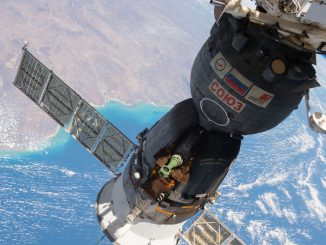
The arrival of the Crew 12 astronauts at the International Space Station (ISS) on February 14, 2024, has restored the station’s crew size to seven following a recent medical issue that temporarily reduced the number of occupants. The SpaceX Crew Dragon capsule successfully docked with the ISS at 20:15 UTC, approximately 34 hours after launch from the Kennedy Space Center in Florida.
Leading the Crew 12 mission is NASA astronaut Jessica Meir, who expressed excitement upon arrival, stating, “Grateful to be on board, and we’re ready to get to work.” Meir, alongside veteran Russian cosmonaut Andrey Fedyaev and newcomers Jack Hathaway from the United States and Sophie Adenot from France, entered the station two hours after docking, receiving a warm welcome from the existing crew members.
As Crew 12 floated into the ISS, they were greeted by station commander Sergey Kud-Sverchkov, along with cosmonauts Sergey Mikaev and NASA astronaut Chris Williams. Kud-Sverchkov remarked during a brief ceremony, “Welcome to Crew 12… we’ve been waiting for this moment for a very long time.”
The new crew replaces the previous occupants of Crew 11, who had to return early due to health concerns. This transition was crucial for the ongoing research and operations aboard the ISS, as a three-person crew, while manageable, cannot fully support the extensive scientific work and maintenance required. With Crew 12 now in place, the station can resume normal operations, including scheduled spacewalks.
Successful Launch and Mission Objectives
Launched on a Falcon 9 rocket, the Crew Dragon capsule provided the astronauts with a smooth ride to the ISS. Adenot, a skilled pilot, described the experience as “quite a ride, very fun,” highlighting the breathtaking view of Earth from space. She noted, “The Earth is so beautiful from up here. We see no lines, no borders; it was a very big moment for us.”
The Crew 12 mission aims to contribute significantly to the ongoing research within the U.S. segment of the ISS. Meir elaborated on the diversity of the team, stating, “It’s really a testament to everything we do, we have so many countries represented, so many backgrounds, so many disciplines.” The collaboration between astronauts from different nations underscores the international spirit of the ISS program.
Medical Considerations and Future Plans
Prior to their arrival, the crew conducted a private medical conference, indicating the need for follow-up discussions after docking. While NASA maintains strict confidentiality regarding astronaut health, it is known that many astronauts experience discomfort during their initial adaptation to weightlessness. This discomfort typically subsides after a few days in orbit.
NASA had previously considered advancing the launch date for Crew 12 to minimize the time Chris Williams would operate the ISS alone. However, logistical challenges, including preparations for the upcoming Artemis II moon mission and adverse weather conditions, led to the decision to launch on February 13 instead.
With Crew 12 now aboard, the ISS is set to continue its vital work in scientific research, benefiting from a full and capable team. As Hathaway stated, “Crew 12 is honored to join our Expedition 74 friends and colleagues… to add our chapter to the story of the International Space Station.” The collaborative efforts of these astronauts will further enhance the legacy of human exploration in space.