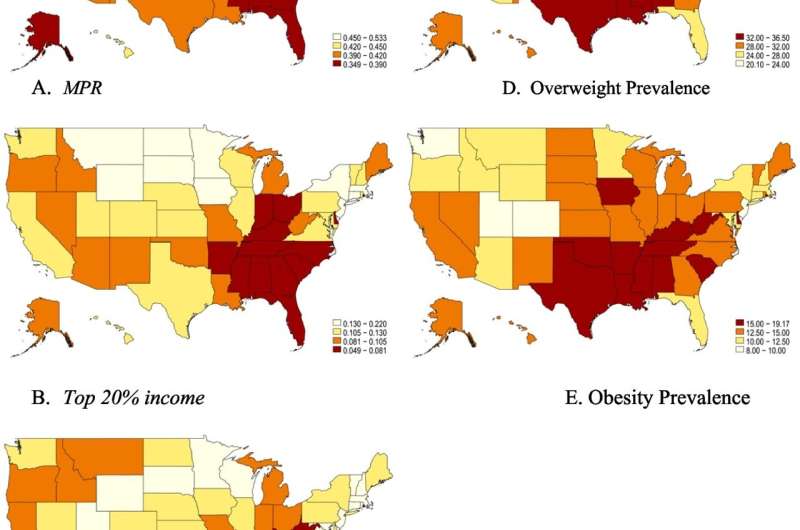
New research highlights the potential long-term economic consequences of childhood obesity, suggesting it may hinder access to the “American Dream.” A study co-authored by Dr. Maoyong Fan, an economist at Ball State University, indicates that childhood obesity carries a significant “mobility penalty,” adversely affecting individuals’ ability to achieve upward economic mobility and reside in opportunity-rich neighborhoods as adults.
The study, titled “Weighing Down the Future: Long-term Effects of Childhood Obesity on Intergenerational Mobility,” is set to be published in the Journal of Population Economics. It utilizes data from the National Longitudinal Study of Adolescent to Adult Health (Add Health), which tracked participants from adolescence into adulthood, linking their records to the Opportunity Atlas.
Findings reveal that adolescents with obesity are approximately 20 percentile points lower in adult income rank compared to their normal-weight peers. Furthermore, these individuals are less likely to live in high-opportunity neighborhoods in adulthood. Specifically, childhood obesity correlates with a 17.6 percentage-point decrease in the likelihood of residing in low-poverty areas.
The implications of these findings extend beyond health concerns. Dr. Fan emphasized, “Childhood obesity isn’t just a health crisis. It is an economic mobility crisis.” The study indicates that individuals facing obesity often experience lower educational attainment, persistent health issues, and increased discrimination within the labor market.
The research also highlights disparities in how these economic penalties are distributed. Gender plays a role, as females face more substantial mobility penalties than males. Additionally, children from low-income families and those living in the South and Midwest experience particularly severe effects, with these regions often described as “obesity hotspots” and “opportunity deserts.”
Co-author Dr. Yanhong Jin from Rutgers University noted, “For millions of American families, excess weight in childhood may be quietly closing doors to opportunity.” This dynamic creates a feedback loop that can exacerbate existing inequalities.
As policymakers contemplate strategies to mitigate childhood obesity, the study suggests a shift in perspective is necessary. Prevention should be regarded not only as a health priority but also as a crucial investment in economic opportunity. Dr. Man Zhang, an assistant professor at Renmin University in China, remarked, “Interventions that reduce childhood obesity can deliver benefits well beyond lower medical spending.”
This research underscores the importance of addressing childhood obesity as a multifaceted issue with far-reaching implications, emphasizing the need for comprehensive strategies that encompass both health and economic dimensions.