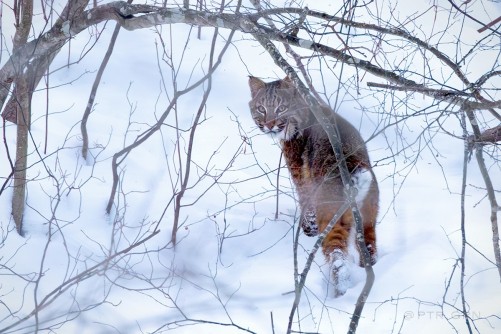
The bobcat population in southern New England is experiencing a notable resurgence, with over 1,000 sightings recorded this winter. This encouraging trend has emerged from the Rhode Island Bobcat Project, which is spearheaded by researchers from the University of Rhode Island (URI) in collaboration with local partners such as the Rhode Island Department of Environmental Management and the Wildlife Clinic of Rhode Island.
The project aims to gather crucial data on bobcat behavior, habitat use, and population dynamics in the region. Assistant Professor of Quantitative Ecology Kathleen Carroll and Ph.D. student Christopher Hickling are leading the effort, emphasizing the significance of public interest in these elusive animals. They believe the increasing sightings reflect not only a recovery of the species but also a growing awareness of its ecological importance.
Understanding Bobcat Behavior Through Public Engagement
Data collected from public reports, camera traps, and GPS radiocollars are essential for mapping bobcat activity. Carroll notes that the bobcats in southern New England appear more tolerant of human presence compared to their counterparts in less populated areas. “Bobcats in this area appear very tolerant of people compared to bobcats in other regions,” Carroll stated. “This makes sense since southern New England is so densely populated.”
The project has seen a diverse range of sightings, predominantly from southern Rhode Island. This geographic focus provides a unique opportunity for researchers to evaluate how urban environments influence bobcat behavior. With the arrival of spring, Carroll advises residents to be mindful of female bobcats, which typically give birth to litters of two to four kittens during this period.
If residents suspect a den on their property, they are encouraged to reach out to the research team for guidance. This proactive approach helps ensure the safety of both the bobcats and the local community.
Innovative Naming and Monitoring Strategies
The URI team has developed a creative naming convention for the bobcats they collar and release, choosing names inspired by native bird species such as Osprey, Falcon, and Plover. Each bobcat receives a formal identification code alongside a more memorable name, enabling effective tracking while also fostering public engagement.
Carroll explains that this method enhances the research experience and helps make the data more relatable to the community. “Since URI’s Scott McWilliams, who studies birds, has been a mentor for our work, birds made good sense for our naming convention,” she shared.
Bobcats are known for their large home ranges, which means they can move considerable distances. While younger males often venture further afield, many individuals may remain in the same vicinity, creating opportunities for repeat sightings. This behavior, combined with their charismatic appearance, captivates local residents.
According to Carroll, the appeal of bobcats lies in their resemblance to domestic cats, which fosters a connection between people and wildlife. “Many of the behaviors and mannerisms we see in our pets are also represented in bobcats; this relatability makes them good representatives for the broader wildlife community,” she said.
As the project continues, the URI team hopes to enhance public understanding of bobcats and their role in maintaining biodiversity. Residents are encouraged to share their sightings, contributing to a collective effort that supports wildlife conservation in southern New England.
For more information about the Rhode Island Bobcat Project, visit https://connectivityandconservation.com/bobcat-project. For inquiries, contact [email protected] or [email protected].