On July 2, 2025, astronomers detected an unprecedented astronomical event known as GRB 250702B, the longest gamma-ray burst ever recorded. Unlike typical gamma-ray bursts that last only seconds to minutes, this remarkable explosion persisted for an extraordinary seven hours, emitting three distinct bursts throughout the day. The discovery, made by the NASA team using the Fermi Gamma-ray Space Telescope, has sparked intense interest within the scientific community, as it represents a potential breakthrough in understanding these enigmatic cosmic phenomena.
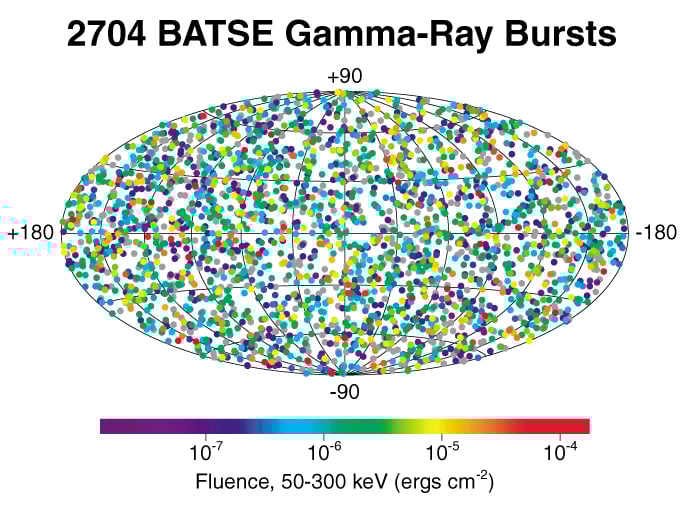
Gamma-ray bursts are the universe’s most energetic explosions, releasing more energy in a fleeting moment than the Sun will emit throughout its entire ten billion-year lifespan. While roughly 15,000 bursts have been catalogued since their phenomenon was first recognized in 1973, GRB 250702B stands out due to its unprecedented duration and repeated nature. Traditionally, gamma-ray bursts are believed to arise from single, cataclysmic events, such as the collision of neutron stars or the collapse of massive stars. However, GRB 250702B defies these expectations, prompting researchers to explore new explanations.
A recent paper published in the Monthly Notices of the Royal Astronomical Society proposes a compelling theory involving intermediate mass black holes. These black holes, which range from a few hundred to a hundred thousand solar masses, represent a largely elusive category in the black hole family, positioned between stellar mass black holes and supermassive black holes found at the centers of galaxies. The researchers suggest that GRB 250702B could have been produced when a star similar to our Sun ventured too close to one of these intermediate mass black holes, resulting in its disintegration due to tidal forces.
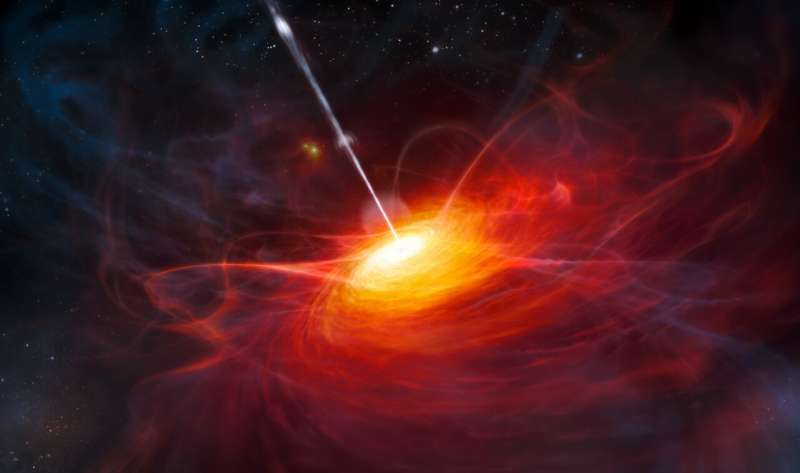
As the star’s materials spiraled inward, they fueled a relativistic jet of particles travelling near the speed of light, generating the extraordinary gamma-ray emissions detected by Fermi. Notably, the repeating nature of the bursts aligns well with this theory, indicating that the star may not have been completely destroyed in a single event. Instead, it could have experienced multiple close encounters, each producing a fresh burst of emissions, thereby explaining the timing of the three distinct Fermi triggers.
The location of GRB 250702B adds further intrigue to the investigation. Positioned approximately 5.7 kiloparsecs from the center of its host galaxy, the burst occurs well away from the supermassive black hole typically found at galactic cores. This distance offers a promising indication of the potential presence of a wandering intermediate mass black hole in that region.
If the proposed theory is validated, GRB 250702B would mark a historic moment in astronomy, representing the first observation of a relativistic jet generated by an intermediate mass black hole consuming a star. Such a discovery would not only deepen our understanding of black hole formation but also underscore the complexity of cosmic events.
The scientific community remains vigilant as multiple competing models continue to emerge regarding the nature of this remarkable phenomenon. The ongoing debate reflects the dynamic nature of astronomical research, where groundbreaking discoveries often surface unexpectedly. As astronomers work diligently to unravel the mysteries surrounding GRB 250702B, it stands as a vivid reminder of the universe’s vastness and complexity, propelling the field of astronomy into new frontiers of exploration.