Virginia Democrats have introduced a new curriculum focused on Diversity, Equity, and Inclusion (DEI) as the legislative session commenced on January 10, 2025. This move comes at a time of heightened political and social tensions on campuses across the United States. The proposed legislation aims to integrate DEI principles into classroom instruction, sparking both support and opposition from various stakeholders.
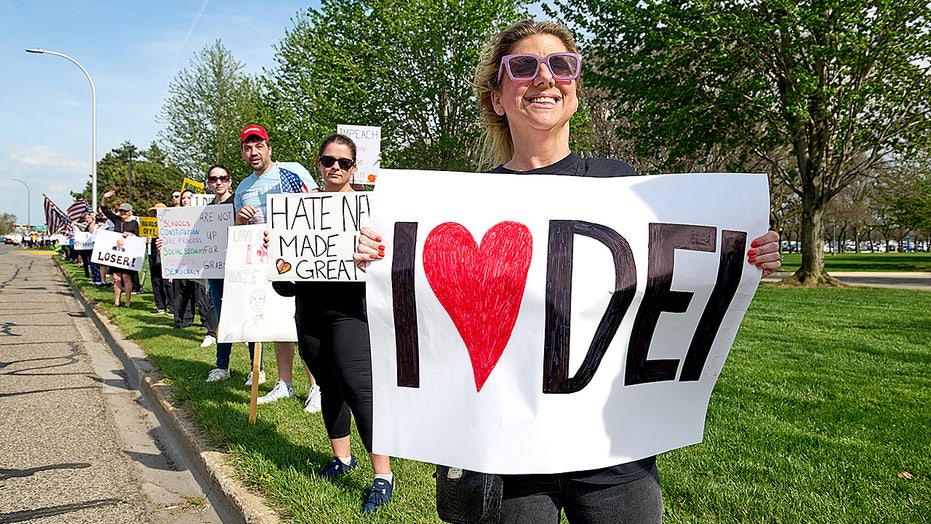
On April 29, 2025, hundreds gathered outside a rally featuring former President Donald Trump at Macomb County Community College in Warren, Michigan. Protesters voiced their concerns over Trump’s policies and their implications for educational institutions, reflecting the divided opinions surrounding his influence on higher education.
The growing debate over DEI initiatives is underscored by recent events in Minnesota, where experts express concern that school closures following an incident involving U.S. Immigration and Customs Enforcement (ICE) will impact children negatively. This situation highlights the intersection of education, safety, and immigration policies, raising critical questions about the welfare of students.
In a separate incident, a conservative student at a university in Utah reported a threatening encounter with a radical left-wing classmate, who allegedly threatened to “Kirk” him before being arrested on campus. This incident, occurring during a speech by Charlie Kirk, founder of Turning Point USA, on September 10, 2025, underscores the increasingly hostile atmosphere on some campuses regarding differing political views.
Furthermore, a high-ranking official from the Trump administration has brought attention to alleged financial aid fraud in blue states, labeling certain institutions as “ghost students” for misappropriating funds. This revelation could have significant implications for federal education funding and oversight.
The introduction of a controversial course titled “Decolonizing Medicine” at a blue-state university has also generated backlash, with critics arguing that it challenges traditional medical standards by focusing on the “White body” norm. The course has become a flashpoint in the ongoing discourse about race and education in America.
In a related development, a school board member in California has filed a lawsuit claiming that the local teachers’ union misled members regarding the allocation of funds to political organizations. The suit adds to growing scrutiny of teachers’ unions and their political activities, particularly under the leadership of Becky Pringle, President of the National Education Association (NEA).
The educational landscape continues to evolve amid these controversies, with institutions like Yale University hosting speakers such as Trita Parsi, who has faced accusations of promoting Iranian regime interests. Such events often ignite debates about academic freedom and the responsibilities of educational institutions.
As these issues unfold, the intersection of politics and education remains a focal point for policymakers, educators, and students alike, with implications that extend far beyond the classroom. The ongoing discussions surrounding DEI initiatives, political threats, and educational integrity are shaping the future of higher education in America.