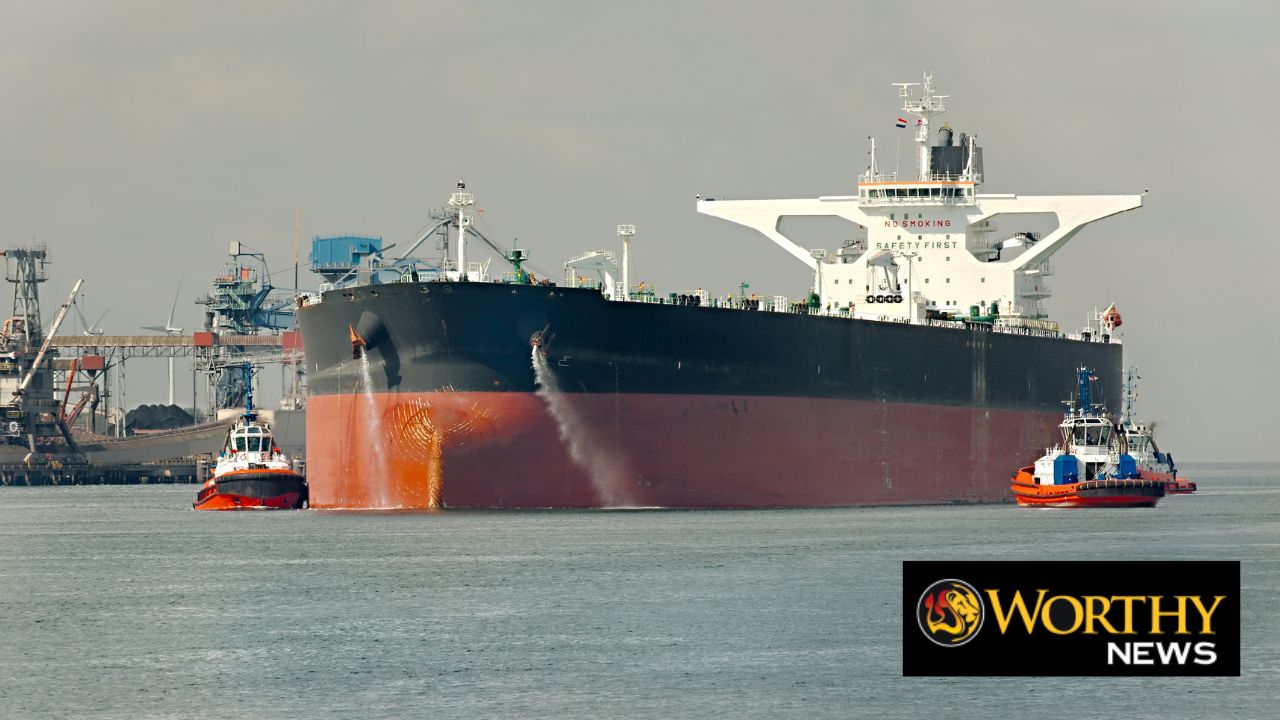
President Donald Trump announced on March 3, 2026, that the U.S. Navy will provide escorts for commercial tankers transiting the Strait of Hormuz. This decision comes in response to heightened tensions in the region, particularly threats from Iran’s Islamic Revolutionary Guard Corps (IRGC) against maritime traffic.
In a statement posted on his Truth Social account, Trump emphasized the urgency of the situation, declaring, “Effective IMMEDIATELY, I have ordered the United States Development Finance Corporation (DFC) to provide, at a very reasonable price, political risk insurance and guarantees for the Financial Security of ALL Maritime Trade, especially Energy, traveling through the Gulf.” He further assured that “no matter what, the United States will ensure the FREE FLOW of ENERGY to the WORLD.”
The announcement follows reports of the IRGC issuing warnings to vessels in the area, instructing them to refrain from passage through the Strait. This vital waterway connects the Persian Gulf to the Gulf of Oman and is crucial for global oil transportation. Over the weekend, ships in the vicinity reportedly received VHF transmissions from the IRGC indicating that no vessels are permitted to transit the Strait.
In light of these developments, the U.S. Department of Transportation’s Maritime Administration issued a safety alert, advising vessels to keep clear of the Strait if possible. The alert highlighted “significant military activity” in the area and recommended that U.S.-flagged, owned, or crewed commercial vessels maintain a distance of 30 nautical miles from U.S. military ships to avoid being misidentified as threats.
Tensions have escalated in the region, with reports indicating that Iran has targeted Arab nations along the Persian Gulf, including Bahrain, Kuwait, Qatar, and the United Arab Emirates. This response follows U.S. military strikes within Iran earlier in the weekend. On March 3, U.S. Central Command confirmed that all IRGC naval vessels in the Gulf of Oman had been destroyed.
The U.S. Navy’s involvement underscores a commitment to maintaining maritime security in a region that is pivotal for global energy supplies. With escalating military actions, the administration continues to monitor the situation closely, indicating that further measures may be forthcoming.
The implications of Trump’s announcement are significant, as the Strait of Hormuz is responsible for approximately 20% of the world’s oil trade. The U.S. Navy’s protective measures aim to reassure shipping companies and ensure uninterrupted energy flow amidst rising geopolitical tensions.