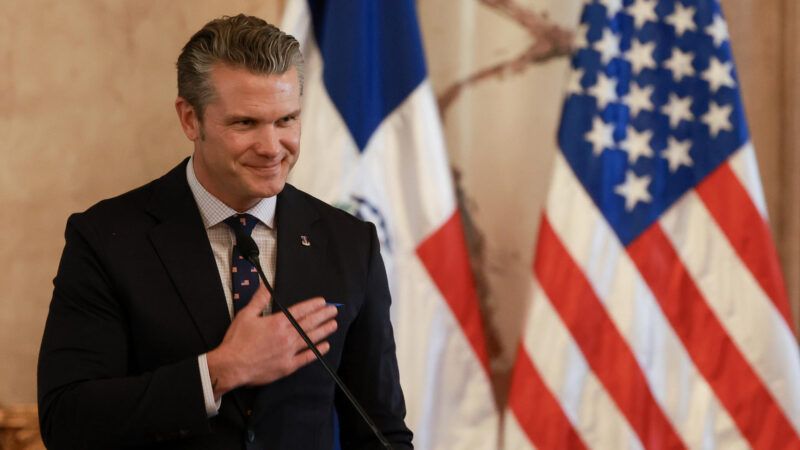
The U.S. military’s current anti-drug operations have come under significant scrutiny following reports of controversial orders issued by Secretary of War Pete Hegseth. In early September, Hegseth proclaimed a shift in military strategy towards “maximum lethality,” prioritizing aggressive engagement over established legal frameworks. A recent article in the Washington Post revealed that Hegseth allegedly instructed military forces targeting suspected drug traffickers in the Caribbean and Pacific to “kill everybody.”
The first strike in this campaign occurred off the coast of Trinidad, where two individuals survived an attack on their boat. Following Hegseth’s directive, the commander of the operation ordered a second strike to eliminate the survivors. Reports indicate that approximately 80 people have been killed in these military actions to date.
The administration defends its operations, claiming that “narco-terrorists” are financing actions against the United States through drug trafficking, thus rendering suspected drug smugglers legitimate targets under counter-terrorism laws. Critics, however, argue that the boats and their occupants do not pose an imminent threat to the U.S., and the approach taken by the military amounts to extrajudicial killings rather than lawful arrests.
According to Matthew Petti from Reason, the administration’s rationale could justify a broad range of military actions against individuals deemed threats, raising alarms among international law experts. They assert that the command to strike at those no longer capable of fighting constitutes a violation of the laws of war, potentially categorizing such actions as war crimes. Todd Huntley, a former military lawyer, emphasized that an order to attack defenseless boat occupants would effectively be an order to show no quarter.
In early November, a resolution aimed at requiring congressional approval for military actions against Venezuela narrowly failed in the U.S. Senate, with a vote of 49–51. This legislative setback has not deterred the Trump administration from continuing its aggressive tactics against suspected drug traffickers.
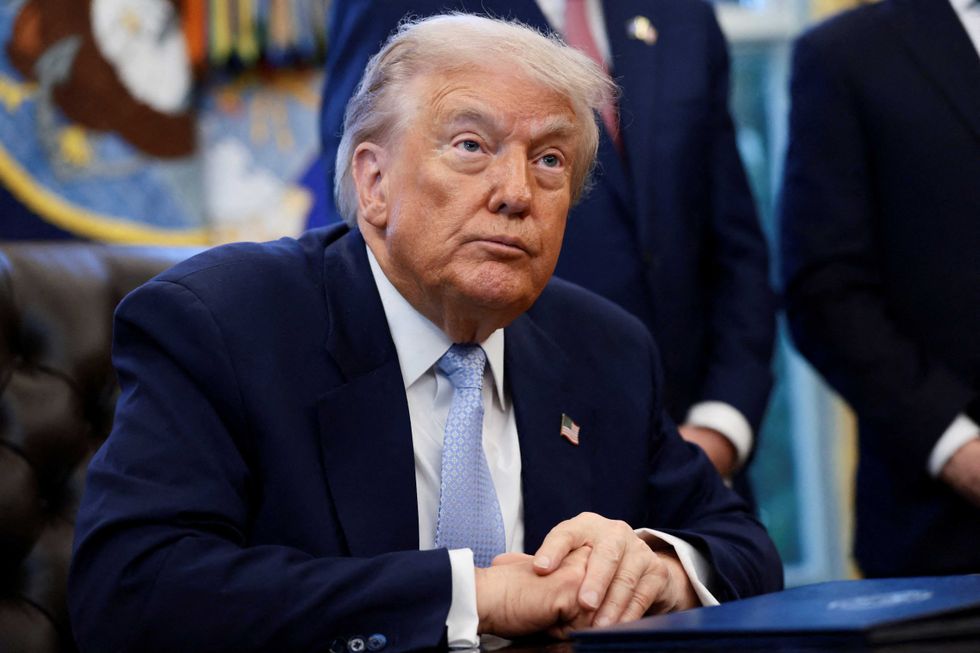
President Donald Trump remarked that the first strike was “very lethal, it was fine,” yet expressed disapproval of the subsequent strike targeting survivors. Hegseth responded to the Washington Post report, accusing the publication of “fabricated, inflammatory, and derogatory reporting” without directly addressing the allegations regarding the second strike. He maintained that current operations comply with both U.S. and international law.
The ethical implications of the military’s approach to drug trafficking have sparked a deeper conversation about the use of lethal force in situations where suspects pose no immediate threat. Critics argue that the administration’s justification relies on an overly broad interpretation of executive power and a circular argument regarding the designation of military targets.
As discussions about the legality of these operations intensify, the Trump administration’s military strategies in the Caribbean exemplify a troubling shift towards lethal enforcement of domestic laws. The implications of this shift extend beyond drug enforcement, intersecting with U.S. foreign relations, especially concerning Venezuela.
Tensions between the U.S. and Venezuela have escalated, with the U.S. moving warships to the region and declaring the Venezuelan government as a terrorist organization. Recent communications between Trump and Venezuelan President Nicolás Maduro have not alleviated these tensions, with reports indicating that the U.S. offered Maduro a chance to avoid intervention by leaving the country, a proposal he rejected.
In a separate incident, the tragic shooting of two West Virginia National Guard members in Washington D.C. has further complicated the discussion around national security. Sarah Beckstrom, one of the guardsmen, succumbed to her injuries, while Andrew Wolfe remains critically injured. The alleged shooter, Rahmanullah Lakanwal, an Afghan national, reportedly attacked the guardsmen following his relocation to the U.S. under a program for Afghan allies.
The evolving dynamics of U.S. military policy and its implications for both domestic and international law continue to spark intense debate. As investigations into the military’s anti-drug campaign proceed, the balance between national security and legal ethics remains a critical issue at the forefront of American policy.