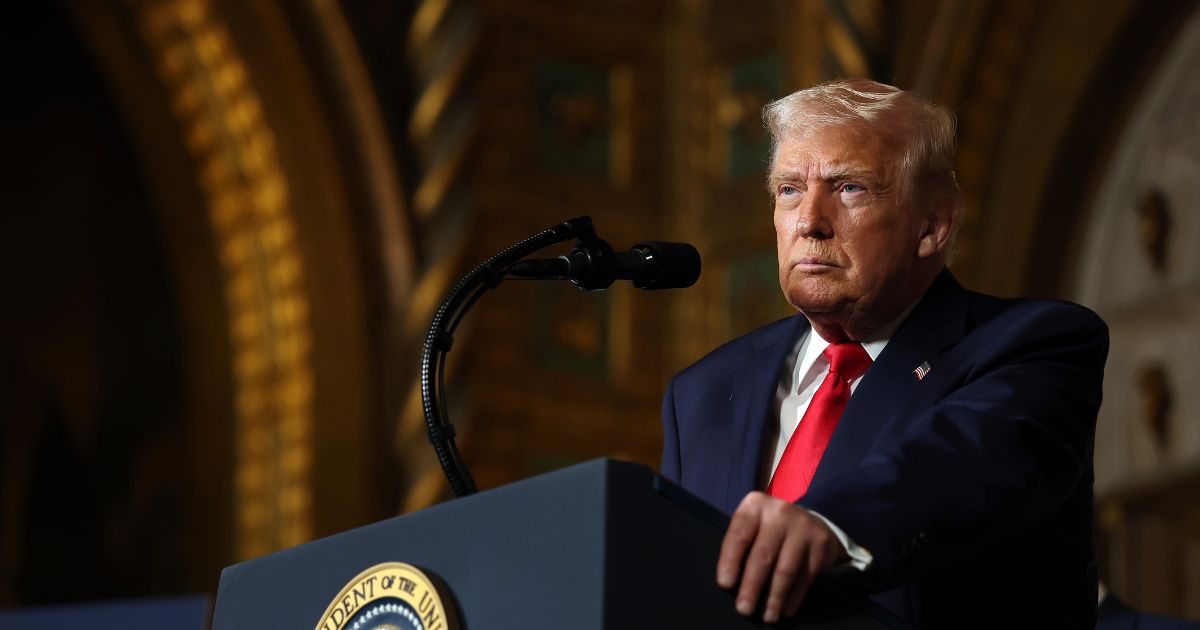
The U.S. Supreme Court is expected to rule on President Donald Trump’s tariffs in early 2026, prompting the administration to prepare contingency plans in case the decision does not favor them. In May, a federal appeals court allowed Trump’s tariffs to remain in effect while legal challenges proceed. The tariffs, which were imposed in early April, are based on the International Emergency Economic Powers Act (IEEPA) and were justified by the administration citing a record trade deficit of $1.2 trillion in 2024.
White House Press Secretary Karoline Leavitt commented on the appeals court ruling, emphasizing that Congress established the National Emergency Act to provide a framework for addressing the appropriate use of IEEPA. She noted, “Any questions over whether Trump improperly imposed these IEEPA tariffs were already adjudicated in Congress following Liberation Day.”
In late April, the Senate considered a resolution introduced by Democratic lawmakers to rescind Trump’s tariffs. Treasury Secretary Scott Bessent stated in mid-December that the administration has “plenty of revenue alternatives” if the Supreme Court rules against them, while stressing that the tariffs are also a matter of national security. He asserted, “We are rebalancing trade, and this year, for the calendar year, we are going to shrink the deficit by several hundred billion dollars. So economic security is national security.”
As the calendar year progresses, tariff revenue is reportedly increasing, contrasting with figures from President Joe Biden’s last fiscal year. Bessent further argued that the IEEPA tariffs are instrumental in strengthening U.S. supply chains by bringing critical manufacturing back to the United States.
Should the Supreme Court rule against the Trump administration, reports suggest that the administration is prepared to impose tariffs under different legal frameworks. Ted Murphy, a trade lawyer at Sidley Austin in Washington, stated, “Nobody thinks the tariffs are going away. They are just going to be reissued under a different umbrella. They will reissue tariffs the same day.”
The Financial Times reported that the administration might use Section 232 of the Trade Expansion Act of 1962, which has already been invoked for tariffs on various products, including cars and steel. Investigations into sectors such as semiconductors and pharmaceuticals are currently underway under this section, although the findings have not yet been disclosed.
Another potential strategy involves using Section 122 of the Trade Act of 1974, which allows for the imposition of tariffs up to 15 percent for 150 days as a temporary measure while further actions are considered. Additionally, Section 338 of the Tariff Act of 1930 could be triggered, permitting immediate tariffs of up to 50 percent on countries that discriminate against U.S. commerce.
A ruling unfavorable to the Trump administration might destabilize the U.S. Treasury bond market, with analysts predicting a drop in prices as investors brace for increased federal borrowing to cover potential revenue losses. There is also speculation that the Supreme Court could order refunds for levies collected thus far under the IEEPA.
White House representative Kush Desai highlighted the significant economic and national security implications of a Supreme Court ruling that opposes Trump’s tariffs, stating, “The economic and national security consequences would be enormous.” He expressed optimism regarding a “speedy and proper resolution” from the Supreme Court.
As the situation unfolds, the administration remains focused on navigating the complexities of trade policy while addressing both economic and security concerns in a rapidly evolving global landscape.