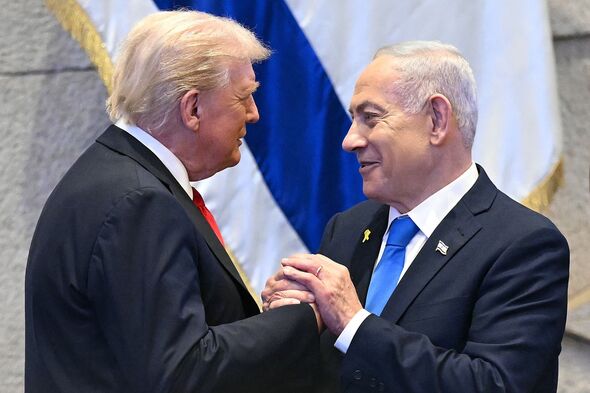
President Donald Trump is scheduled to meet with Israeli Prime Minister Benjamin Netanyahu at his Mar-a-Lago estate on Monday. The meeting aims to revitalize a ceasefire in Gaza, which has shown signs of weakening, potentially jeopardizing the peace efforts that the United States brokered. The U.S. has been advocating for a ceasefire since its initiation in October 2023, following a deadly assault by Hamas that resulted in approximately 1,200 fatalities.
The ceasefire, although largely holding, has experienced a slowdown in progress, with both sides accusing each other of violations. Tensions have also emerged among the U.S., Israel, and Arab nations regarding the next steps in the peace process.
Challenges Ahead for Ceasefire Negotiations
The initial phase of the ceasefire has concluded, paving the way for a more complicated second phase. Trump’s proposed 20-point plan, which has received endorsement from the U.N. Security Council, seeks to dismantle Hamas’s control over Gaza. This ambitious strategy includes creating a demilitarized Gaza Strip under the oversight of an entity referred to as the Board of Peace, which Trump would lead.
Mona Yacoubian, director and senior adviser of the Middle East Program at the Center for Strategic and International Studies, expressed skepticism about Netanyahu’s willingness to support this plan. She noted, “This is going to be a really tall order for President Trump to get Netanyahu to agree.” The two leaders’ differing approaches toward the region may create friction during their discussions.
The second phase envisions establishing a “technocratic, apolitical” administrative body to manage Gaza’s day-to-day operations, significantly under the guidance of the Board of Peace. Furthermore, the plan anticipates normalizing relations between Israel and Arab nations, potentially leading to Palestinian statehood. Yet, logistical and humanitarian challenges loom large, including the need to rebuild Gaza’s infrastructure and dismantle Hamas’s military capabilities.
International Implications and Local Resistance
The proposed International Stabilization Force, designed to oversee security operations in Gaza, has yet to be formed. According to a Western diplomat, there exists a “huge gulf” between U.S.-Israeli interpretations of the force’s mandate and the viewpoints of other major regional powers and European governments. The U.S. and Israel envision the force playing a commanding role in security, including disarming Hamas. However, countries approached to contribute troops have expressed concerns that the mandate could resemble an “occupation force.”
As the meeting approaches, the situation remains fluid. Progress has been hindered by Israeli officials taking time to review the Palestinian technocratic committee’s members, while military strikes in Gaza continue. Reports indicate that Hamas is open to discussions about “freezing or storing” its weapons stockpile but maintains that armed resistance is justified as long as Israeli occupation persists in Palestinian territories.
In the backdrop of these negotiations, Egypt, Qatar, Saudi Arabia, and Turkey are advocating for a negotiated settlement regarding Hamas’s disarmament and further Israeli withdrawal. This advocacy conflicts with U.S. proposals for swift construction of temporary accommodations for Palestinians in areas still under Israeli control.
The United Arab Emirates has reportedly committed to financing Gaza’s reconstruction, although final plans remain unconfirmed. A proposed map reviewed by the Associated Press suggests a designated area for “UAE Temporary Emirates housing complex” within an Israeli-controlled section of Gaza, but the UAE has not publicly responded to inquiries about its involvement.
As the leaders prepare to meet, the outcome of their discussions could significantly influence the future of Gaza and broader Middle East relations. The meeting marks their first in-person encounter since Trump visited Israel in October to celebrate the ceasefire’s initiation. Netanyahu previously visited Mar-a-Lago in July 2024 during Trump’s reelection campaign.
This evolving situation reflects the complexities of peace negotiations in the region, and the implications of Monday’s meeting will be closely monitored by international observers and stakeholders.