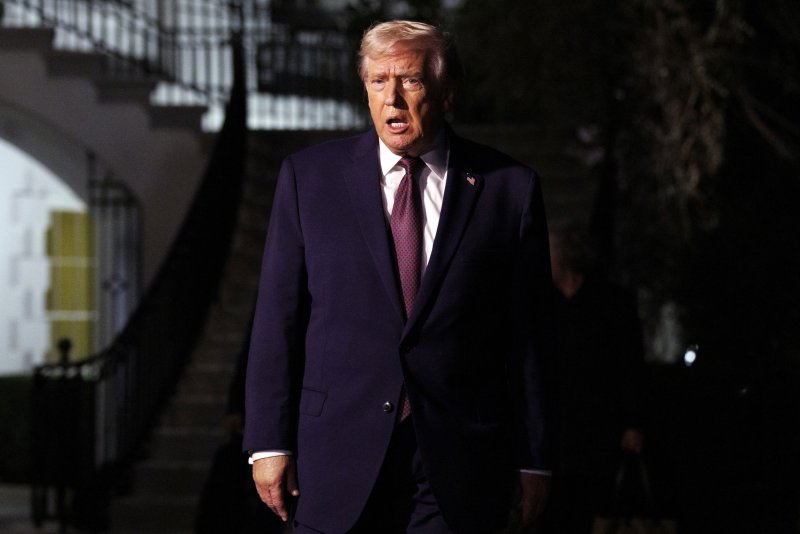
President Donald Trump has reiterated his stance that the United States needs to annex Greenland “for defense.” This statement, made during an interview published on January 4, 2025, comes amidst ongoing diplomatic tensions with Denmark and Greenland, where officials have consistently rejected the notion of U.S. annexation.
In a press conference on January 3, following the apprehension of Venezuelan President Nicolas Maduro, Trump and Secretary of State Marco Rubio hinted at potential U.S. military actions across the Americas. When asked if Maduro’s capture might signal to nations like Greenland that military action could be a possibility, Trump responded, “They are going to have to view it themselves.” He emphasized the necessity of Greenland for U.S. defense, stating, “We do need Greenland, absolutely. We need it for defense.” Trump pointed out that Greenland is “surrounded by Russian and Chinese ships,” underscoring his administration’s concerns regarding national security.
Greenland, the world’s largest island, is a self-governing territory of Denmark. Its vast icy landscape hides valuable resources such as oil, natural gas, and minerals, making it strategically important. The island is already home to the U.S. military’s northernmost base, highlighting its role in American defense strategy.
During a televised address in March 2025, Trump claimed his administration was actively “working with everybody involved to try and get it,” asserting that the U.S. needs Greenland “really for international world security.” He expressed confidence that the U.S. would acquire Greenland “one way or the other.” In response, Greenland Prime Minister Mute Egede emphasized on social media that Greenland would determine its own future, stating that its people do not wish to be governed by either the U.S. or Denmark.
The situation has also sparked reactions from Danish officials. Jesper Moeller Soerensen, Denmark’s ambassador to the U.S., addressed a social media post by Katie Miller, wife of White House Deputy Chief of Staff Stephen Miller, which depicted a U.S. map overlaid on Greenland with the word “SOON.” Soerensen’s response was clear: “We are close allies and should continue to work together as such,” adding a reminder of the importance of respecting Denmark’s territorial integrity.
In December 2024, Jeff Landry, who was appointed as the U.S. envoy to Greenland, stated that the United States does not intend to “go in there trying to conquer anybody.” He expressed gratitude to Trump for the opportunity to serve in this role, which he views as a pathway to making Greenland a part of the United States.
As discussions about Greenland’s status continue, the international community remains attentive to the evolving dynamics between the U.S., Denmark, and Greenland, particularly concerning defense and territorial issues. The ramifications of Trump’s statements and the ongoing dialogue will undoubtedly shape future relations in the region.