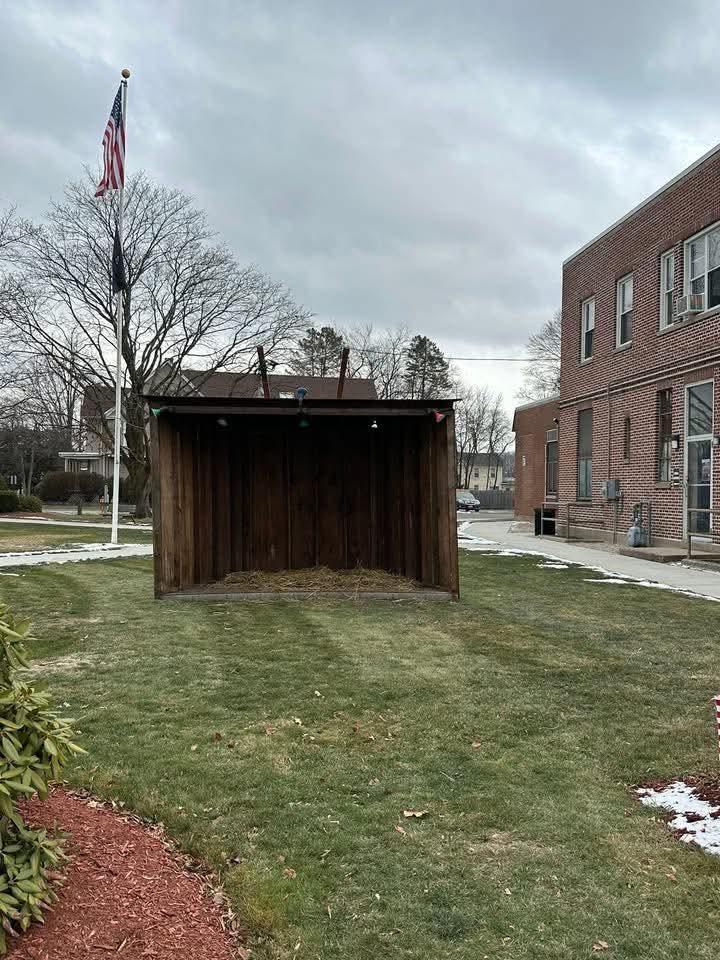
A nativity scene display in Plainville, Connecticut, which has been a staple for over two decades, will not be put up this year, leading to significant community controversy. The Plainville Republicans publicly criticized the decision, claiming that it was made without proper input from the Town Council. The absence of the display from Veterans Memorial Park has sparked discussions among residents and political officials alike.
In a series of posts on social media, the Plainville Republicans voiced their discontent, asserting that town officials took action based on a request for a legal opinion from Town Attorney Morris Borea. The party alleged that the Town Council was not consulted in this decision-making process. One of the posts stated, “The town was not asked by anyone to review the policy nor have there been any complaints about the nativity scene.” The posts received nearly 500 reactions and around 150 comments, with many expressing support for the nativity scene.
The controversy began when discussions arose about the town library’s plan to display a Christmas tree. In response, Borea provided a legal analysis indicating that a standalone nativity scene could conflict with the Establishment Clause of the First Amendment. He emphasized, “If you have just a nativity scene that’s put up by town personnel on town property, I think there’s a serious legal question there.”
Borea, who identifies as Catholic and appreciates the nativity scene at his church, explained that the display represents a religious viewpoint. He stated, “Under our constitution and the way the courts interpreted it, government isn’t supposed to endorse one view over another.” His opinion, released in a letter dated December 21, concluded that placing the nativity scene on town property could be interpreted as government endorsement of Christianity, which may expose the town to legal challenges.
The letter outlined two potential solutions. The first option suggested incorporating the nativity scene into a larger, secular holiday display that includes non-religious symbols. The second option involved creating a public forum policy that would allow community groups to place holiday displays in an equitable manner. “Plainville may display the nativity scene this year only if it is part of a broader, inclusive holiday display or under a neutral public forum policy,” Borea concluded.
In light of the town’s tradition of displaying the nativity scene for approximately 25 years, the Republicans proposed that adding secular decorations might have been a suitable compromise to retain the nativity scene. They also mentioned that the Town Council is expected to convene to establish a clearer policy for future holiday displays.
As the debate continues, requests for comments from Town Manager Michael Paulhus and members of the town council have gone unanswered. The chair of the Plainville Democratic Town Committee has also not responded to inquiries regarding the situation. This ongoing discussion highlights the complexities surrounding the intersection of community traditions and legal considerations in public displays.