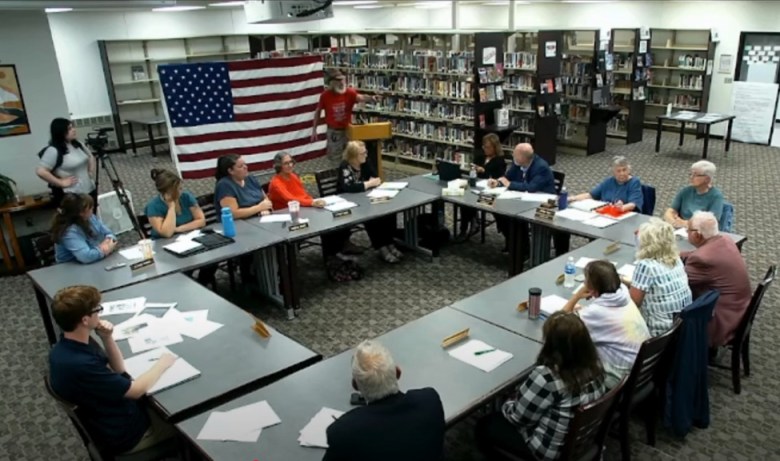
A social studies teacher in Lincoln, Maine, has been dismissed following remarks he made about the assassination of conservative commentator Charlie Kirk. The Regional School Unit 67 (RSU 67) board voted unanimously on December 17, 2025, to terminate the employment of Derek Brewer, a decision that followed months of discussions and public outcry from the community.
Brewer’s comments, made in a classroom setting on September 11, 2025, the day after Kirk’s assassination, sparked significant controversy. According to RSU 67 board Chair Rebbecca Hanscom, Brewer expressed indifference to Kirk’s death, stating, “he didn’t care that Charlie Kirk died.” Additionally, he referenced a social media video in which Kirk discussed tolerating a certain number of gun-related deaths to uphold the Second Amendment, calling the situation “ironic.”
In a board meeting, Hanscom emphasized that Brewer used his classroom as a platform for personal political views, which violated district policies. She noted that his statements were particularly distressing given their proximity to a highly charged national event, leading to disruptions within the school community.
The fallout from Brewer’s comments was immediate. Following the remarks, a group of parents protested at the school demanding his dismissal, prompting police intervention to restore order. On the day after the incident, nearly 100 students were reported as having unexcused absences or left school early, and several families chose to withdraw their children to pursue homeschooling options.
The controversy surrounding Brewer’s comments drew intense scrutiny from both parents and board members. Hanscom remarked on the significant disruption caused by the incident, stating, “Mr. Brewer is unfit to teach, and his services are unprofitable to RSU 67.” Consequently, the board determined that Brewer’s employment should be terminated effective immediately.
Despite the dismissal, Brewer’s name was still listed on the staff directory of Mattanawcook Academy as of the following Tuesday. Attempts to reach Brewer for comment were unsuccessful.
The actions of the RSU 67 board highlight the challenges educators face in navigating political discourse within educational environments and the potential ramifications that arise from expressing personal views in a classroom setting. The case has raised questions about the balance between free speech and professional conduct in schools, a topic that continues to generate debate across various educational institutions.