On December 28, 2025, Israeli military authorities ordered the evacuation of Khirbet Yanoun, a small Palestinian village in the northern occupied West Bank. Residents were given a mere deadline of 4 p.m. to leave their homes, resulting in the complete abandonment of the hamlet for the first time in decades. Local representative Rashid Murrar, who had previously warned of the village’s possible disappearance, was among the last families to evacuate, marking a significant moment in a long history of displacement linked to Israeli settlement expansion.
Khirbet Yanoun, located southeast of Nablus, has faced relentless pressure from Israeli settlers and military forces since the late 1990s. The establishment of the nearby Itamar settlement and its surrounding outposts, including Giv’ot Olam and Givat Arnon, significantly restricted the movement and access of Yanoun’s residents. Over the years, nearly twenty families were displaced, subjected to repeated harassment and violence that forced them to flee.
The ordeal intensified with settlers reportedly attacking villagers, often armed with weapons and dogs. Murrar recounted these experiences, stating, “They came with dogs and guns. They beat residents. They told us they didn’t want to see anyone here.” By 2002, the remaining families had abandoned their homes for nearly a year, seeking refuge in the nearby town of Aqraba.
Despite returning in 2005 after international intervention, the violence continued, reaching new heights in recent months. Masked settlers regularly invaded the village, perpetrating acts of violence, vandalism, and theft. Murrar described the situation as unbearable, saying, “It turned into hell.” The military also enforced restrictions that prevented residents from receiving essential supplies, effectively besieging them.
Growing Tensions and Systematic Displacement
The systematic displacement of Yanoun is part of a broader strategy employed by Israeli settlers in the West Bank. According to local historian Hamza Aqrabawi, Yanoun served as an early testing ground for the establishment of illegal settler outposts, which often precede more violent forms of intimidation. The outpost established by settler Avraham Avri Ran in the mid-1990s became a hub for organized attacks against the village and surrounding regions.
In the past two years alone, the municipality overseeing Yanoun documented approximately 273 settler attacks, alongside ongoing land confiscations that have reduced the village’s land to less than 3,500 dunams (350 hectares). More than 80% of the hamlet’s original land has been appropriated by Israeli authorities, often under the pretext of security or military zones.
The local government has attempted to support remaining residents through measures like exempting them from utility fees and appealing for international assistance for agricultural projects. Yet, as Aqraba’s mayor pointed out, “under occupation, we cannot provide security.” This lack of security has rendered efforts to sustain the community increasingly difficult.
The Impact on Education and Community
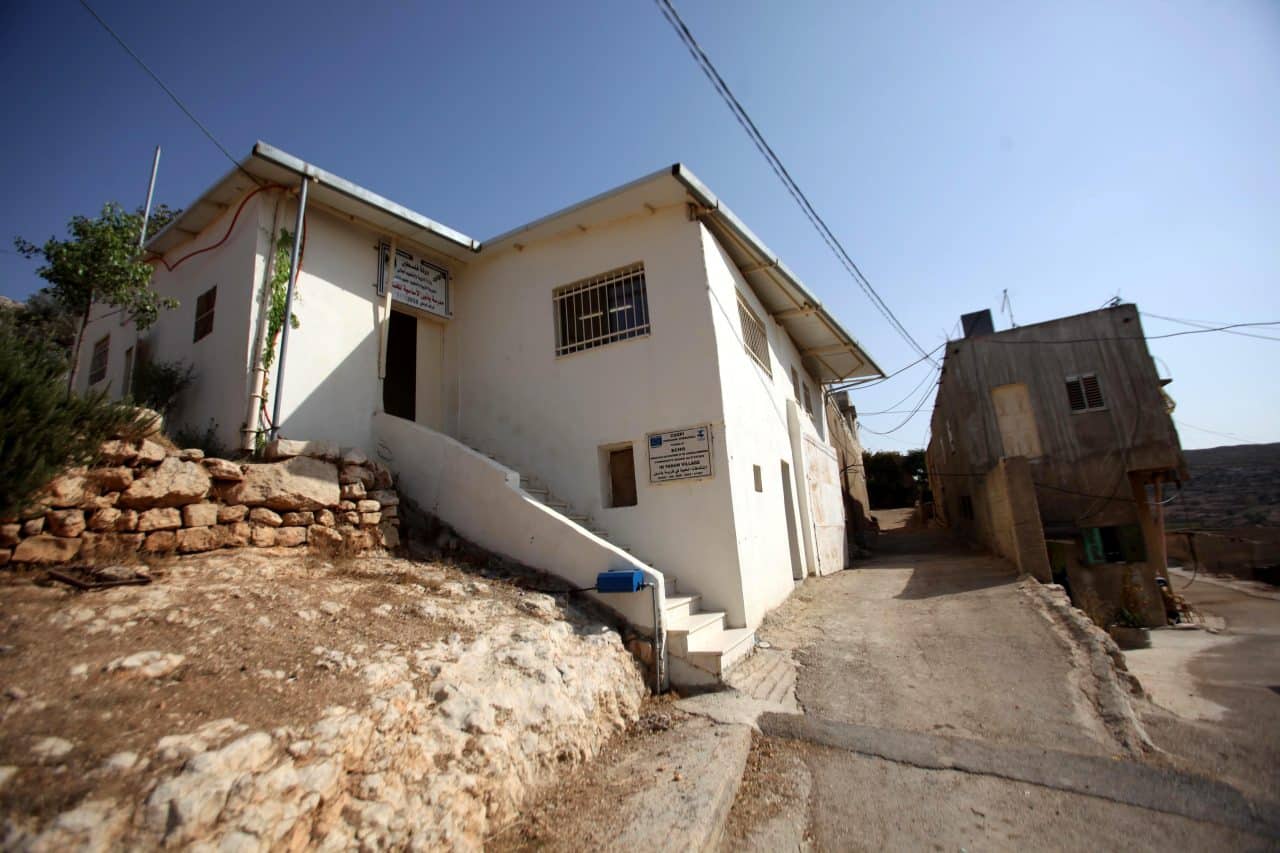
One of the most poignant outcomes of the ongoing violence has been the closure of the village’s school. Established in 2000 in an old house, the school served about 20 students, offering them a semblance of education amid turmoil. However, escalating threats from settlers led to its closure in late December 2025. “Settlers set up checkpoints at the entrances to the hamlet, making it difficult for teachers to reach it,” said Salah al-Din Jaber, head of the Aqraba municipality.
The loss of the school signifies not just an interruption of education but also the fraying of the community’s social fabric. Yanoun was more than just a settlement; it was an agricultural hub, with fields of wheat, barley, and ancient olive trees providing sustenance for families. The village’s spring, Ain Yanoun, was a lifeline, symbolizing the connection between the land and its people.
As agricultural restrictions and land confiscations increased, residents have felt the impact profoundly. Community activist Ayham Abu Bakr noted, “Every olive tree that cannot be harvested is another step toward emptying a village of its people.” This strategy of gradual displacement has left Yanoun empty, yet its story continues to resonate.
Murrar’s reflections capture the essence of this struggle: “We were forced to leave once, then we returned. Now I live in an old house that I consider temporary.” The narrative of Yanoun illustrates the harsh realities faced by many Palestinian communities as they contend with ongoing displacement and loss, underscoring a painful chapter in the broader context of the Israeli-Palestinian conflict.