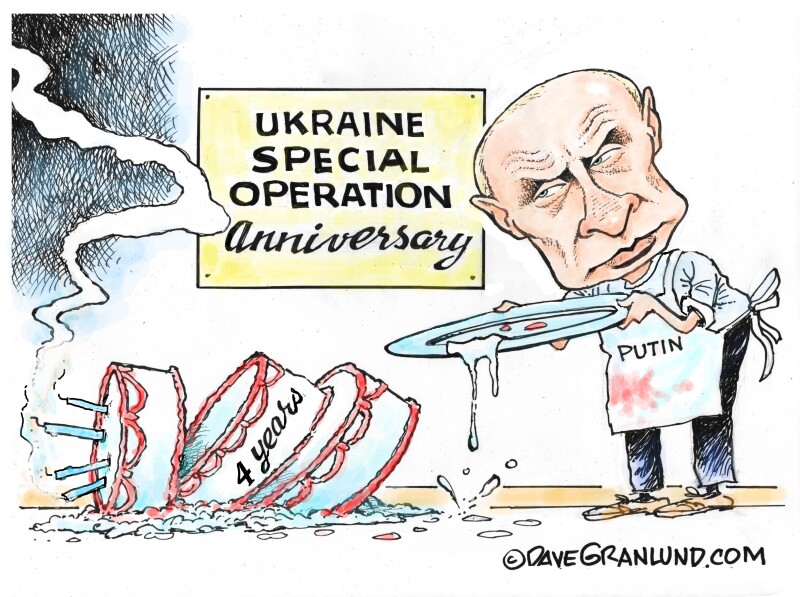
An editorial cartoon released on February 25, 2026, by cartoonist Dave Granlund brings attention to the ongoing situation in Ukraine, focusing on the actions of Russian President Vladimir Putin. The artwork aims to encapsulate the complexities and ramifications of the conflict, providing a visual commentary that resonates with both domestic and international audiences.
Granlund’s cartoon cleverly represents the multifaceted nature of the conflict, drawing on current events to illustrate the tension surrounding Putin’s military strategies. By using humor and satire, he encourages viewers to reflect on the serious implications of these actions and the broader international response.
Understanding the Context of the Conflict
The conflict in Ukraine has persisted since 2014, with Russia’s annexation of Crimea marking a significant turning point. Since then, the situation has escalated into a protracted conflict, resulting in thousands of casualties and a humanitarian crisis. As of early 2026, the fighting continues, with various international entities actively involved in seeking a resolution.
Granlund’s work serves not only as a form of artistic expression but also as a reminder of the human impact of such geopolitical tensions. The cartoon reflects the frustrations and concerns of many around the world, highlighting the ongoing struggle for peace and stability in the region.
In recent months, diplomatic efforts have intensified, with several countries advocating for negotiations to resolve the conflict. The portrayal of Putin in Granlund’s cartoon may also reflect the growing discontent among global leaders regarding his actions.
The Role of Political Satire
Political cartoons have long been a powerful medium for expressing dissent and critiquing leadership. By utilizing humor, artists like Granlund can convey complex ideas in a manner that is accessible and engaging. Through his work, Granlund invites viewers to grapple with the implications of Putin’s policies while fostering a dialogue about the future of Ukraine.
As the situation evolves, editorial cartoons will likely continue to play a crucial role in shaping public opinion and political discourse. Granlund’s latest piece stands as a testament to the enduring power of satire in times of conflict, reminding audiences of the need for vigilance and advocacy in the face of aggression.
The cartoon not only captures the current mood surrounding the conflict but also serves as a historical record of public sentiment. As events unfold, the significance of such artistic expressions will remain vital in understanding the complexities of international relations and the quest for peace.