Supporters of Proposition 50 in California are celebrating a significant victory after the measure passed with overwhelming support. This proposition will temporarily redraw congressional districts to favor Democrats, a move that has sparked discussions about its implications for future elections. Activists in Contra Costa County are particularly buoyed by the result, viewing it as validation of their ongoing efforts against the presidency of Donald Trump.
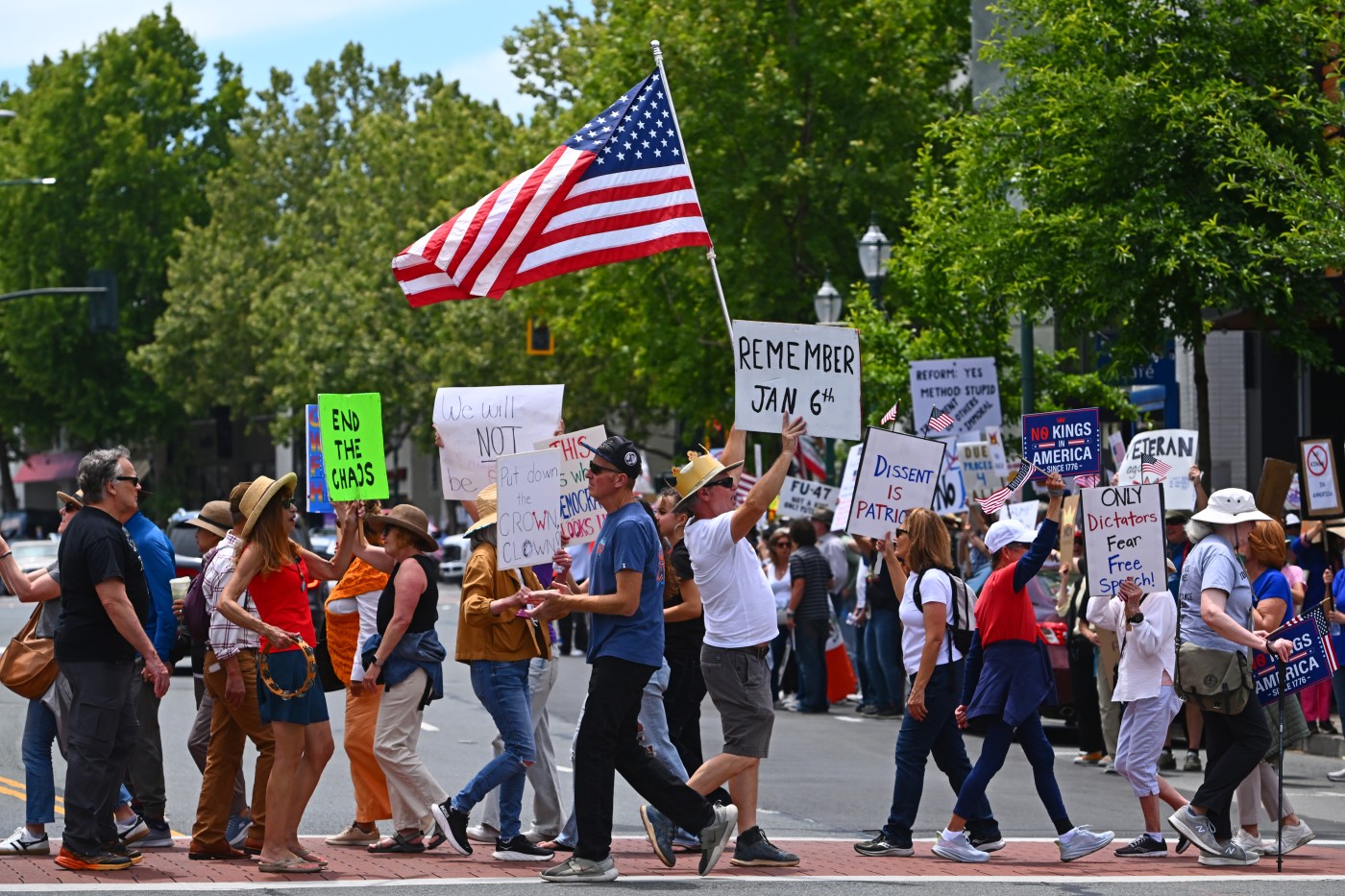
The recent success of Proposition 50, alongside Democratic victories in New York City, New Jersey, and Virginia, illustrates the potential for grassroots movements to effect change. Activists, who have organized weekly protests, believe that their collective efforts, including participation in the large-scale No Kings protests held on October 18, have made a noticeable impact. Estimates suggest that between 162,000 and 224,000 people joined rallies across the Bay Area that day.
Kathryn Durham-Hammer, a leading figure in the Indivisible ReSisters group, emphasized the growing comfort among individuals in expressing their political views. “They are realizing that we the people do have power when we connect with each other and act together,” she stated. This sentiment resonates among the activists, who are motivated by the visible engagement of their friends and family.
In contrast, supporters of Trump argue that the opposition movement lacks significant influence. Jan Soule, president of the Silicon Valley Association of Conservative Republicans, contends that the protests represent only a fraction of the U.S. population, casting doubt on their effectiveness. “All they’re really achieving is that people with common sense, including Democrats, are wondering, ‘Is this really the party I want to be a part of?’” Soule remarked.
Political analysts also suggest that the protests may not sway Trump supporters or the administration itself. Kyle Kodnik, managing editor of the University of Virginia Center for Politics-based newsletter, noted that while the protests signal dissent, they may not lead to immediate change. “This administration doesn’t seem particularly constrained by anything,” he explained.
Despite these criticisms, the protests have galvanized energy around Democratic initiatives, particularly Governor Gavin Newsom’s push for Proposition 50. Activists argue that the visibility of large protests has pressured Democratic leaders to unify in their response to Trump’s policies, especially during the federal government shutdown.
The growing momentum of the protests has fostered a sense of community among participants. Melissa Michelson, a political science professor, observed that while individual protests may not yield immediate results, sustained efforts are crucial for creating lasting change. “They need to be large and sustained to the degree where policymakers feel like they can no longer ignore them,” she said.
Looking ahead, leaders of the Indivisible movement are committed to maintaining their activism. They are preparing for potential pushback from the Trump administration while focusing on supporting local initiatives, such as assisting those facing challenges in federal Immigration Court and aiding food banks affected by delays in SNAP payments.
Michele Hart, a participant in the protests, expressed a deep sense of responsibility to continue voicing concerns about Trump’s actions. “I feel like I should stand up,” she stated, reflecting the sentiment of many who attended the October 18 demonstration.
Former GOP consultant Dan Schnur noted parallels between the anti-Trump protests and the Tea Party movement, highlighting the potential for grassroots movements to reshape political landscapes. He cautioned, however, that while protests are an important step, they alone will not solve the issues at hand.
Durham-Hammer confirmed ongoing plans for activism, stating, “The protests continue to this day.” With upcoming events planned, including a protest in Pleasant Hill, activists remain resolute in their commitment to challenge the current political climate and advocate for their beliefs.