A federal judge has ordered the release of five-year-old Liam Conejo Ramos and his father, Adrian Conejo Arias, from an immigrant detention center in Texas, allowing them to return to their home in Minnesota. The ruling, which took effect on March 10, 2024, followed growing controversy surrounding the child’s detention and the tactics employed by the U.S. Immigration and Customs Enforcement (ICE).
Liam and his father were detained on January 20, 2023, in a suburb of Minneapolis, following their arrival in the United States as they pursued a claim for asylum. They were subsequently transferred to the Dilley Detention Center in Texas, where Liam’s detention drew significant public outcry. Reports highlighted a photograph of the young boy in custody, which intensified calls for his release.
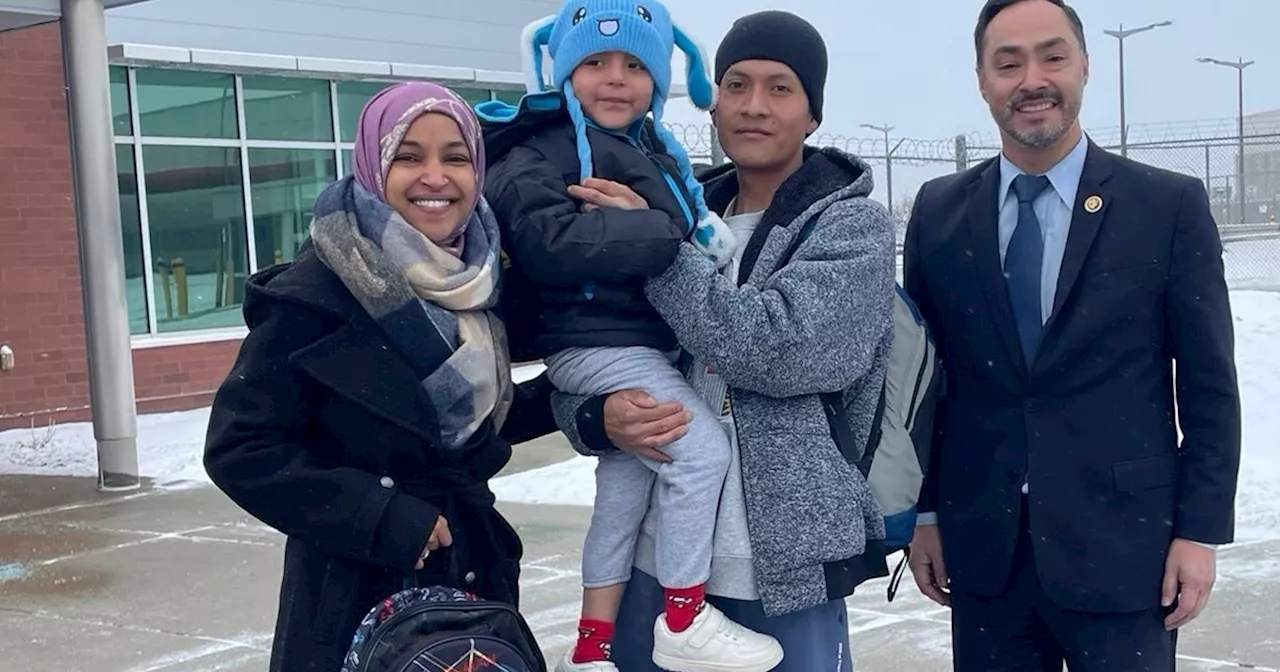
After their return to Minnesota on Sunday morning, Representative Ilhan Omar shared a photograph of the pair at the airport, celebrating their reunion. Representative Joaquin Castro accompanied them after personally escorting them from the detention center, expressing gratitude to those who advocated for their freedom.
The family’s attorney emphasized that they were in the country legally and had complied with court requirements, indicating that their detention was due to civil immigration violations rather than any criminal activity. The attorney alleged that ICE agents used Liam as “bait” during the family’s arrest, an assertion that has been contested by the Department of Homeland Security (DHS).
DHS officials disputed claims of misconduct, asserting that Liam had been abandoned by his father during the arrest attempt. They stated that ICE officers had attempted to return the child to his mother, but she refused to take custody. Ultimately, DHS reported that the father consented to remain with Liam in custody.
U.S. District Judge Fred Biery criticized the government’s handling of the case, stating, “The case has its genesis in the ill-conceived and incompetently implemented government pursuit of daily deportation quotas, apparently even if it requires traumatizing children.” This statement reflects a broader concern regarding the impact of immigration enforcement practices on families, particularly children.
The release of Liam and his father has been met with relief by advocates and lawmakers who decried the conditions and circumstances surrounding their detention. The public response underscores ongoing debates surrounding immigration policy in the United States.
As the family begins to transition back to their life in Minnesota, the case serves as a poignant reminder of the complexities and human costs associated with immigration enforcement.