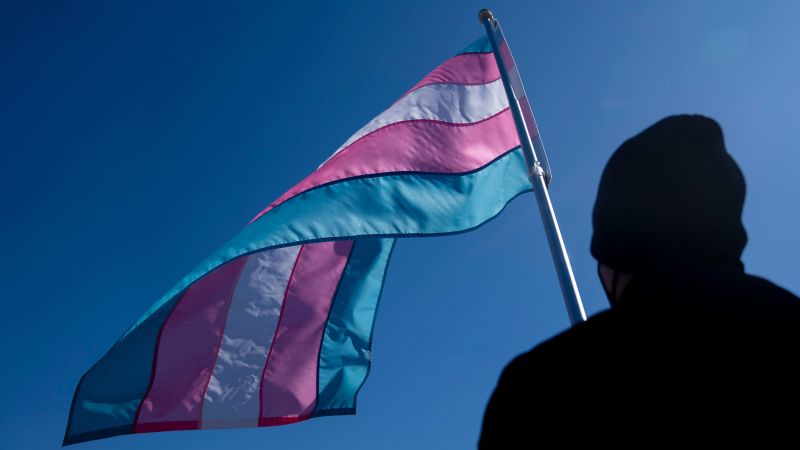
The Texas A&M University System’s board of regents has voted to prohibit professors from teaching courses that “advocate race or gender ideology, or topics related to sexual orientation or gender identity” without prior approval from the university president. This decision marks a significant escalation in an ongoing conflict concerning academic freedom and the teaching of gender-related issues in higher education.
The controversy erupted after a student in a summer course recorded herself accusing her professor of violating “our president’s laws” by discussing “gender ideology.” Texas Republican politicians quickly seized upon the incident, labeling it “TRANSGENDER INDOCTRINATION.” In response to this backlash, the Trump administration’s Assistant Attorney General for Civil Rights, Harmeet Dhillon, expressed concern and announced plans to investigate the matter. Within days, the professor had been dismissed, students organized protests advocating for academic freedom, and the president of the system’s flagship university resigned for unspecified reasons. This turmoil followed questions about whether a class on children’s literature could legally explore a book about a 12-year-old identifying as nonbinary.
The terms “gender ideology” and “transgender ideology” have gained prominence in recent political discourse, appearing in government documents, media reports, and debates online. The White House has declared its aim to eliminate these concepts, raising questions about their meanings and implications.
Historical Context of Gender Legislation
The term “gender ideology” did not originate in the United States. It has been part of a larger global anti-gender movement, which gained traction in Europe during the 2010s and has since spread to Latin America, Africa, and the US. The movement is often championed by conservative governments and religious organizations. For instance, in 2018, Brazilian President Jair Bolsonaro campaigned against “gender ideology,” framing it as a threat to traditional family values.
In the US, the rhetoric surrounding gender issues has intensified. On his first day in office in 2023, President Donald Trump issued an executive order titled “Defending Women from Gender Ideology Extremism and Restoring Biological Truth to the Federal Government.” This order mandated that “gender” be replaced with “sex” in federal policies, defining “sex” as an individual’s biological classification as either male or female. The order criticized “gender ideology” for promoting a view that diminishes the significance of biological sex while suggesting that individuals can be born in a body misaligned with their gender identity.
Zaya Perysian, a content creator who has publicly documented her transition, shared her concerns about the executive order. She received a passport identifying her as male, reflecting the sex assigned at birth, which contradicted her identity and left her feeling vulnerable. “We’re 1% of the population and 90% of the conversation,” Perysian commented, emphasizing the ongoing challenges faced by transgender individuals.
The Broader Implications of Ideological Labels
The terminology surrounding “gender ideology” and “transgender ideology” has become increasingly politicized. Advocacy groups argue that these labels serve to delegitimize the experiences and identities of transgender individuals. According to attorney Chase Strangio from the ACLU, such rhetoric paints transgender identities as ideological threats to societal order. This framing can lead to increased discrimination and violence against marginalized communities.
Statistics support the concern over rising anti-trans sentiment. Between May 2024 and May 2025, attacks against transgender individuals increased by 14%, according to data from GLAAD. Furthermore, research indicates that the enactment of anti-trans laws correlates with a rise in suicide attempts among transgender and nonbinary youth.
Medical organizations, including the American Medical Association and the American Academy of Pediatrics, advocate for gender-affirming care, which has been shown to significantly improve the mental health outcomes for transgender individuals. Despite this, over half of US states have enacted bans on certain medical treatments for transgender minors, limiting access to essential healthcare.
The repercussions of politicizing gender identity extend beyond personal impacts. For instance, the Centers for Disease Control and Prevention (CDC) recently removed a video on measles care because it mentioned “gender identity,” demonstrating how ideological constraints can hinder public health initiatives.
The ongoing debates surrounding gender and identity continue to influence policy and public perception. As the language used to describe these issues evolves, the lives of transgender individuals remain at the forefront of a contentious national conversation. The stakes are high, with the potential for significant consequences on health, safety, and civil rights for vulnerable populations.