In Spokane, Washington, community initiatives are reshaping the way residents view household items. The **Spokane Repair Café** and **Mend-It Café** are leading efforts to encourage repairs rather than replacements, addressing the growing issue of waste in a society increasingly reliant on disposable goods. These organizations provide free repair services while teaching valuable skills to participants, aiming to extend the life of everyday items.
At a recent event held in a library meeting space, volunteers and community members gathered to fix various household items. Among them was **Chris Oxford**, who was working on an old lamp that had been deemed a fire hazard. “It was about to short out and – hopefully – pop the breakers,” Oxford explained after identifying the problem. While he didn’t have the necessary part on hand, he guided the owner to a local shop for repairs and offered to complete the work free of charge once the parts were acquired.
The rise of a “throwaway culture” in the United States has led to an alarming increase in waste. Economic factors, such as stagnant wages and the low cost of imported goods, have made disposal seem more practical than repair. Yet, post-pandemic trends indicate a shift. **Elyse Hochstadt**, executive director of **Spokane Zero Waste**, noted a growing interest in sustainability, particularly among younger generations.
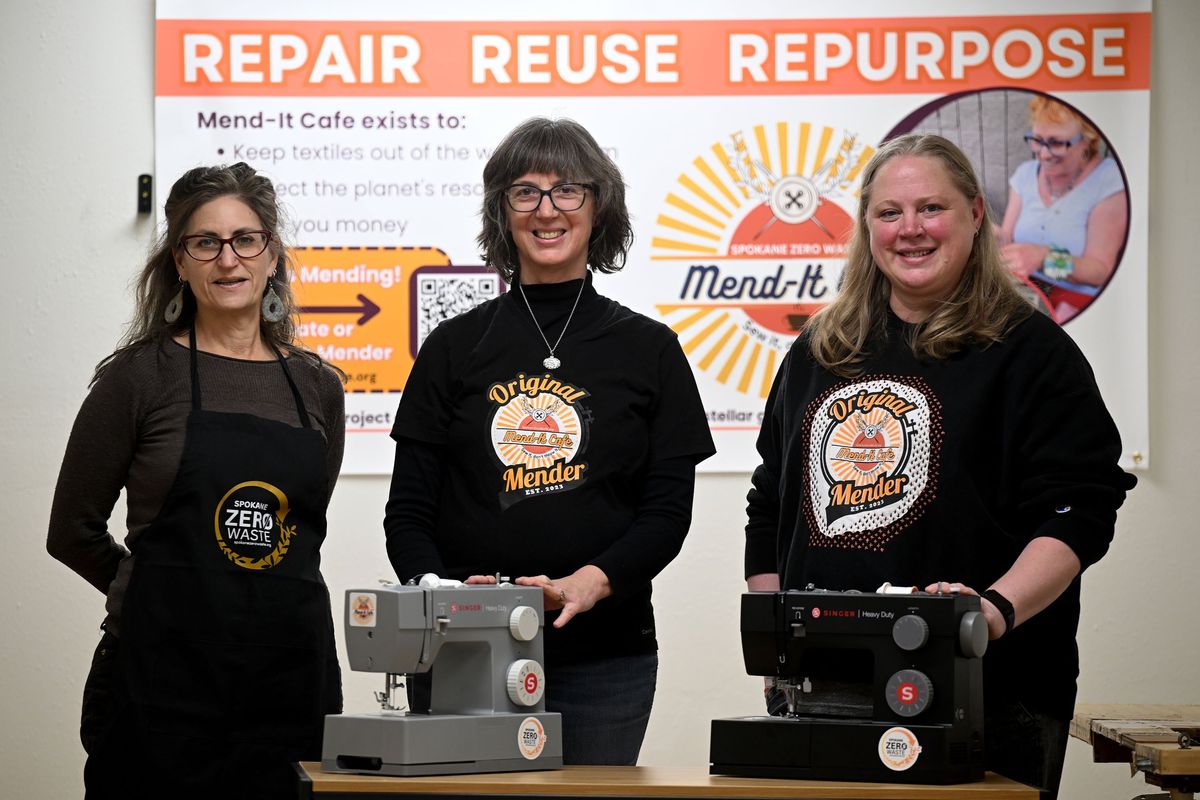
The **Mend-It Café**, launched in **May 2023**, focuses on textiles and clothing repair. Hochstadt, a fiber artist, initiated this project to address the textile waste crisis, which often goes unnoticed. “Textiles are something that we engage in every day,” she stated, emphasizing the creative potential of mending. The café has successfully diverted over **2,300 pounds** of textiles from landfills by repairing more than **930** items since its inception, with participation from over **530** community members.
The Mend-It Café hosts events across various locations, including farmers’ markets and libraries. They recently held a successful event at **Gonzaga University**, where students eagerly brought in items needing repair. The organization also offers classes for those new to sewing, helping to build skills in the community.
In contrast, the **Repair Café**, established around the same time, offers a broader range of repairs. Founded by neighbors in Spokane’s Perry District, they provide a space for fixing items on the second Thursday of each month. Volunteers, like **Levi Westra**, often take on unique challenges, from fixing a century-old barber’s pole to addressing sentimental toys.
“Many times this process is like being Sherlock Holmes,” Westra remarked, highlighting the investigative nature of repairs. The Repair Café has seen nearly **240** items brought in, with an impressive **75%** success rate in repairs. When on-site fixes are not possible, volunteers direct patrons to local repair shops or suppliers for necessary parts.
Both organizations not only aim to repair items but also to foster a culture of sustainability and self-sufficiency. They encourage the public to appreciate the value of mending and restoring possessions, rather than discarding them. Oxford recalled a particularly poignant moment when a young boy successfully repaired his toy robot, a task that brought him a deep sense of accomplishment.
As both the Mend-It Café and Repair Café continue to grow, they rely heavily on community support and volunteer efforts. The Mend-It Café seeks individuals with expertise in textiles, while the Repair Café welcomes volunteers of all skill levels, including those who can assist with outreach and social media.
Those interested in getting involved can reach the Mend-It Café at menditCafé@spokanezerowaste.org and the Repair Café at [email protected]. Upcoming events include the Mend-It Café at the **Scale House Market** at **4 p.m. on January 7, 2026**, and their next beginner sewing class at **1 p.m. on January 10, 2026**.
In a time when consumer culture often prioritizes convenience over sustainability, Spokane’s Repair Café and Mend-It Café stand as community-driven solutions, fostering repair skills and promoting environmentally conscious practices.