A team of researchers, including renowned expert Gary Chastagner, has embarked on a significant initiative to enhance the quality and resilience of Christmas trees through a multi-million dollar project. This collaboration, involving nine institutions across several countries, is backed by a grant of nearly $7.5 million from the USDA National Institute of Food and Agriculture.
Chastagner, a professor emeritus at Washington State University (WSU), has dedicated nearly five decades to research in tree and ornamental flower bulb pathologies. His contributions have led to advancements that have reshaped the Christmas tree industry. In recognition of his extensive work, he received a lifetime achievement award from the National Christmas Tree Association in 2018. Despite retiring, he remains active in research and is excited about the potential impact of this new project.
The initiative, titled “A GIFT SEED,” which stands for Accelerated Genetic Improvement of Fir Through Sequencing, Economics, Extension, and Diagnostics, aims to explore various aspects of fir trees. This includes enhancing their resistance to pests and diseases, adapting to climate change, and identifying traits that appeal to consumers.
According to data from the USDA, more than 14.5 million Christmas trees were harvested from approximately 16,000 farms in the United States in 2022, generating over $553 million in revenue. The majority of these trees are firs, with Oregon and North Carolina leading production. Washington ranks fourth, contributing around one million commercial Christmas trees.
Justin Whitehill, an associate professor and director of the Christmas Tree Genetics Program at North Carolina State University, highlighted the popularity of fir trees. He noted that approximately 75% of all Christmas trees sold are firs, and when including Douglas firs, the percentage rises to 93%. Whitehill emphasized that while firs are favored for their aesthetic and aromatic qualities, they are not universally adaptable to all regions, which the project aims to address.
Chastagner’s career began at WSU in 1978, focusing initially on bulb crops. He quickly became involved in addressing issues faced by Douglas fir growers in Washington, particularly a disease known as Swiss needle cast. His research has led to significant improvements in tree quality, including greater durability and reduced needle loss.
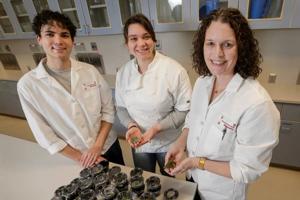
The current project also delves into consumer preferences. Earlier this year, volunteers in Pullman, Washington, participated in a study directed by Carolyn Ross, a food sciences professor at WSU, examining how aroma influences the choice of Christmas trees. The study is part of a larger investigation that included a similar panel at the University of Florida.
Whitehill explained, “We wanted to explore the chemistry and biology of different species and understand the genetics behind their aromas.” Volunteers evaluated bough segments from five fir varieties: Fraser, noble, Nordmann’s, Trojan, and concolor. Initial findings suggest that Fraser firs are the most popular based on scent, while noble firs ranked lower.
Ross emphasized that preferences in tree scent are diverse. “There’s not one perfect something for everybody. Some people prefer a piney scent, while others like citrus aromas,” she stated. Understanding these preferences is crucial for offering a variety of options to consumers.
The project holds promise not only for improving the quality of Christmas trees but also for enhancing the industry’s sustainability. Whitehill and Chastagner expressed enthusiasm about integrating findings related to aroma with research on genetics and natural defenses against pests and diseases.
“This multiyear project is designed to benefit both consumers and growers, creating a win-win situation,” Chastagner said. The research aims to address the various demands placed on Christmas trees, from needle retention to aesthetic appeal, ensuring that they remain a beloved symbol of the holiday season.
As the project progresses, the team anticipates exciting developments that will contribute to the future of Christmas tree cultivation and enjoyment.