A paraplegic engineer from Germany, Michaela Benthaus, made history on March 9, 2024, as the first wheelchair user to launch into space. She embarked on a rocket ride with five other passengers, departing from West Texas aboard a spacecraft operated by Blue Origin, the company founded by billionaire Jeff Bezos. This milestone marks a significant moment not only for Benthaus but also for the accessibility of space travel.
Severely injured in a mountain biking accident seven years ago, Benthaus achieved her dream after extensive preparations. She was joined on the flight by Hans Koenigsmann, a retired executive from SpaceX, who helped sponsor her journey. The ticket prices for the flight have not been disclosed.
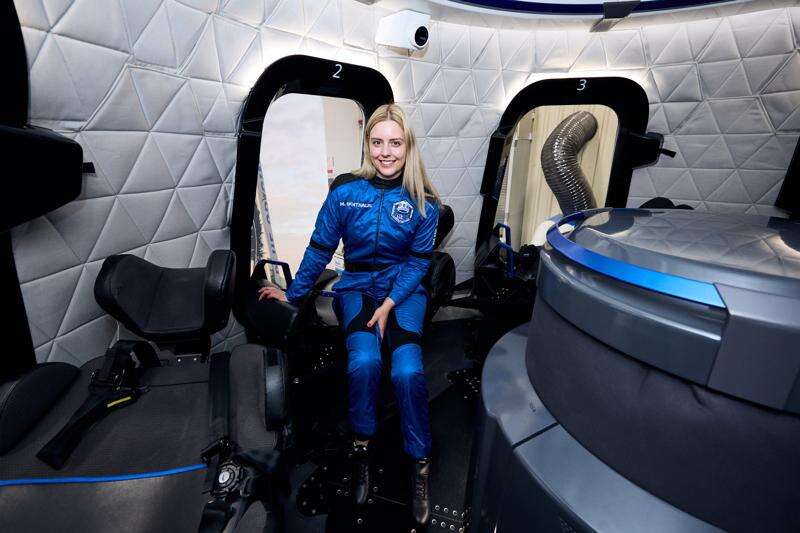
The 10-minute mission involved only minor adjustments to accommodate Benthaus, reflecting the company’s commitment to inclusivity. According to Jake Mills, an engineer at Blue Origin, the autonomous New Shepard capsule was designed with accessibility in mind, allowing it to cater to a broader range of passengers. Previous space tourists included individuals with limited mobility, as well as those with impaired sight and hearing.
To ensure her comfort during the flight, Blue Origin provided a patient transfer board, allowing Benthaus to move from the capsule’s hatch to her seat. A carpet was laid on the desert floor upon landing, providing immediate access to her wheelchair, which she left behind at launch. Benthaus had practiced the procedure in advance, with Koenigsmann participating in the design and testing phases. An elevator was also installed at the launch pad, enabling her to ascend seven stories to the capsule.
At the age of 33, Benthaus is part of the European Space Agency’s graduate trainee program in the Netherlands. She previously experienced weightlessness during a parabolic flight out of Houston in 2022 and participated in a simulated space mission in Poland. Reflecting on her journey, she stated, “I never really thought that going on a spaceflight would be a real option for me… There is like no history of people with disabilities flying to space.”
When Koenigsmann approached her about the opportunity to fly on Blue Origin, Benthaus initially thought there might be some misunderstanding. However, upon realizing the offer was genuine, she enthusiastically accepted. This mission is privately funded and does not involve the European Space Agency, although the agency recently cleared John McFall, a reserve astronaut and amputee, for a future flight to the International Space Station.
Koenigsmann was designated as Benthaus’s emergency assistant prior to the flight, tasked with helping her exit the capsule and navigate the steps upon landing. Benthaus emphasized her desire to accomplish as much as possible independently. Her long-term goal extends beyond space travel; she aims to advocate for improved accessibility on Earth.
While receiving positive feedback from her peers within the space community, she noted that societal perceptions can still be less inclusive. “I really hope it’s opening up for people like me. I hope I’m only the start,” she expressed.
Accompanying Benthaus and Koenigsmann on the flight were business executives and investors, further adding to the diversity of participants. This mission raised Blue Origin’s total number of space travelers to 86.
Founded in 2000, Blue Origin launched its first passenger flight in 2021. Since then, the company has expanded its capabilities, including delivering spacecraft to orbit from Cape Canaveral, Florida, using its larger and more powerful New Glenn rocket. Blue Origin is also actively working on lunar landers.
This historic flight not only signifies a breakthrough for individuals with disabilities but also paves the way for a more inclusive future in space exploration.