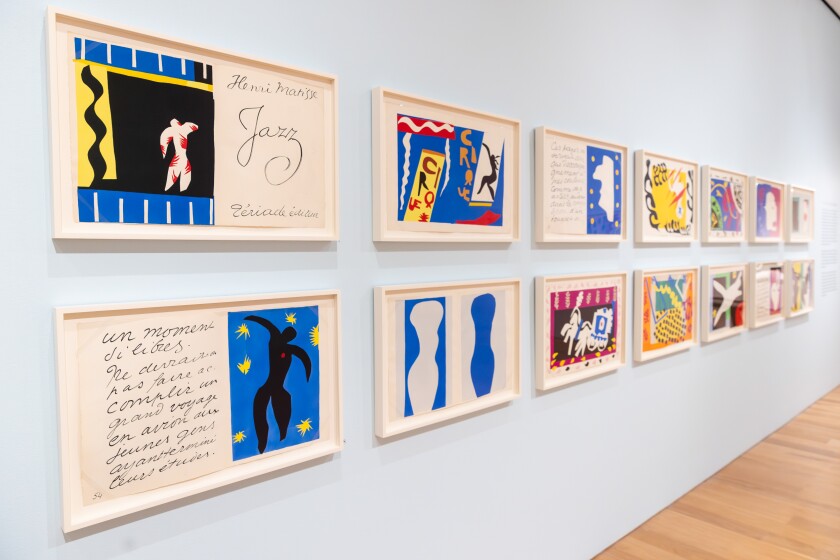
The Art Institute of Chicago has opened a new exhibition titled “Matisse’s Jazz: Rhythms in Color,” celebrating the remarkable late-career creativity of Henri Matisse. The exhibit, which runs through June 1, 2024, highlights Matisse’s innovative “cut-outs” that emerged during the 1940s, a period marked by a resurgence in his artistic output after a decline in his earlier years.
Curated by Emily Ziemba, a research curator in the museum’s department of prints and drawings, the exhibition is not a comprehensive retrospective. Instead, it provides a focused examination of Matisse’s trajectory, showcasing all 20 color plates from his 1947 artist book “Jazz.” This presentation marks the first time the Art Institute has displayed all these pieces together, offering a unique opportunity to appreciate Matisse’s vibrant use of color and form.
The cut-outs featured in “Jazz” are renowned for their boldness and striking visuals. Created from gouached sheets of paper, Matisse collaged these shapes into dynamic compositions that adorned the walls of his studio. This inventive technique became his primary mode of expression following a significant abdominal surgery in 1941. Matisse continued to explore this style until his passing in 1954.
The original edition of “Jazz” comprised 250 copies, with an additional 100 copies of just the color plates. The Art Institute acquired its copy a year after release for just $375, a noteworthy investment considering the book’s current value. The exhibition not only features the striking plates from “Jazz,” but it also includes “Oceania-The Sea” (1948), a major cut-out that measures an impressive 51⁄2-by-121⁄2-foot and was screenprinted by textile designer Zika Ascher.
In addition to these significant works, the exhibition presents a range of Matisse’s earlier art, including his iconic odalisques, like the bronze “Seated Nude” (1922-29, cast 1951) and the lithograph “Large Odalisque in Striped Pantaloons” (1925). These pieces reflect recurring themes in Matisse’s work, emphasizing his exploration of the human form and color.
One standout piece, “Daisies” (1939), offers insight into Matisse’s evolving style. The oil on canvas appears to feature cut-out sections, foreshadowing his later cut-out technique. This connection enriches the viewer’s understanding of Matisse’s artistic journey, illustrating how his work transitioned over decades.
“Matisse’s Jazz” serves as a fitting complement to a previous exhibition in the prints and drawings galleries, which focused on Pablo Picasso, Matisse’s modernist counterpart. Ziemba noted, “We haven’t done a Matisse project in our [print and drawings] galleries ever, so I just think it was naturally time.”
Through this exhibition, the Art Institute of Chicago not only highlights Matisse’s extraordinary late creativity but also underscores the enduring impact of his work on contemporary art. The vibrant colors and innovative forms continue to resonate, inviting viewers to engage with Matisse’s legacy in a fresh and compelling way.