On January 3, 2024, Earth reached its perihelion, the point in its orbit where it is closest to the sun, at a distance of approximately 91.5 million miles. This astronomical event occurs only once each year, with Earth spending the majority of its orbit at varying distances from the sun. The average distance, known as an astronomical unit, is around 93 million miles, but this number fluctuates throughout the year.
The concept of perihelion is derived from the Greek word “Helios,” referring to the sun-god, and highlights the intricate relationship between our planet and the sun. In contrast, Earth will reach its aphelion, the farthest point from the sun, in July 2024, when it will be about 94.5 million miles away. This dynamic distance affects not only the speed at which Earth travels in its orbit but also influences seasonal weather patterns.
During the winter months, when Earth is closer to the sun, it travels faster in its orbit. This increased speed results in shorter durations for the winter season. Observers can confirm this by counting the days from the spring equinox to the fall equinox, and then comparing that to the days from fall back to spring. The winter half of the year is notably quicker, illustrating our planet’s unique solar journey.
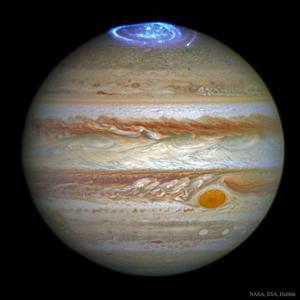
Despite Earth being nearest to the sun during January, this proximity does not translate to warmer winter temperatures. However, it does slightly moderate the cold, making northern hemisphere winters somewhat milder. As January unfolds, the moon has disappeared from the evening sky, allowing for a clearer view of the planet Jupiter, which shines brightly as it approaches opposition on January 10.
At opposition, Earth sits directly between the sun and Jupiter, enhancing the planet’s visibility. This alignment allows stargazers to witness Jupiter’s brilliance, which is partly due to its massive size—over eleven times the diameter of Earth—and its significant mass, which is over 300 times that of Earth. Jupiter’s gravitational influence also plays a role in Earth’s orbital dynamics, affecting our planet’s distance from the sun and contributing to long-term climate changes, such as ice ages.
Meanwhile, Venus, previously known as the “morning star,” is currently positioned on the opposite side of the sun from Earth, rendering it invisible for several weeks. As the sun’s glare diminishes, Venus will soon reappear in the evening sky, reestablishing its role as the “evening star.”
Since the winter solstice in December 2023, daylight hours have gradually increased, although the sun has not risen earlier until this week. The longer days are primarily due to the sun setting later in the evening. With the arrival of early sunrises, residents are encouraged to enjoy the shifting seasons as we move further into the year.
As we embrace the new year, these celestial events remind us of the ongoing and intricate dance of our solar system, impacting both our environment and our experience of time on Earth.