The ancient travertine quarries of Tivoli, Italy, continue to shape the skyline of contemporary architecture, supplying the stone for new temples, churches, and government buildings around the globe. This enduring resource, used to construct iconic structures such as the Colosseum and St. Peter’s Basilica, is now being extracted to fulfill modern architectural demands.
Roman travertine, known for its porous structure and unique formation, is quarried from sulfuric springs and basins in the Tivoli region. Composed primarily of calcium carbonate, this sedimentary rock has been shaped by natural processes over hundreds of thousands of years, resulting in distinctive layers that reflect the area’s geological history. Its appeal lies in its strength, versatility, and aesthetic variety, making it a favored choice for architects worldwide.
From Ancient Rome to Contemporary Creations
The Mariotti Carlo SpA stonecutting firm, a family business operating for four generations, has been at the forefront of travertine production. They have undertaken prestigious projects, including the Getty Center in Los Angeles and the Bank of China headquarters in Beijing. Currently, they are crafting travertine for a temple being rebuilt for The Church of Jesus Christ of Latter-day Saints in New York City.
Fabrizio Mariotti, the firm’s current head, describes travertine as a “classic stone known all over the world.” He emphasizes its unique ability to reflect light, likening it to “carrying the light of Rome everywhere.” The travertine being prepared for the Latter-day Saint temple includes intricately cut pieces designed to fit together seamlessly on-site.
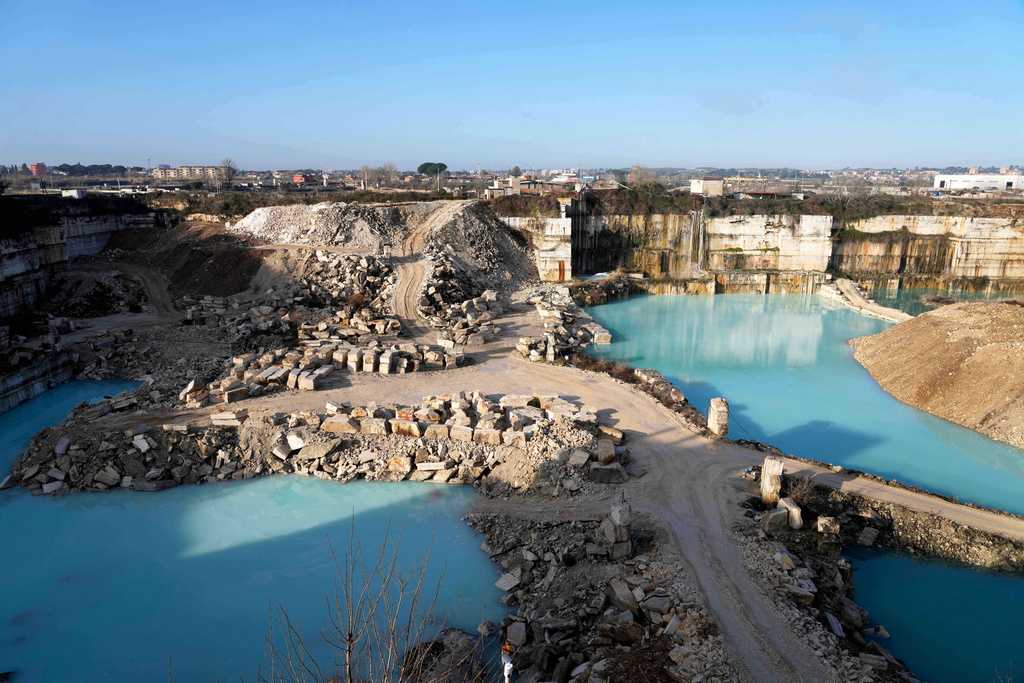
At the Tivoli quarries, the atmosphere is alive with activity. Workers use powerful jackhammers to break down the stone, while flat-bed trucks transport massive slabs weighing up to 33 tons. The Degemar quarries, notable for being drilled down to 30 meters below sea level, feature vibrant blue sulfur springs that pool the travertine residue. Such sites have historical significance; Gian Lorenzo Bernini famously sourced travertine here for the stunning colonnade surrounding St. Peter’s Square.
Modern Demand for a Timeless Stone
Vincenzo De Gennaro, the current head of the Degemar quarries, highlights the enduring nature of travertine. He asserts that its longevity is evidenced by the impressive structures that have stood for millennia in Rome. “There is the concrete experience of a civilization dating back thousands of years that stands in the light of day,” he notes, referring to the lasting impact of Roman architecture.
The versatility of travertine has led to its use in various international projects, from a new airport in Riyadh, Saudi Arabia, to the headquarters of China’s ruling party in Shenzhen. According to De Gennaro, travertine is a “living stone,” formed in a mineral-rich environment, which contributes to its unique characteristics.
Marco Ferrero, a professor of civil engineering at La Sapienza University in Rome, further explains the stone’s cultural significance. He describes travertine as embodying the spirit of Rome—solid and noble yet unpretentious compared to marble. “Marble speaks to us in beautiful Italian, while travertine speaks to us in Roman dialect,” he states, reinforcing the stone’s connection to the city’s rich history.
As modern architects continue to draw inspiration from ancient Rome, the travertine quarries of Tivoli remain an essential resource. They not only provide beautiful and durable materials for present-day construction but also carry with them a legacy that connects contemporary projects to the grandeur of the past.