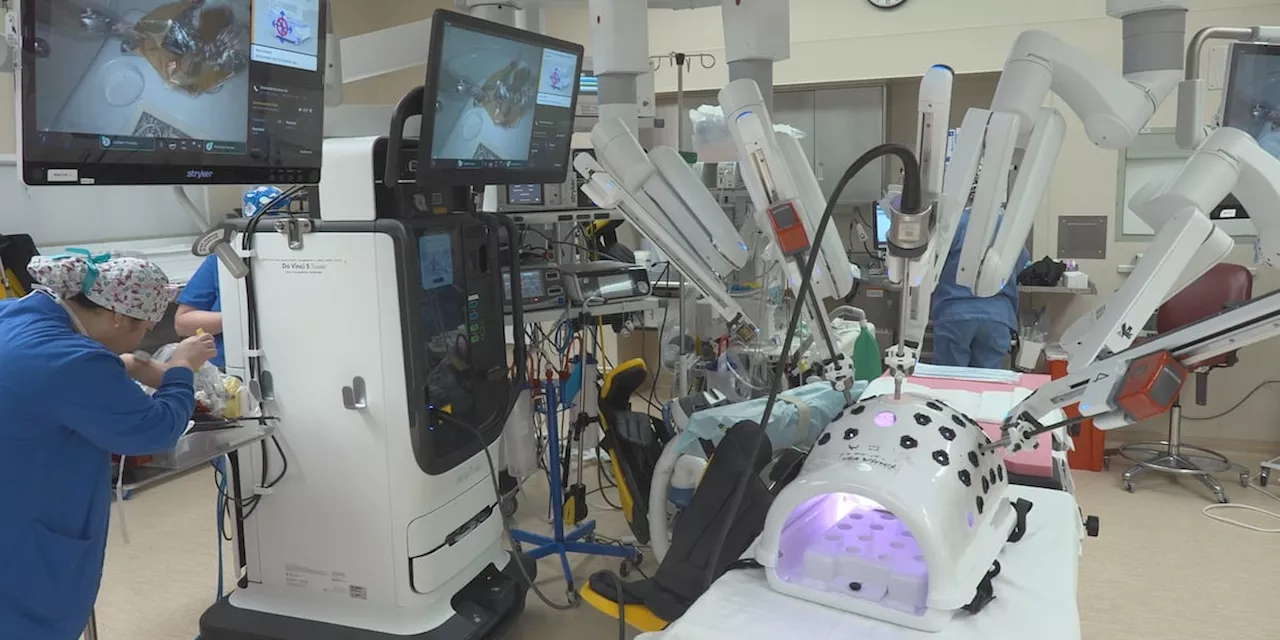
A groundbreaking robotic device at Providence Alaska Medical Center (PAMC) is significantly enhancing the treatment options for women facing gynecologic cancers. The Da Vinci 5 has been in use at PAMC for nearly a year, marking a pivotal shift in how surgical procedures are performed, enabling more women to receive necessary care.
According to the Foundation for Women’s Cancer, there were approximately 34,020 deaths from gynecologic cancer in the United States in 2023. This alarming statistic underscores the urgent need for effective treatment options. Dr. Melissa Hardesty, a gynecologic oncologist at PAMC, describes the Da Vinci 5 as a “game changer” in addressing this critical health issue.
The device facilitates minimally invasive surgeries, which have become essential for patients who previously may not have qualified for surgical intervention due to health concerns. Dr. Hardesty explained that many patients were deemed too unhealthy for surgery due to conditions like heart problems or diabetes. With the Da Vinci 5, even those on blood thinners can undergo surgery with minimal time off the medication, expanding eligibility for treatment significantly.
Dr. Hardesty emphasizes the importance of awareness regarding gynecologic cancers. Women are encouraged to monitor their bodies for abnormal symptoms, such as irregular bleeding patterns or changes in their menstrual cycles, especially as they approach menopause. Early detection and intervention are crucial, and robotic-assisted surgeries like those performed with the Da Vinci 5 play a vital role in improving outcomes.
The Da Vinci 5 utilizes advanced technology, including magnified cameras and a three-dimensional view of the surgical area, allowing surgeons to perform complex procedures with precision. Dr. Hardesty noted, “We went from a situation where patients were having big open surgeries and staying in the hospital for prolonged periods of time to outpatient surgery.” This evolution enhances recovery times and overall patient experience.
During surgery, small incisions are made in the patient’s abdomen, through which 8-millimeter metal tubes are inserted. The surgeon controls the robotic instruments from a console, using finger controls to navigate and manipulate the tools for tumor removal, organ excision, and stitching. An assistant at the bedside supports the procedure by managing equipment and assisting with camera adjustments.
Dr. Hardesty highlighted the profound impact of the Da Vinci 5 on surgical capabilities, stating, “It’s really expanded what we’ve been able to offer people in their own communities.” The device represents not just technological advancement but also a commitment to improving healthcare access for women battling gynecologic cancers.
The introduction of the Da Vinci 5 at PAMC illustrates a significant step forward in cancer treatment, potentially saving lives and improving the quality of care for many women in Alaska and beyond. As healthcare technology continues to evolve, the focus remains on providing effective, accessible treatments that can change the trajectory of cancer care.