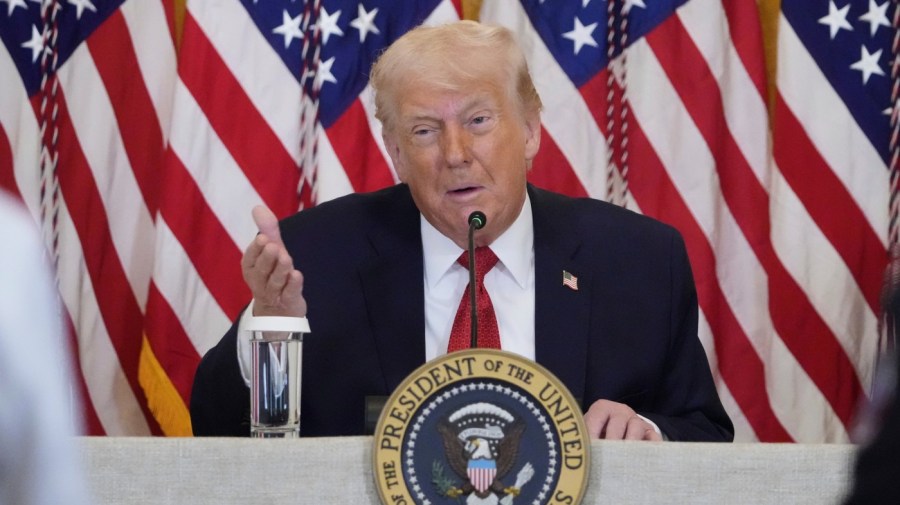
President Donald Trump suggested on March 15, 2024, that he may impose tariffs on nations that oppose the United States’ efforts to acquire the Danish territory of Greenland. This remark came during a discussion about potential tariffs on European allies, emphasizing his administration’s ongoing negotiations surrounding international economic relations.
Trump’s comments were made in the context of previous threats to impose 25 percent tariffs on France and Germany if they did not increase their financial contributions to U.S. pharmaceutical costs. “I went through country after country,” he stated, indicating a firm stance on the matter. The proposal highlights the administration’s approach to international negotiations, particularly concerning trade and territorial disputes.
International Response and Implications
The suggestion of tariffs against countries opposing the acquisition of Greenland has sparked a mixed response among European leaders. While some see it as a continuation of Trump’s aggressive trade policies, others view it as an unlikely strategy given the complexities of international relations. The European Union has previously expressed concerns regarding unilateral trade actions that could disrupt established economic agreements.
The idea of acquiring Greenland has been a topic of debate since Trump first proposed it in 2019. Denmark, which owns Greenland, firmly rejected the idea at that time, stating that the territory is not for sale. Trump’s recent remarks suggest that he may be willing to escalate tensions further in pursuit of this goal.
Trump’s administration has consistently emphasized the importance of reducing trade deficits and increasing the U.S. bargaining power on the global stage. As tensions rise, the implications of proposed tariffs could have significant repercussions for U.S.-European relations and the broader geopolitical landscape.
Potential Economic Impact
Imposing tariffs could lead to increased costs for consumers in the U.S. and might provoke retaliatory measures from affected countries. Analysts warn that such actions could further complicate existing trade negotiations and disrupt supply chains. The economic ramifications of these tariffs could be significant, affecting not only the pharmaceutical sector but also various industries reliant on international trade.
The administration’s approach raises questions about the long-term strategy regarding international partnerships. While advocating for American interests, the potential fallout from punitive tariffs could strain relationships with key allies and hinder collaborative efforts on other critical issues.
As discussions about Greenland and international tariffs continue, the global community watches closely to gauge the potential outcomes of Trump’s proposals. The evolving situation underscores the intricate balance between trade interests and diplomatic relations in an increasingly interconnected world.