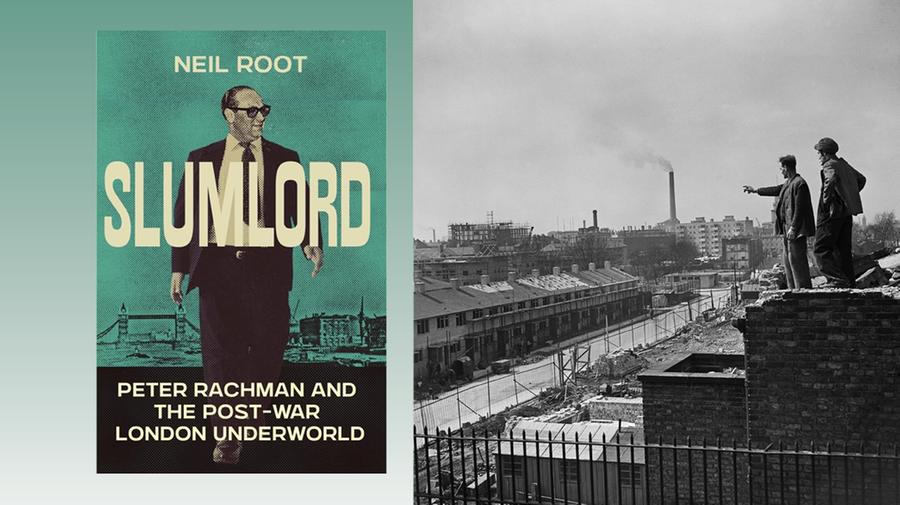
Peter Rachman, a name synonymous with exploitation and corruption, became notorious in the 1950s and 1960s for his ruthless practices in London’s rental market. His actions led to the term Rachmanism, reflecting the grim realities faced by tenants during a time of severe housing shortages. Rachman’s story is one of opportunism that capitalized on the vulnerabilities of the impoverished, particularly immigrant communities.
From Immigrant to Slumlord
Born Perec Rachman in 1919 in Lvov, Poland, Rachman’s early life was marked by tragedy. He lost his parents during the Holocaust, narrowly escaping death through forced labor in the Soviet Union. After serving in the Polish Army during World War II, he arrived in England in 1946. Following a string of unfulfilling jobs, he entered the property market, ultimately establishing himself as a landlord in the struggling neighborhoods of Notting Hill and Paddington.
In the post-war era, many Caribbean immigrants settled in these areas, facing discrimination in housing. Rachman seized the opportunity, purchasing dilapidated properties and renting them at exorbitant rates. He became notorious for his exploitative tactics, which included intimidation and harassment of tenants who dared to complain about the conditions of their homes.
Exploitation and Infamy
Rachman’s modus operandi was to acquire cheap, rundown properties and let them to vulnerable tenants, primarily immigrants. If they complained about the poor living conditions, he would send enforcers to evict them. He also obstructed tenants’ efforts to seek justice through rent tribunals by intimidating them into withdrawing their applications.
To evade scrutiny, Rachman hid his property ownership through front companies. Many of his tenants were sex workers, and it was alleged he took a portion of their earnings, although police were unable to substantiate these claims. Rachman expanded his empire into the nightlife scene in Soho, attracting the attention of the notorious Kray brothers. To maintain peace, he established a nightclub that funneled proceeds to the Krays, further entrenching himself in the underworld.
Despite his criminal dealings, Rachman attracted a range of high-profile contacts, including Christine Keeler and Mandy Rice-Davies, figures central to the Profumo affair. His connections reached into the political sphere, where he interacted with individuals like Michael Heseltine, who was also involved in property dealings in West London.
Rachman’s empire began to crumble under increasing scrutiny from local media and politicians. Harold Wilson, then leader of the Labour Party, condemned Rachman in Parliament, bringing national attention to his unscrupulous practices. Unfortunately for Rachman, he passed away from a heart condition at the young age of 42 before he could face the full consequences of his actions.
After his death, it took seven years to settle his estate, revealing an array of unpaid tax liabilities. His legacy, however, is one of infamy. The term “Rachmanism” entered the political lexicon, symbolizing the exploitation of vulnerable tenants and the unchecked power of slumlords.
Rachman’s life serves as a stark reminder of the darker aspects of the housing market and the lengths to which some individuals will go to profit at the expense of others. His story remains relevant, resonating in ongoing discussions about housing rights and tenant protections in today’s society.