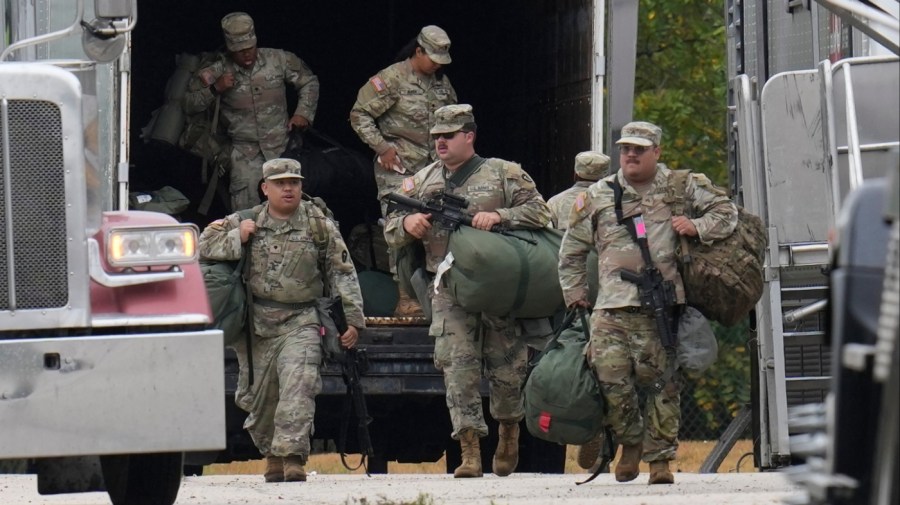
The Supreme Court has ruled against President Donald Trump‘s request to deploy the National Guard to the Chicago area, marking a significant setback for the president’s plans to use military forces in urban settings. The decision, announced on July 5, 2023, follows more than two months of deliberation and reflects the court’s stance on the balance of power between federal and state authorities.
The ruling comes as part of Trump’s broader initiative to increase military presence in Democratic-led cities, which he argues is necessary to combat rising crime rates. The court’s refusal to allow the deployment highlights ongoing tensions between the federal government and local jurisdictions regarding law enforcement and public safety measures.
In a statement following the ruling, the Supreme Court emphasized the importance of maintaining state sovereignty in matters of local law enforcement. This decision indicates a cautious approach towards the use of federal military resources in domestic situations, reinforcing the principle that states should have primary control over their law enforcement agencies.
The implications of this ruling extend beyond Chicago. Trump has sought to position himself as a strong leader on crime, particularly in urban areas where he believes public safety is at risk. The court’s decision serves as a reminder of the legal limitations that can hinder executive authority, especially when it comes to deploying military resources within the United States.
The Chicago area has faced significant challenges in addressing crime, particularly gun violence, which has been a focal point for both local officials and the Trump administration. While the president’s administration has argued that a military presence could deter criminal activities, critics contend that such measures could escalate tensions between communities and law enforcement.
This ruling may also influence future discussions on the deployment of military forces in domestic scenarios, especially as cities across the country grapple with similar issues. The Supreme Court’s decision underscores the necessity of legal protocols and the need for collaboration between state and federal entities in addressing public safety concerns.
As the situation unfolds, both Trump and local leaders in Chicago will likely reassess their strategies. The ruling could impact Trump’s campaign rhetoric as he seeks to appeal to voters concerned about crime while navigating the legal constraints imposed by the court’s decision.
The Supreme Court’s ruling serves as a pivotal moment in the ongoing discourse about law enforcement, public safety, and the role of the federal government in local matters.