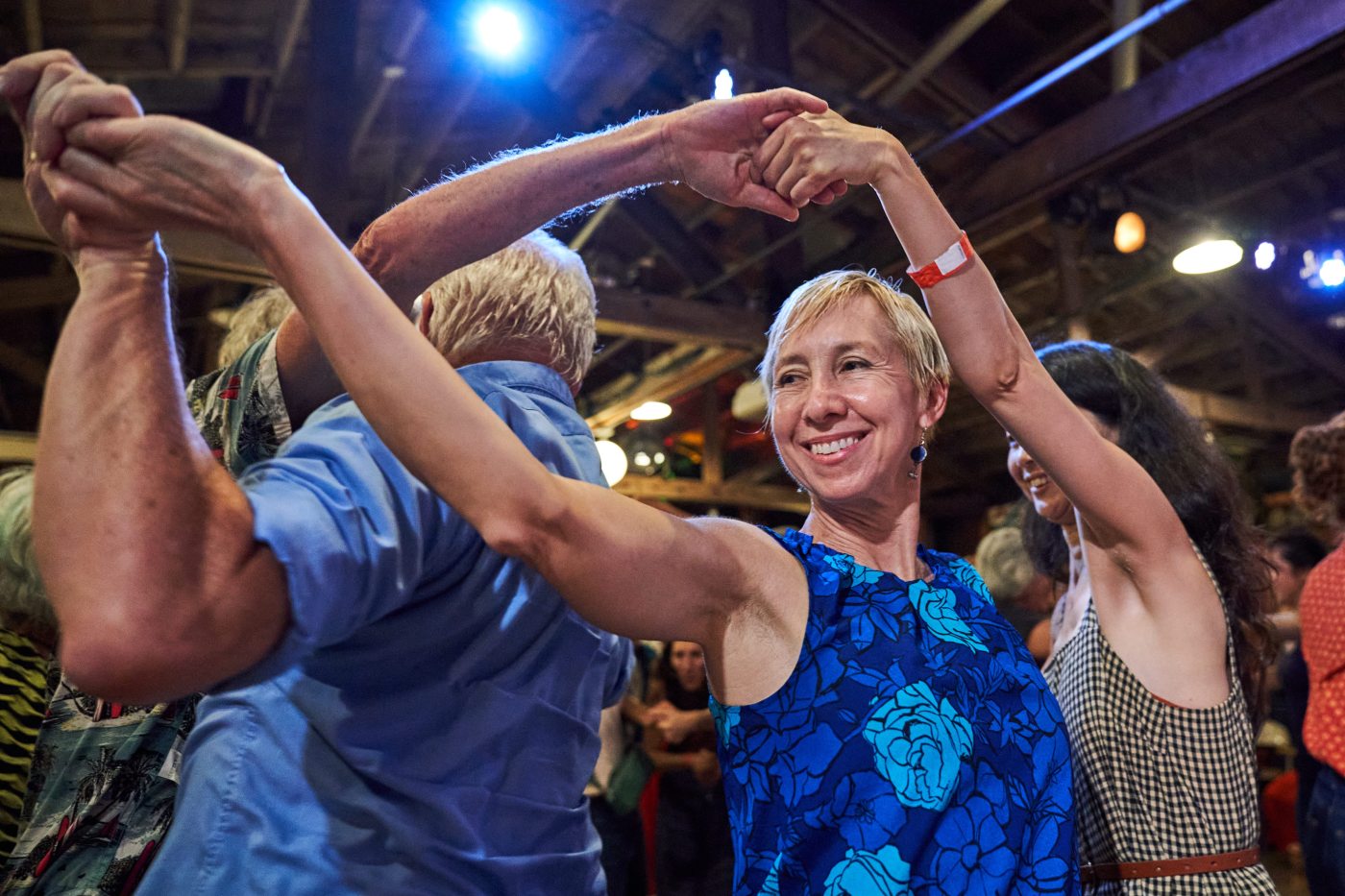
The Bay Area is witnessing a vibrant resurgence of square dancing, highlighted by the recent “Dare to Be Square West” festival at the Ashkenaz Music & Dance Community Center in Berkeley. This lively event, which took place on November 8, 2025, drew a diverse crowd eager to engage in this traditional dance form, marking its return after more than a decade.
With the sound of lively music filling the hall, festival-goers filled the dance floor, responding enthusiastically to the calls of the dance leader. “Take your partner and promenade!” shouted Tony Mates, a caller who traveled from Seattle to lead the festivities. His energetic commands guided participants through an array of lively movements, creating a joyful atmosphere that resonated with both seasoned dancers and newcomers alike.
The festival is a testament to the growing popularity of square dancing, a style deeply rooted in American culture. Influenced by early settlers and diverse communities, square dancing was designated as the national folk dance by an act of Congress in 1982. Today, it remains an essential part of community gatherings across many states, including California.
According to Evie Ladin, an Oakland musician and dance caller, the revival of square dancing is particularly notable among younger generations. “We’re seeing a serious influx of new dancers, especially high school and college students,” she stated. The appeal lies not only in the physical activity but also in the social connections it fosters. Ladin described square dancing as “friendship set to music,” a refreshing alternative to screen time.
While square dancing experienced a decline in participation during the rise of digital entertainment and the pandemic, it is making a comeback. Mike Pogue, a club caller for the Rockin’ Jokers, noted that their club, which meets weekly in San Jose, has grown from about 30 members in 2021 to approximately 100 today. “The 1970s were the peak for square dancing, but we’re seeing renewed interest now,” he added.
The festival provided an inclusive environment for dancers of all ages and backgrounds. Participants embraced the spirit of fun and community, embodying the traditional values of square dancing. As Ladin noted, the dance style is evolving, with movements to make it more gender-neutral, allowing for greater inclusivity. The use of terms like “larks” and “robins” instead of traditional gendered names demonstrates the community’s commitment to modernization.
Square dancing is not just a nostalgic activity; it has also adapted to contemporary society. Events like the “Lord of the Rings Costume Party Square Dance” at the Ashkenaz Center signify its appeal across various demographics. Even corporate entities, such as Google, have incorporated square dancing into team-building activities, further solidifying its status as a fun and engaging pastime.
The infectious energy of the dance floor was palpable. As dancers navigated through intricate formations, Ladin likened the experience to a rave, where collective movement creates a powerful sense of connection. “It’s just like in a rave, where people feel that energy,” she explained.
For those interested in joining this lively community, regular square dances are hosted in various locations. The Rockin’ Jokers meet on Wednesdays at the Cambrian Park United Methodist Church in San Jose, while the Hillside Club and Polish Club in Berkeley and San Francisco respectively host events on the third and second Fridays of each month.
The revival of square dancing in the Bay Area illustrates a broader trend of communities seeking meaningful social interactions. As participants express their joy and connection through dance, the future of square dancing appears bright, promising continued growth and enjoyment for generations to come.