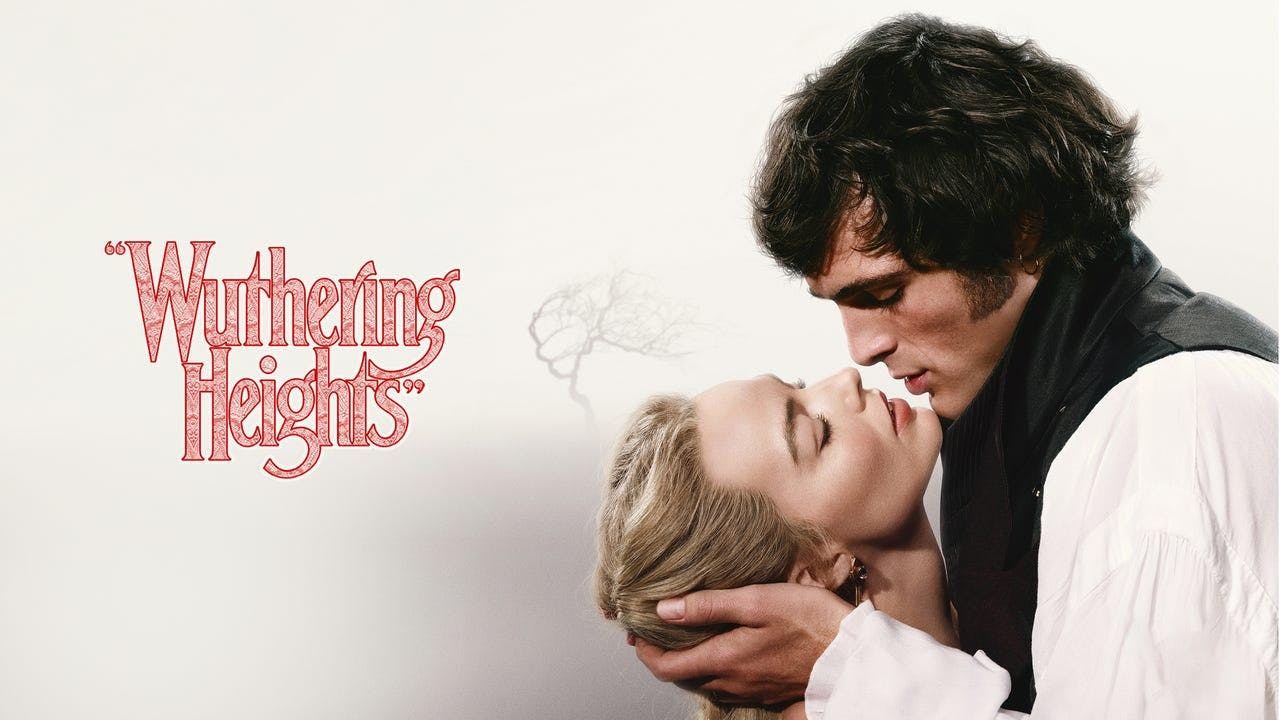
Emerald Fennell’s recent adaptation of Wuthering Heights has sparked significant debate, especially regarding the portrayal of its primary characters. Critics have focused on the lack of chemistry between Catherine Earnshaw (played by Margot Robbie) and Heathcliff (portrayed by Jacob Elordi), alongside accusations of historical inaccuracies in costuming and set design. However, the characterization of Nelly Dean, played by Hong Chau, has largely gone unnoticed despite her crucial role in the narrative.
From the outset of the film, Nelly is introduced as Cathy’s companion, contrasting sharply with Cathy’s wild and free-spirited nature. This difference sets the stage for the complexities of their relationship, particularly once Heathcliff enters the scene. As Cathy becomes increasingly enamored with Heathcliff, she distances herself from Nelly, who finds herself relegated to a subordinate role. The film fails to adequately explore Nelly’s background as the illegitimate daughter of a lord, which severely limits her social mobility compared to Cathy, who is merely the daughter of an untitled man.
Nelly’s lack of agency is evident in her dependence on Cathy, who is portrayed as increasingly selfish. Following Cathy’s engagement to Edgar Linton (played by Shazad Latif), Nelly witnesses Cathy’s emotional turmoil as she grapples with her feelings for Heathcliff. In a moment of vulnerability, Cathy seeks Nelly’s advice, only to insult her by claiming no one will ever love her. This striking moment illustrates the depth of their relationship’s dysfunction and Cathy’s self-centeredness.
Cathy’s disdainful remark is a profound betrayal, one that has lasting implications for their friendship. Following this confrontation, Nelly chooses not to inform Cathy that Heathcliff is at the door, leading to a miscommunication that results in Heathcliff leaving without understanding Cathy’s true feelings. The narrative suggests that Nelly bears some responsibility for this outcome, but it is Cathy’s actions that initially drove a wedge between them.
Years later, when Heathcliff returns, Cathy’s frustration with Nelly reaches a boiling point. She accuses Nelly of betraying her, failing to recognize that her own words had already severed their bond. The complexity of their relationship is neglected in Fennell’s adaptation, which reduces Nelly to a villainous figure without acknowledging her struggles and the societal constraints she faces.
Moreover, the film implies that Nelly’s negligence contributes to Cathy’s declining health, particularly after the death of Cathy’s child. While Nelly does indeed fail to recognize the seriousness of Cathy’s condition, it is also true that Cathy often struggles to communicate her feelings effectively. This dynamic further complicates the narrative, portraying both characters as flawed yet deserving of empathy.
In the original novel by Emily Brontë, both Cathy and Nelly are presented with a degree of complexity that the film adaptation overlooks. Fennell’s rendition simplifies their motivations and reduces their interactions to a more one-dimensional conflict. While Nelly is not without her faults, her depiction as a traitor is overly simplistic and unfair.
Ultimately, the film’s portrayal of Nelly Dean raises questions about how characters are represented in adaptations. The nuances of her character, shaped by her status and experiences, deserve more recognition. Both Nelly and Cathy navigate a world that limits their choices, reflecting broader themes of class and gender that resonate beyond the pages of Brontë’s classic novel.
As discussions about Wuthering Heights continue, it is essential to acknowledge the complexities of all characters involved. Nelly Dean’s portrayal, in particular, invites a reevaluation of her role, urging audiences to look beyond surface-level interpretations and appreciate the intricacies of human relationships within the narrative.