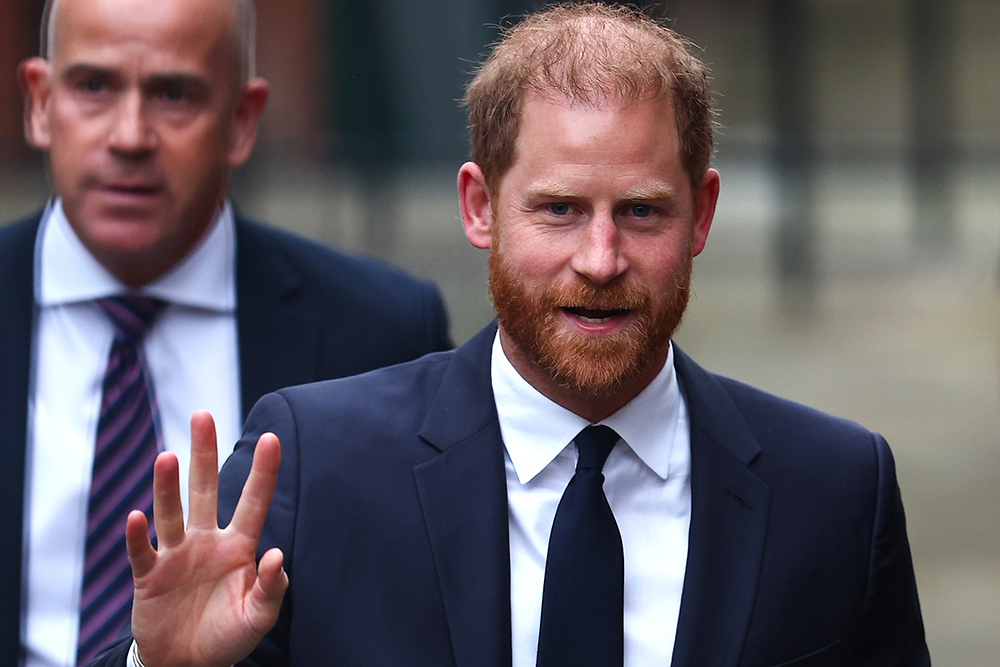
Prince Harry is appearing in London’s High Court today as he initiates a significant privacy lawsuit against the publisher of the Daily Mail, Associated Newspapers Limited. This legal action involves several prominent figures, including music icon Elton John, actress Elizabeth Hurley, and model Sadie Frost, all of whom accuse the company of participating in unlawful activities. These allegations include hiring private investigators to secretly install listening devices in vehicles.
The legal proceedings are set to unfold over a span of up to nine weeks, with Prince Harry expected to present his evidence on March 7, 2024. According to reports from BBC News, Associated Newspapers has categorically denied the allegations, labeling them as “preposterous.” The outcome of this case could have significant implications for privacy rights and media practices in the United Kingdom.
This lawsuit marks Prince Harry’s third legal confrontation with a major newspaper group. He previously took action against News Group Newspapers, the owner of The Sun, which resulted in a settlement prior to trial. Additionally, he won a case against The Mirror Group, receiving £140,600 in damages for unlawful information gathering.
The issues raised in this case are part of a broader conversation about celebrity privacy and media ethics. The involvement of high-profile figures adds to the public interest, spotlighting the lengths to which some media outlets may go to obtain information.
As the trial progresses, the testimonies and evidence presented could shed light on the dynamics between the press and individual privacy, potentially influencing future regulatory discussions in the media landscape. The implications of this case extend beyond just the parties involved, touching on significant themes of privacy and accountability in journalism.
With the court proceedings underway, the public and media alike will be closely monitoring developments in what promises to be a landmark case in the ongoing debate over privacy rights.