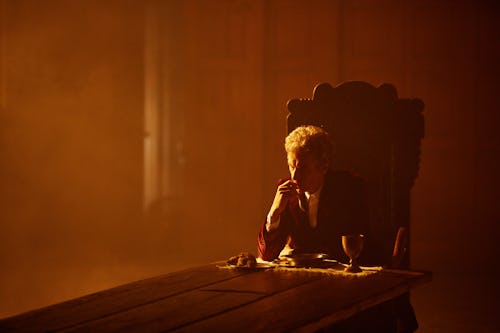
Doctor Who delivered an unforgettable narrative in its Season 9 episode titled “Heaven Sent,” which premiered in November 2015. Celebrated by fans and critics alike, this episode has become a hallmark of storytelling excellence, yet it remains underappreciated outside the show’s devoted following. Its profound exploration of grief and mortality resonates deeply, making it a standout in the realm of science fiction television.
The episode opens with a haunting question: “How many seconds in eternity?” The 12th Doctor, portrayed by Peter Capaldi, finds himself trapped in a labyrinthine castle, pursued by a monstrous figure known as The Veil. This relentless entity embodies the crushing weight of grief, serving as a metaphor for the loss that follows us throughout life. As the narrative unfolds, the Doctor grapples not only with the immediate threat of The Veil but also with the devastating loss of his companion, Clara (played by Jenna Coleman).
In a behind-the-scenes featurette, writer and showrunner Steven Moffat articulated the episode’s core theme: “All of us are locked in a castle of grief sometime.” This poignant sentiment captures the essence of “Heaven Sent,” which portrays the Doctor’s struggle to confront his sorrow within the confines of his own personal hell.
The episode’s simplicity belies its depth. While it centers on the Doctor’s solitary battle against a single foe, the twist reveals he is caught in a time loop, forced to endure his grief repeatedly. According to Moffat, the Veil represents the inevitability of grief, while the diamond wall symbolizes the insurmountable barriers one must face when dealing with loss. The Doctor’s journey becomes a metaphorical representation of the human experience, illustrating how one must confront and process their grief to move forward.
Director Rachel Talalay employs striking visuals and a haunting atmosphere that heightens the emotional stakes. Critics praised the episode for its avant-garde approach and expressionist visuals, drawing comparisons to Ingmar Bergman’s classic film, “The Seventh Seal.” Despite its critical acclaim and a Hugo Award nomination, “Heaven Sent” has often been overlooked in broader discussions of the greatest television episodes.
The complexities of “Heaven Sent” stem from its inherent ties to the broader narrative of Doctor Who. While episodes like “Blink” stand alone and introduce viewers to the series’ unique concepts, “Heaven Sent” assumes a familiarity with the Doctor’s character and the emotional weight of his journey. Capaldi himself noted that the series has always grappled with themes of death, reinforcing the notion that the Doctor’s experiences reflect our own struggles with loss.
In literalizing the battle with grief, “Heaven Sent” encapsulates what makes genre television impactful: it transforms abstract, painful experiences into tangible narratives. Episodes from shows like “Lost” and “Buffy the Vampire Slayer” have similarly tackled themes of love and loss, yet “Heaven Sent” remains unique in its profound exploration of grief through the lens of science fiction.
Despite its brilliance, the episode often finds itself absent from mainstream discussions of the best television episodes of all time. The intricate storytelling and emotional depth should have secured its place in the pantheon of great television, yet its legacy is often overshadowed by more accessible episodes.
As “Heaven Sent” marks its 10th anniversary, it serves as a reminder of the power of storytelling to address universal themes. While it may have been overlooked by some, its impact on fans and the genre remains profound. The Doctor’s journey through grief resonates deeply, and as Moffat stated, “People always talk about grief as being alone.” In the confines of the castle, the Doctor’s solitude becomes a mirror of our own struggles.
In a world that continues to grapple with loss, “Heaven Sent” stands as a testament to the resilience of the human spirit. It invites viewers to confront their grief, reminding us all that, like the Doctor, we can endure and break through the walls that hold us back.