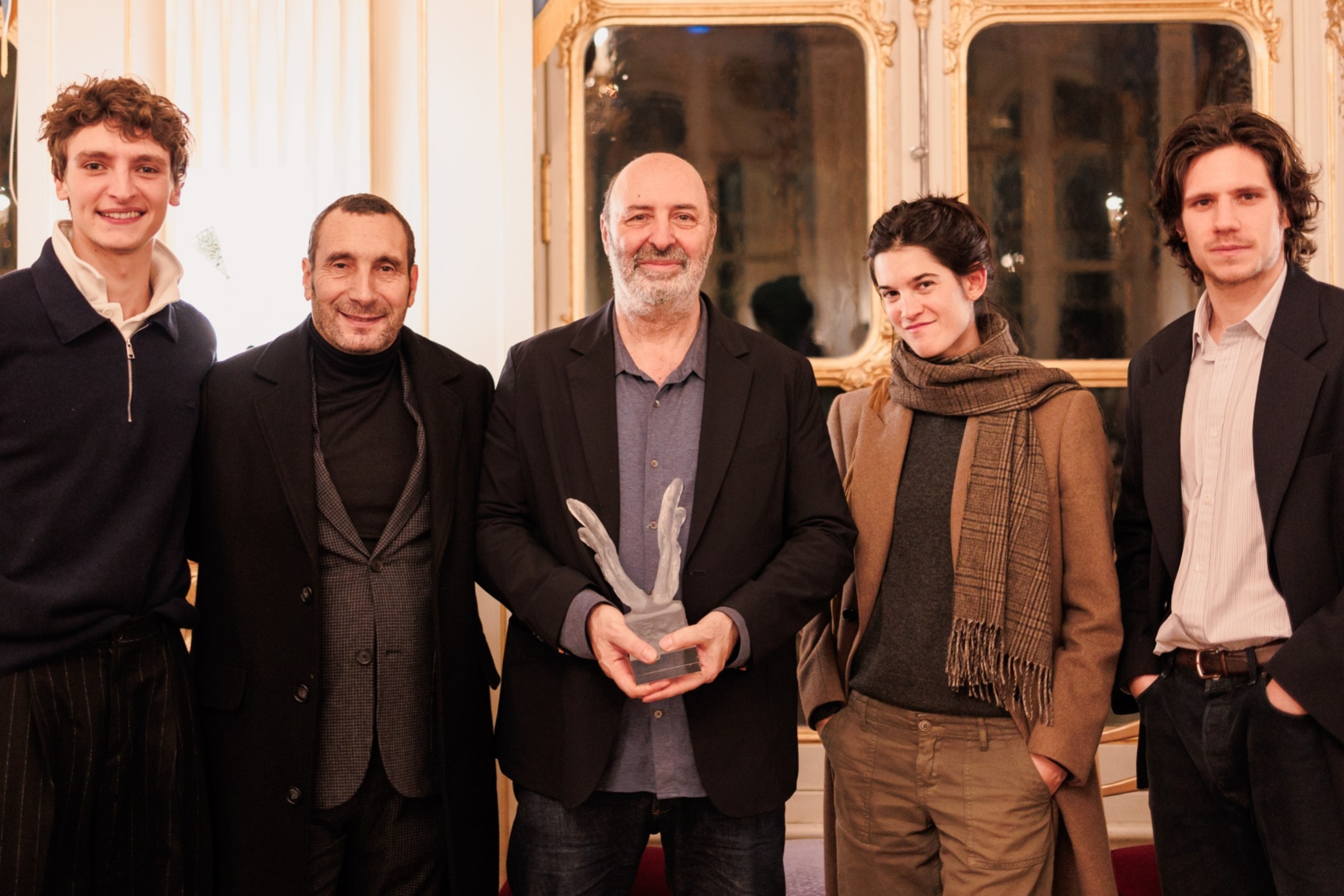
Director Cedric Klapisch received the prestigious French Cinema Award on January 15, 2024, during a heartfelt ceremony held at the Ministry of Culture in France. Surrounded by his close collaborators, including longtime screenwriter Santiago Amigorena and renowned actor Zinedine Soualem, Klapisch was recognized for his impactful career that has transcended national borders.
The French Cinema Award, inaugurated by Unifrance in 2016, celebrates individuals whose work has significantly promoted French cinema on the global stage. Previous honorees include acclaimed figures such as Isabelle Huppert, Juliette Binoche, and directors like Olivier Assayas and Éric Toledano. Klapisch’s films, notably the beloved “Spanish Apartment” series, embody themes of movement and cultural exchange, following an extended family across three continents.
During his acceptance speech, Klapisch emphasized the importance of travel as a creative force. He noted that a promotional tour for his film “Pot Luck,” released in 2002, served as inspiration for its sequel, “Russian Dolls.” He remarked, “Some journeys give birth to new films. Travel is a fundamental part of my cinema. That’s the reason I made ‘Pot Luck’ — and why I’m standing here today.”
Reflections on Artistic Influence and Cultural Exchange
Klapisch, who grew up in Paris, began his filmmaking journey after earning a Master of Fine Arts degree from New York University’s Tisch School of the Arts. He reflected on how that experience significantly influenced his career. “I began my adult life in the U.S., and today I honestly wonder whether young French people still feel the same pull to go there,” he stated. He observed a shift in cultural dynamics, noting that American filmmakers and actors are increasingly drawn to France, a trend that was less common in the past.
Pointing to what he described as “a strange, pivotal moment” for the film industry, Klapisch shifted his focus to the unique aspects of the French cinematic landscape. “There’s constant talk about box office numbers, admissions, and international circulation,” he said. “But France is truly unique because of its system, and the CNC in particular.” He expressed his strong support for the CNC (Centre National du Cinéma et de l’image animée), highlighting its vital role in nurturing cinematic creation in France.
Klapisch’s sentiments were echoed by Gaétan Bruel, president of the CNC, who attended the ceremony, along with Rachida Dati, the French Minister of Culture, and Gilles Pélisson, president of Unifrance. Their presence underscored the significance of Klapisch’s contributions to the film industry and the continued importance of supporting creative endeavors in France.
As Klapisch continues to explore themes of identity and cultural connection through his work, his recognition at this year’s Unifrance Rendez-Vous in Paris serves as a reminder of the power of cinema to bridge divides and foster understanding across different cultures.