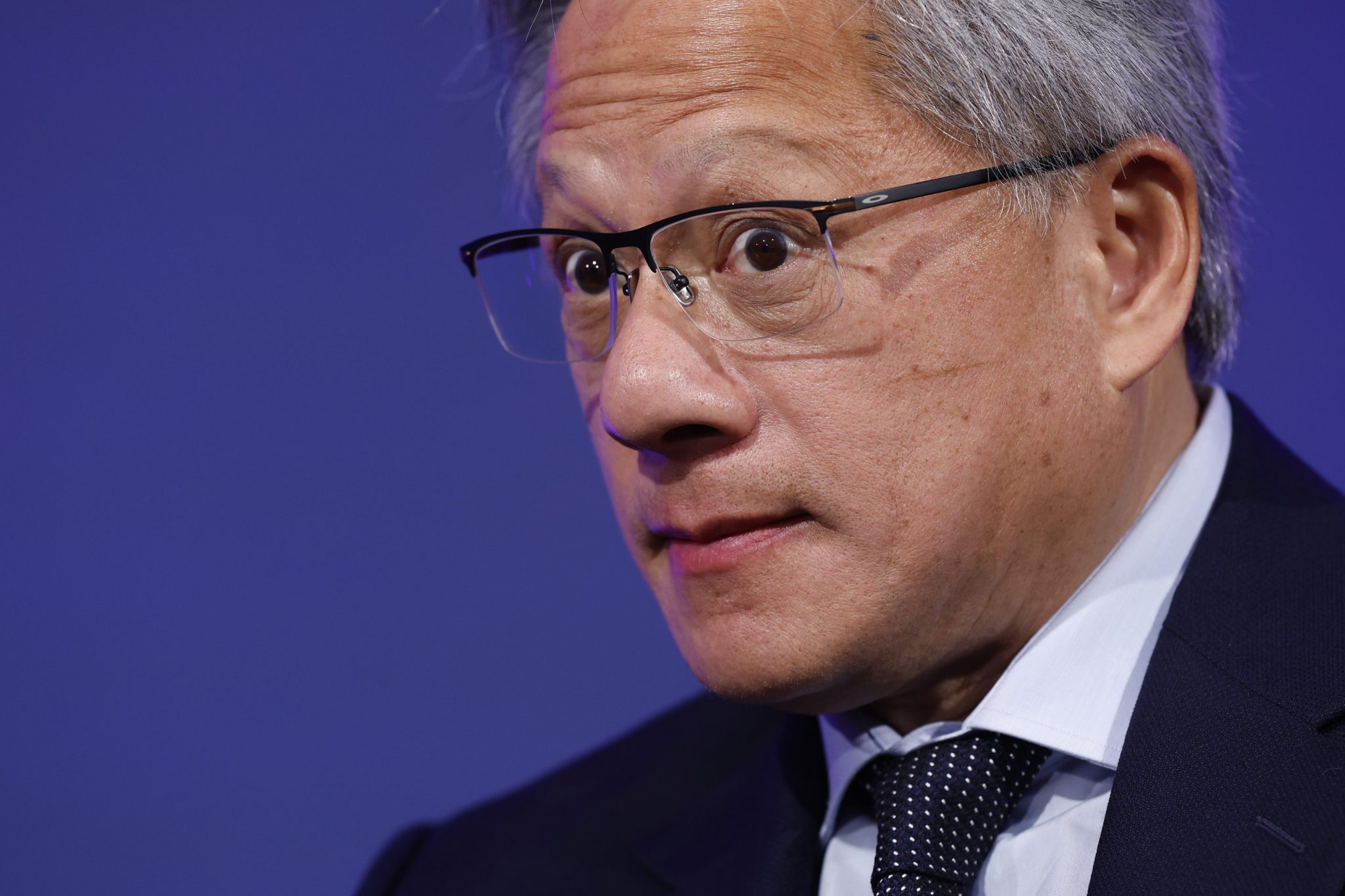
Nvidia’s CEO, Jensen Huang, addressed employees this week, expressing concerns about the company’s precarious position amid rising fears of an AI bubble. According to audio from an internal all-hands meeting reviewed by Business Insider, Huang remarked that the market’s reaction to Nvidia’s strong financial performance has been unexpectedly negative.
On Thursday, less than 24 hours after Nvidia announced record earnings and projected a staggering $500 billion in revenue for the remainder of 2025 and 2026, Huang noted, “The market did not appreciate our incredible quarter.” Despite the company’s robust results, investor sentiment flipped abruptly, resulting in a decline in Nvidia’s stock price after an initial rise.
Huang indicated that Wall Street’s expectations have reached a level where they might be detrimental. “If we delivered a bad quarter, it is evidence there’s an AI bubble. If we delivered a great quarter, we are fueling the AI bubble,” he explained. He acknowledged that even a slight misstep could lead to a significant market reaction, stating, “If we were off by just a hair… the whole world would’ve fallen apart.”
Market Reactions and AI Trade Concerns
Nvidia’s latest earnings report showcased impressive sales growth in its data-center processors, which are essential for powering AI models. Despite this, the stock market’s initial enthusiasm quickly evaporated, with Nvidia shares rising by as much as 5% before closing down nearly 3%. This reversal underscores a growing anxiety among investors regarding the sustainability of the AI boom and the substantial investments tech giants are making in infrastructure.
Investors have expressed concerns that companies are spending excessively on data centers and graphics processing units (GPUs) without a clear path to recouping those costs. Moreover, some are scrutinizing the complex financing structures behind AI infrastructure, with signs emerging that credit markets are becoming more cautious.
Adding to the uncertainty, a recently released U.S. jobs report revealed stronger-than-expected hiring figures for September, yet it also indicated a higher unemployment rate. This conflicting information has led to speculation about the Federal Reserve’s interest rate decisions moving forward, particularly in December.
Mark Hackett from Nationwide commented on the situation, saying, “The broader narrative hasn’t broken; it’s simply being tested right now. Periods like this often act as a release valve rather than signaling a true trend reversal.”
The Challenges of Being the AI Industry Leader
Internally, Huang referenced the high expectations surrounding Nvidia, acknowledging that its position as a leader in the AI sector has transformed every earnings announcement into a high-stakes event. He noted the online memes portraying Nvidia as the “linchpin of the global economy,” humorously saying, “We’re basically holding the planet together—and it’s not untrue.”
While this narrative has driven Nvidia’s market value to unprecedented heights, it has also intensified scrutiny and pressure on the company. Huang emphasized that Nvidia’s role is to provide the necessary compute infrastructure rather than to dictate market valuations.
In a lighter moment during the meeting, Huang joked about the company’s dramatic market fluctuations, reflecting on the “good old days” when Nvidia had a market capitalization of $5 trillion. He pointed out, “Nobody in history has ever lost $500 billion in a few weeks,” highlighting the enormity of recent market shifts.
Despite the challenges, Huang expressed pride in Nvidia’s accomplishments and reassured employees about the company’s strong fundamentals. He stated that while the market may react unpredictably, the underlying business remains robust, emphasizing the importance of continuing to innovate in the face of volatility.