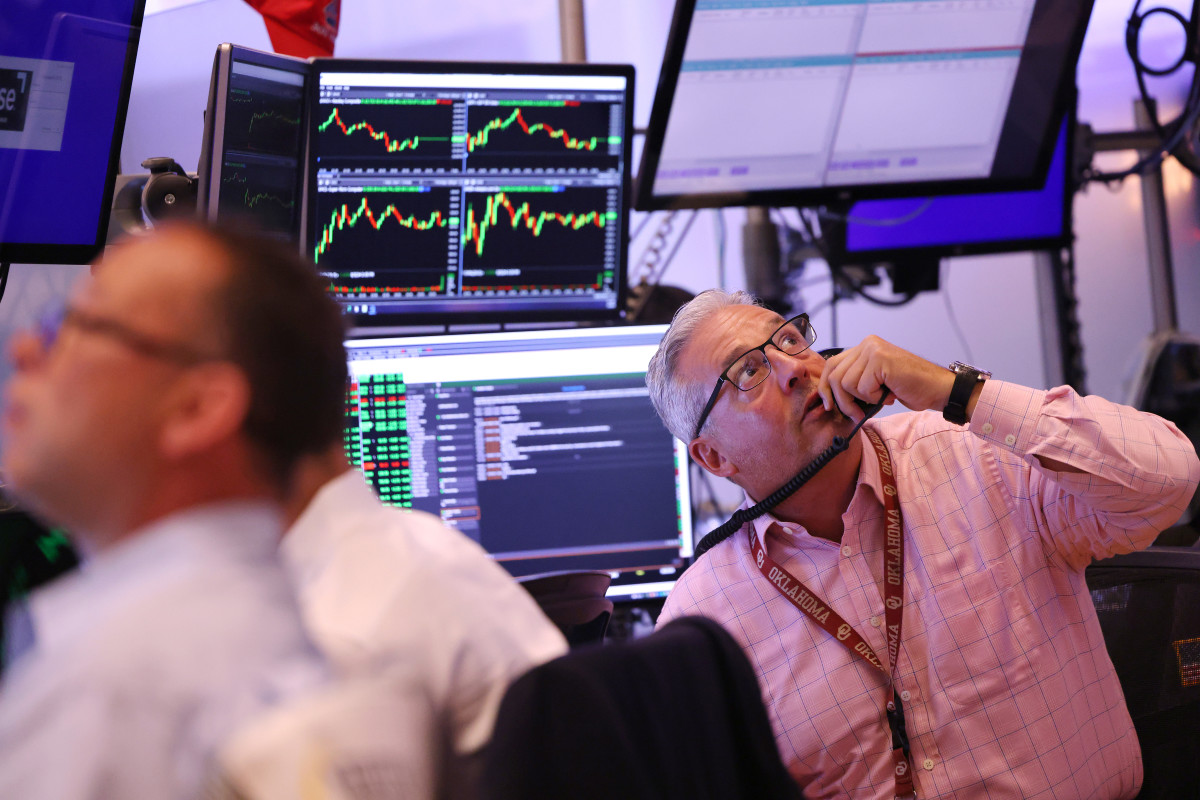
Morgan Stanley has revised its investment strategy for technology stocks as it looks ahead to 2026. The financial services firm has removed several tech stocks from its buy list, emphasizing the importance of artificial intelligence (AI) chips while cautioning investors against unrealistic growth expectations. Following a period of significant gains, Morgan Stanley stresses that future growth may be uneven.
Demand for computing power continues to surge, keeping semiconductors at the forefront of the technology sector for a third consecutive year. The S&P 500 delivered impressive total returns of 26.3% in 2023, followed by 25% in 2024, and over 16% so far in 2025, amounting to an approximate 86% cumulative gain since 2023, according to data from Chevy Chase Trust and reported by Barron’s.
As the tech landscape evolves, nearly one-third of the S&P 500 is dominated by the so-called “Magnificent Seven,” with Forbes estimating this figure to be as high as 37% as of October 2025. Morgan Stanley, however, urges caution against overly optimistic forecasts suggesting that AI spending will maintain its rapid acceleration without interruptions. The firm indicates that while the future remains promising, it is likely to be volatile.
Focus on Core Chip Leaders
Morgan Stanley is concentrating on established chip manufacturers, identifying areas where market expectations may be mispriced as it approaches 2026. The firm predicts the S&P 500 will reach 7,800 by the end of 2026, a target based more on sustainable earnings growth than inflated valuations.
The bank remains optimistic about AI-driven growth but insists on a more disciplined approach. Analysts predict solid bottom-line expansion without necessitating soaring valuations, which suggests a potential 14% upside from Friday’s close at 6,834.50, according to CNBC.
Morgan Stanley’s list of tech stocks to consider includes:
– **AI Processors**: Nvidia, Broadcom
– **Data-Center Connectivity**: Astera Labs
– **Memory**: Micron
– **Equipment & Manufacturing**: Applied Materials, Taiwan Semiconductor
– **Analog Chips**: NXP Semiconductors, Analog Devices
Nvidia and Broadcom Lead the Pack
Nvidia (NVDA) and Broadcom (AVGO) are highlighted as the top choices for AI chip investments. As discussions around custom application-specific integrated circuits (ASICs) gain traction, Morgan Stanley identifies Nvidia as offering the “best return on investment,” particularly with the anticipated launch of the Vera Rubin platform in the second half of 2026. This innovative platform is projected to deliver over 3.3 times the performance of its predecessor, Blackwell, with up to seven times the AI processing capabilities in its optimal server configuration.
Broadcom is recognized for its robust positioning in custom silicon and networking within AI infrastructure, taking advantage of rising expectations surrounding ASICs. For those seeking exposure to data centers without the high costs associated with mega-cap tech stocks, Astera Labs (ALAB) offers a compelling alternative, particularly in connectivity for large-scale AI projects.
While Morgan Stanley’s outlook for AI focuses on high-performance processors, it also recognizes the importance of other components in the technology supply chain. The firm sees significant potential in memory, equipment, and select analog chips, which become increasingly relevant as demand for AI applications scales.
Micron stands out as Morgan Stanley’s preferred choice in the memory sector, bolstered by strong pricing power and ongoing high demand from data centers for high-bandwidth memory. Despite the potential for uneven growth, the market conditions are favorable for Micron.
On the equipment front, Morgan Stanley continues to support Applied Materials and Taiwan Semiconductor, both of which are integral to the production of high-performance chips and capacity expansion for AI workloads. Additionally, Morgan Stanley identifies opportunities in the analog chip space, specifically citing NXP Semiconductors for its growth prospects and valuation, while highlighting Analog Devices for its solid fundamentals.
In a rapidly changing tech environment, Morgan Stanley’s strategic adjustments reflect a cautious yet optimistic outlook as investors prepare for the opportunities and challenges that lie ahead in 2026.