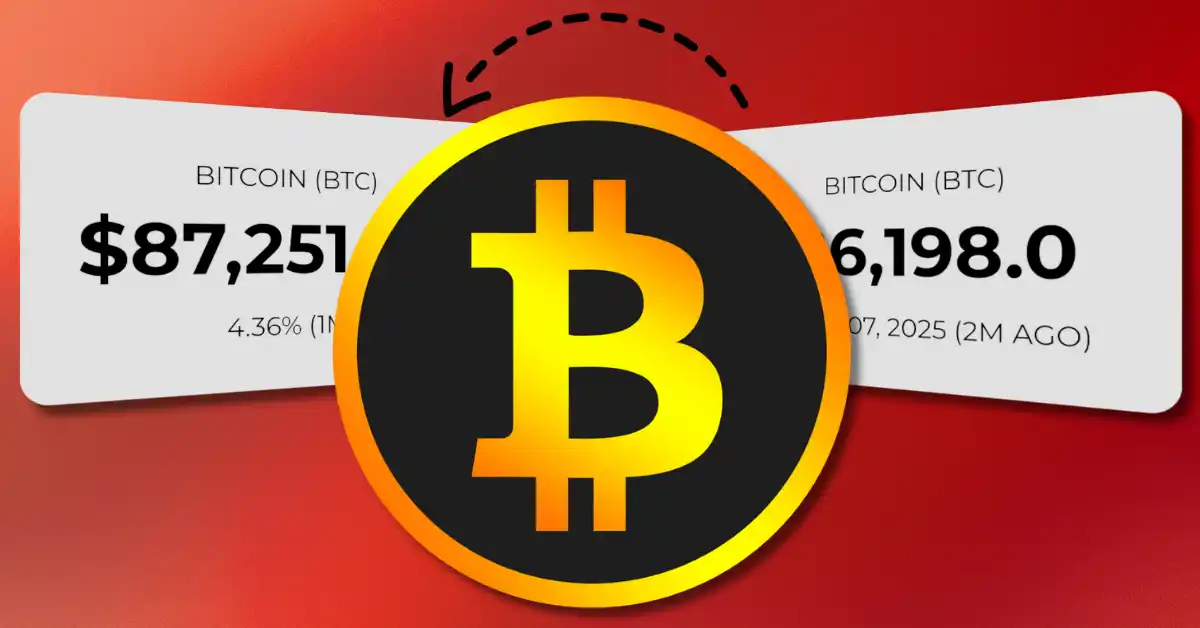
Bitcoin’s performance has sparked debate as it closes out 2025 down nearly 10%. Despite expectations for significant growth driven by spot Bitcoin exchange-traded funds (ETFs) and heightened institutional interest, the cryptocurrency’s price has not reflected this optimism. Michael Saylor, co-founder of MicroStrategy and a prominent Bitcoin advocate, suggests the market might be misinterpreting current trends. He posits that rather than signaling failure, the year 2025 is merely a precursor to future gains.
Fundamentals Point to Future Growth
In a recent discussion on Alex Thorn’s podcast, Saylor asserted that the past year may represent a pivotal period for Bitcoin from a fundamental standpoint. He stated, “The last 12 months have probably been the best 12 months in the history of the industry in terms of fundamentals. It’s profound what’s happened since December.”
Saylor emphasized that while institutions such as BlackRock attract attention, approximately 85% of Bitcoin remains with early holders, whose identities are largely unknown. He noted that short-term price fluctuations are often influenced more by trader sentiment and leverage within derivatives markets than by actual demand for Bitcoin. This market structure indicates that Bitcoin’s price might not always react strongly to bullish news.
Macro Conditions Impacting Price Performance
Bitcoin’s recent struggles are less about cryptocurrency-specific challenges and more about broader macroeconomic factors. Historically, Bitcoin thrives when economic activity is expanding, typically above the critical 50 level of the Purchasing Managers’ Index (PMI). Currently, the global economy has been in contraction for nearly three years.
Analyst Nico highlighted this dynamic, stating, “Bitcoin is a liquidity thermometer. Easy money, it goes up. Tight money, it goes down.” This suggests that the subdued price action of Bitcoin may be more reflective of stringent liquidity conditions than weakening fundamentals.
Saylor also provided insights into forthcoming institutional participation that could bolster Bitcoin’s price. He mentioned, “We’re hearing rumors that major U.S. banks will start to buy Bitcoin, custody Bitcoin, and issue credit against the native Bitcoin asset in the first half of 2026.” These discussions arise after Saylor’s meetings with executives from major financial institutions, including BNY Mellon, Wells Fargo, and Bank of America, who are exploring strategies to manage Bitcoin for clients.
MicroStrategy currently holds 671,268 BTC, valued at billions of dollars, leading a trend of public companies investing in Bitcoin. In total, public companies now hold over 1 million BTC, indicating growing institutional interest and clearer regulatory frameworks.
Saylor predicts that this wave of adoption could support Bitcoin prices in 2026, estimating a price range of approximately $143,000 to $170,000.
As the landscape evolves, the potential involvement of banks in Bitcoin custody and lending could simplify access for everyday investors. If banks begin to offer these services, it may attract cautious investors who previously avoided the cryptocurrency market.
The interplay of institutional moves, macroeconomic conditions, and evolving market structures will significantly influence Bitcoin’s trajectory as the year unfolds. Investors and analysts alike will be closely monitoring these developments as 2026 approaches.