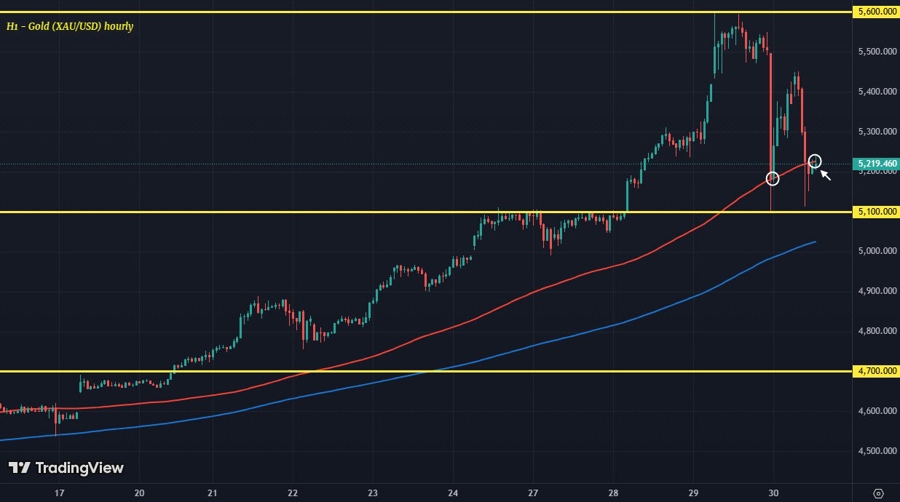
Gold prices experienced significant volatility on January 31, 2024, following a rapid round of profit-taking in US trading. This activity briefly pushed the price of gold down to a low of $5,097. However, buyers quickly entered the market, aiming to capitalize on the dip, demonstrating resilience despite the ongoing fluctuations.
Market analysts noted that buyers successfully defended a crucial near-term level, maintaining support at the 100-hour moving average. This level, alongside additional buying interest around the $5,100 mark, has created a temporary buffer against further declines. Nonetheless, the situation remains precarious, as gold has dipped below this critical threshold, raising concerns about potential further price corrections. A sustained break below the $5,225 mark could trigger a wave of profit-taking, adversely affecting those holding long positions.
Traders are advised to remain cautious as the tendency for profit-taking to lead to more profit-taking could exacerbate market sentiment. This phenomenon is particularly relevant for assets that have experienced rapid price increases, as observed with both gold and silver throughout January. Despite the current volatility, technical indicators suggest that dip buyers are still active in the market, indicating a level of support that may prevent a drastic downturn.
Market Trends and Historical Context
As January draws to a close, the seasonal tendencies affecting gold prices also warrant attention. Traditionally, February has shown modest gains for gold, averaging around 1% over the past two decades. However, historical data reveals that gold has declined in five of the last seven February months. In several instances, a strong performance in January has preceded a downturn in February, which could signal caution for investors looking ahead.
The conclusion of January’s seasonal tailwind may influence market dynamics as traders adjust their positions. It is critical for investors to monitor performance closely, especially as technical levels such as the 200-hour moving average become pivotal in determining future price movements. A firm break below $5,100 could confirm the onset of a more substantial retracement, prompting a reevaluation of market strategies.
In summary, while gold prices are currently experiencing volatility driven by profit-taking, the resilience shown by dip buyers offers a counterbalance. As February approaches, the historical patterns suggest potential challenges for gold, emphasizing the need for careful monitoring of market trends and technical indicators.