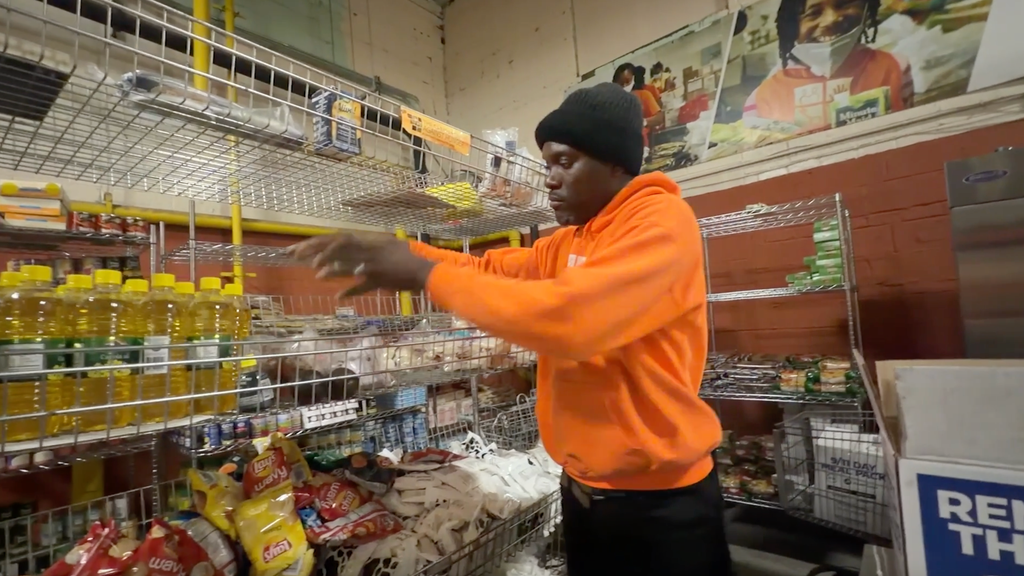
As 2025 draws to a close, Brooklyn nonprofits confront unprecedented challenges, facing increased demand for services coupled with significant funding losses. Organizations like the Campaign Against Hunger in East New York are struggling to meet the needs of families, particularly as colder weather sets in and more individuals turn to community support.
At the Campaign Against Hunger, staff members diligently pack bags of produce for distribution. Dr. Melony Samuels, the organization’s founder and CEO, highlighted the growing reliance on their services. “It’s winter now; families cannot stand in line. It’s very difficult for those with wheelchairs. We are able to go door to door,” Samuels explained. This 27-year-old nonprofit has faced a staggering loss of $3.3 million in government funding this year, leading to significant service reductions. “It’s a sad story, but 2025 has been the most difficult year for the Campaign Against Hunger,” she added.
A recent survey by Brooklyn Org reveals the extent of the crisis affecting local nonprofits. The survey found that 94% of Brooklyn organizations reported an increase in demand for services compared to last year, while 60% experienced cuts in federal funding. “So many nonprofits are struggling because of the federal cuts, even if they receive city funding,” noted Jocelynne Rainey, President and CEO of Brooklyn Org. “If city funding has been impacted by federal cuts, those nonprofits have also been affected.”
In response to this pressing situation, Brooklyn Org has initiated a campaign to raise $5 million to bridge the funding gaps. The campaign is already showing promising results, with Rainey reporting, “Brooklyn really delivered. We are already halfway to our goal.” So far, sixteen local nonprofits have received a combined $1.5 million in grants, including $135,000 for the Campaign Against Hunger.
Samuels described the grant as a critical lifeline, stating, “It is definitely a lifeline, not just for us, but for 12,000 families that the Campaign Against Hunger serves every week.” Another beneficiary, Churches United for Fair Housing, received $45,000 to support its initiatives against poverty and displacement. Executive Director and co-founder Rob Solano expressed relief, saying the grant would help stabilize operations after losing a federal grant earlier this year. “We can use that money to ensure our programs do not skip a beat. We can continue to help New Yorkers every day, looking for affordable housing, food, and support,” he said.
Raindy emphasized the importance of community support, noting that the campaign’s success reflects local residents’ understanding of their neighbors’ struggles. “I think that we all know intrinsically that if our neighbors are struggling, then we’re struggling. All quality of life is better if people are doing better,” she remarked.
Looking ahead, Brooklyn Org aims to expand its community grantmaking efforts by 25% over the next year, further addressing the rising needs of local nonprofits. This ambitious goal underscores a collective commitment to strengthening community resilience in the face of adversity.
As Brooklyn nonprofits navigate these turbulent waters, they remain dedicated to serving their communities, a testament to their vital role in the borough’s social fabric.