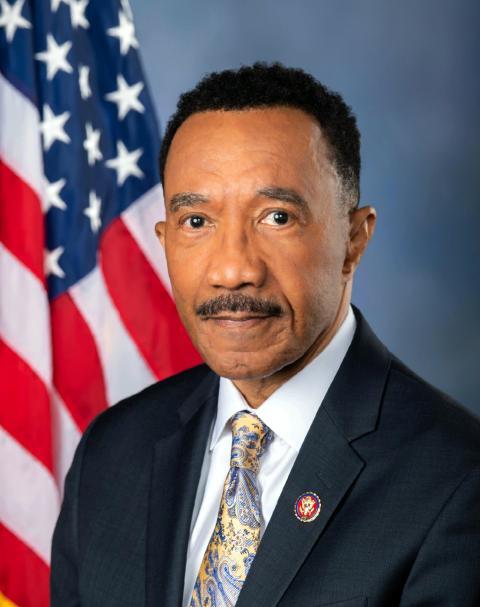
During recent congressional hearings, Congressman Kweisi Mfume of Maryland highlighted the racial undertones involved in the ongoing debate over rights for residents of Washington, DC. Mfume stated, “They think that if this was any other population, a majority population, this would not be taking place; we all know that it is partisan even though some people will say that it’s not partisan.” This statement underscores the complexities surrounding the issue as political divisions deepen.
Congressman Mfume represents Maryland’s 7th Congressional District, a position he has held since 2020, winning a special election to succeed the late Congressman Elijah Cummings. His tenure has been marked by a strong advocacy for civil rights, a theme he has consistently emphasized throughout his career. Mfume previously served as the President of the NAACP from 1996 to 2004, where he focused on advancing civil rights on a national scale.
The congressman’s remarks came as Republicans continue to push back against proposed changes that would grant greater autonomy and rights to DC residents. According to Mfume, the implications of this resistance are rooted in long-standing racial biases. He emphasized that the treatment of DC residents reflects a broader partisan issue that disproportionately affects communities of color.
Congressman Mfume’s Legislative History and Advocacy
Since his first election to Congress in 1986, Mfume has been instrumental in advocating for legislative changes that address civil rights issues. During his first term, he served as Chair of the Congressional Black Caucus from 1993 to 1995. His legislative efforts include sponsoring four bills that were enacted into law during his time in the House, with nine bills sponsored during the current 119th Congress.
Mfume’s work extends beyond civil rights, as he is also a member of the House Committee on Oversight and Government Reform, where he serves as the Ranking Member on Government Operations. His involvement in these committees allows him to influence policies that impact a wide range of issues, from government efficiency to foreign affairs.
In a recent radio interview, Mfume discussed the complexities surrounding the government shutdown and its impact on his constituents. He pointed out the barriers to reopening the government and highlighted the need for productive dialogue among lawmakers to address these critical issues.
The Broader Implications of Racial Dynamics
Mfume’s insights resonate with ongoing discussions about race and representation in politics. His advocacy for civil rights is not limited to his constituency; it reflects a commitment to equity that benefits all Americans. As a prominent member of the Congressional Black Caucus, he represents a collective voice that seeks to ensure that the rights of marginalized communities are recognized and upheld.
Baltimore Mayor Brandon Scott expressed his appreciation for Mfume’s work, stating, “Congressman Kweisi Mfume gave me my voice.” This sentiment highlights the congressman’s role as a mentor and advocate for the next generation of leaders.
As discussions continue in Congress regarding the rights of DC residents and the broader implications of racial dynamics in policymaking, Mfume’s contributions remain crucial. His leadership style and commitment to civil rights exemplify the ongoing struggle for equity in American society, ensuring that the voices of all constituents are heard and valued.
In summary, Congressman Kweisi Mfume’s recent statements shed light on the intersection of race and politics in the quest for rights for Washington, DC. His extensive background in civil rights advocacy positions him as a key figure in addressing these critical issues, making his contributions vital to the ongoing dialogue in Congress and beyond.