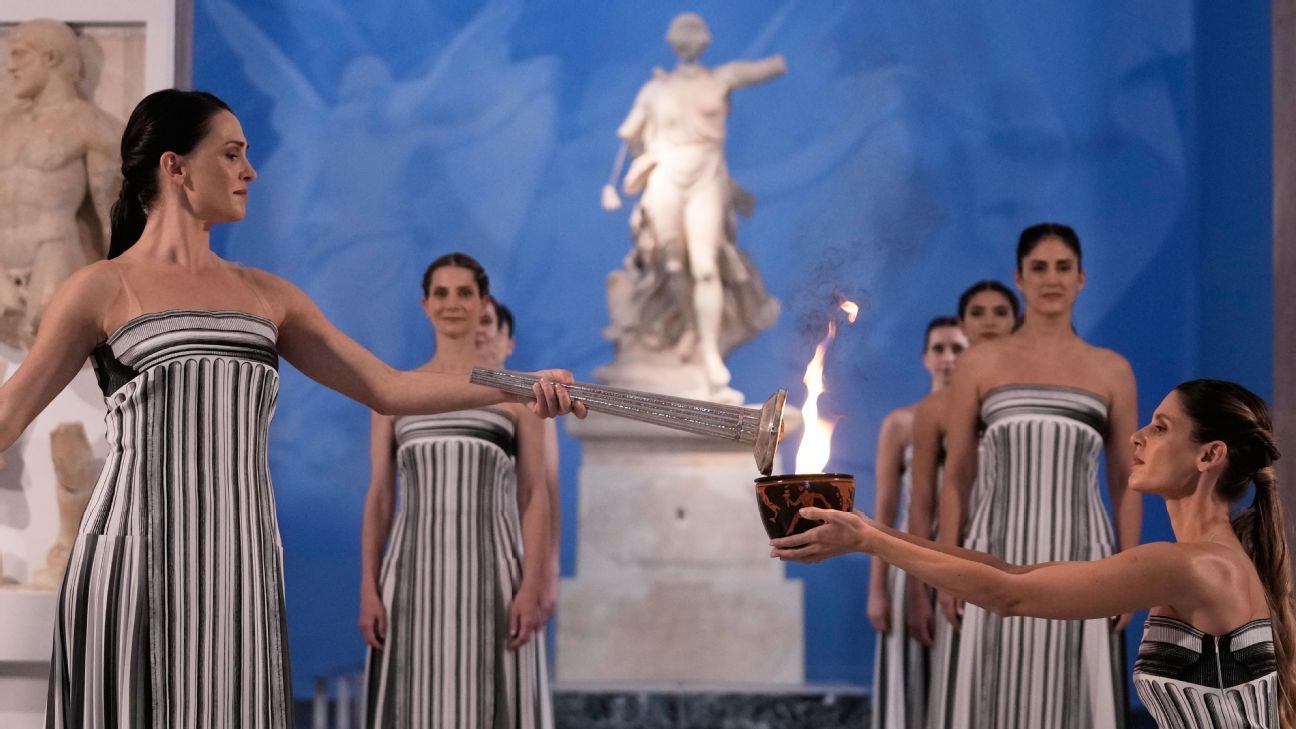
The Olympic flame began its journey to the Milan Cortina Winter Games, scheduled for February 6-22, 2026, but faced unexpected challenges due to adverse weather conditions in Greece. On Wednesday, the traditional torch-lighting ceremony was moved indoors from the historic sites of Olympia to a nearby museum, as heavy rain and overcast skies disrupted the planned outdoor event.
The flame is typically ignited by focusing sunlight through a concave mirror, a method that draws on ancient practices. However, with the sun obscured by clouds, organizers resorted to a backup flame that was kindled during a brief moment of sunlight at a rehearsal earlier in the week. Greek rower Petros Gaidatzis had the honor of launching the torch relay, which will eventually make its way across Italy, carried by around 10,000 runners.
While the weather dampened the ceremony’s atmosphere, the sun eventually made an appearance during the indoor event, bringing a sense of warmth to the proceedings. Kirsty Coventry, president of the International Olympic Committee (IOC), oversaw her first torch-lighting ceremony since her election in March. “It’s incredibly memorable and a little bit emotional for me to be standing here,” she shared, emphasizing the significance of the occasion in connecting the past and present of the Olympic tradition.
Italy is hosting the Winter Games for the third time, but preparations have been marked by financial challenges and construction delays. Despite these hurdles, organizers highlight an exciting program featuring 116 medal events, the introduction of ski mountaineering, increased female participation, and the return of NHL players to Olympic hockey.
After a brief tour in Greece, the flame will be handed over on December 4 before commencing a 63-day, 7,500-mile relay across all 110 Italian provinces. The journey will showcase cultural landmarks and host venues, culminating in the opening ceremony at Milan’s San Siro Stadium. “The Olympic flame will pass through 60 cities, 300 towns, and 20 regions, traveling from the northern peaks to the southern shores,” stated Giovanni Malago, head of the Milan Cortina Organizing Committee.
During the ceremony, speakers called on global leaders to embrace the Olympic Truce, an ancient tradition that encourages the cessation of hostilities during the Games to ensure safe participation. Aristidis Panayiotopoulos, the mayor of Ancient Olympia, emphasized the importance of this message in today’s world, stating, “Today humanity is going through a time of multiple and parallel crises. A society at war is a failed society.”
Despite relocating the ceremony indoors, the event retained its traditional elements, including sculptural dance performances by participants dressed as priestesses and male kouroi, along with invocations in ancient Greek. Artistic director Artemis Ignatiou noted that the team had anticipated potential weather issues and found that the museum’s environment added a unique energy to the ceremony. “Dancing among the statues gave the ceremony a timeless feeling,” she remarked.
Looking ahead, a separate flame for the Winter Paralympics, taking place from March 6-15, will be lit on February 24 at Stoke Mandeville Hospital in England, the birthplace of the Paralympic movement. The successful transition of the Olympic flame marks a significant step towards the upcoming Games, showcasing resilience in the face of challenges.