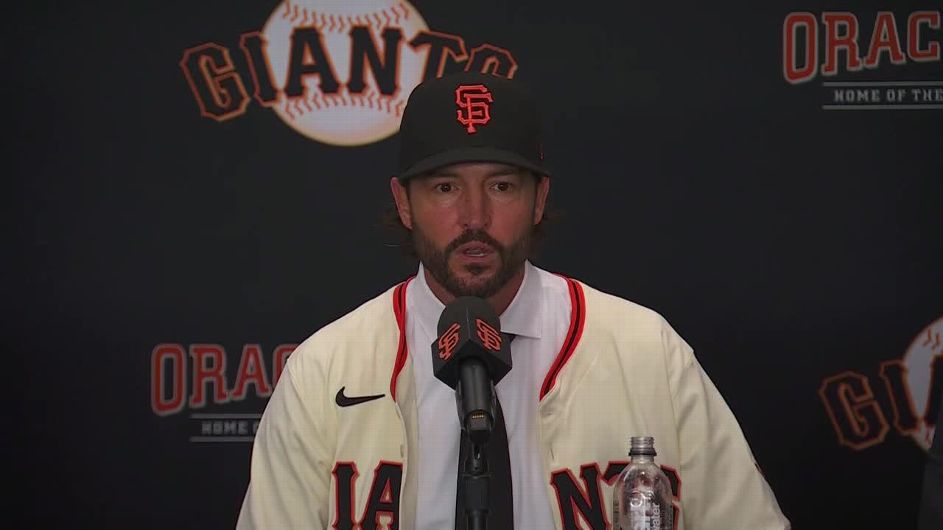
Major League Baseball (MLB) is witnessing a surprising shift in its managerial landscape, with several teams opting for unconventional candidates to fill their coaching positions this offseason. Notably, the San Francisco Giants have reportedly selected renowned college baseball coach Tony Vitello from the Tennessee Volunteers as their new manager. This announcement came on October 18, setting the stage for a series of unexpected appointments.
The trend continued on Halloween when the Washington Nationals named Blake Butera as their manager, despite his young age of just 33 years. The most shocking move, however, occurred six days later when former relief pitcher Craig Stammen, who recently retired, was appointed to lead the San Diego Padres. Stammen’s hiring is particularly notable, as he had not previously been mentioned as a managerial candidate. With these changes, MLB now has three managers without prior professional coaching experience: Vitello, Stammen, and Kurt Suzuki, who recently signed a one-year contract to manage the Los Angeles Angels.
As the league prepares for the 2024 season, five of the nine managerial vacancies have been filled by rookies. In addition to the aforementioned managers, Craig Albernaz has been appointed by the Baltimore Orioles, and Warren Schaeffer has had the interim tag removed by the Colorado Rockies, marking his first full season as a manager after leading the team in 2023.
The recent trend follows a long history of analytics-driven hiring practices in MLB, which began two decades ago with an influx of general managers from quantitative backgrounds. Now, the league appears to be moving towards a more diverse approach in selecting managers, with four of this offseason’s nine openings going to less conventional candidates.
Critics and supporters alike have weighed in on this shift, highlighting that the unique circumstances surrounding these hires could signify a broader transformation within the sport. For instance, Vitello’s transition from college coach to major league manager is unprecedented. He becomes the first individual to make this leap directly. Moreover, Butera is the youngest manager in MLB since Frank Quilici took the helm of the Minnesota Twins in 1972.
In terms of player background, Stammen’s journey is equally remarkable. Of the 850 individuals who have managed at least one MLB game, only 124—less than 15%—were former pitchers. Stammen will become the 11th such individual after making over 500 pitching appearances, with most of the others having retired long before the 1950s.
Paul Toboni, the new president of baseball operations for the Nationals, commented on the trend, suggesting that the hiring of unconventional candidates reflects a growing acceptance of new ideas in coaching. He noted, “I think about other sports and some of these quote-unquote unconventional hires… they’re probably a little more prevalent than they have been in baseball.”
The NBA has long embraced head coaches from the college ranks, with figures like John Calipari and Brad Stevens making successful transitions. Similarly, the NFL has seen coaches like Sean McVay and John Harbaugh thrive without prior extensive experience. Some believe that MLB’s current trajectory mirrors this trend, driven by the increasing role of analytics in strategy.
While many view the appointments as a positive evolution for the sport, others express concerns. They argue that teams may be undervaluing the importance of in-game decision-making nuances. The emergence of rookie managers allows franchises to prioritize leadership qualities and cultural alignment with front office philosophies. One agent noted, “If you can find traits that ultimately define a successful manager, that’s enough to want to hire a guy.”
Vitello’s reputation as an intense, charismatic leader helped him build a formidable baseball program at Tennessee. Suzuki, with his 16-year major league career, is recognized for his strong rapport with pitchers, while Butera’s accolades as a two-time minor league manager of the year highlight his people skills. Stammen, well-loved in San Diego, is noted for his genuine personality.
Despite the optimism surrounding these unconventional hires, some industry veterans, including Joe Maddon, a three-time Manager of the Year, have expressed frustration. Maddon referred to the Vitello hiring as “insulting,” suggesting that it indicates a lack of necessity for professional-level experience in the role.
Moreover, a retired All-Star manager pointed out that the traditionalist mindset still exists within the sport. They remarked, “No matter how much baseball has grown… you still have that kind of old-school thought.” This reluctance to fully accept new pathways to management may reflect a broader resistance to change within baseball.
The identity of those making these managerial hires may also play a role in this transitional period. Toboni, at just 35 years old, is among a new wave of executives steering the direction of teams. Perry Minasian, the Angels’ GM, and Buster Posey, now president of baseball operations for the Giants, have similarly unconventional backgrounds, which could influence their hiring philosophies.
While some teams, like the Minnesota Twins and Atlanta Braves, opted for more traditional choices this offseason by promoting from within, the MLB landscape remains in flux. The Orioles’ choice of Albernaz, despite his limited experience, underscores a willingness to prioritize talent over conventional metrics. Orioles president of baseball operations Mike Elias stated, “I think managerial experience is important, but it’s not everything when you’re making that hire.”
As the 2024 season approaches, the impact of these managerial appointments will unfold, potentially reshaping the future of the sport in ways that echo trends seen in other professional leagues.