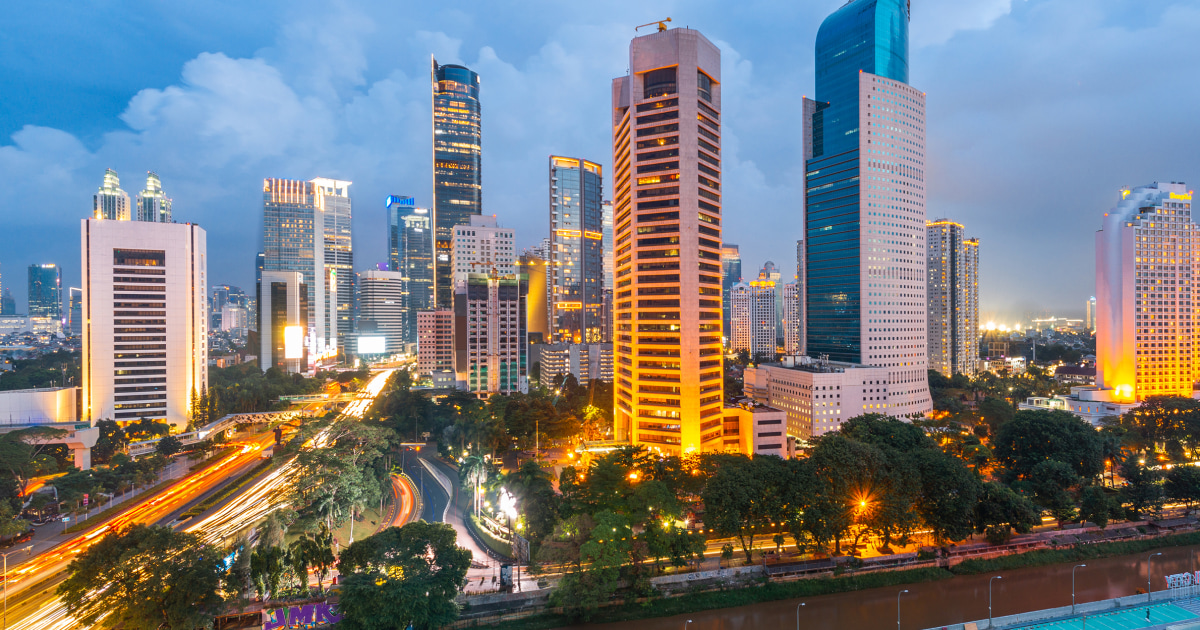
Jakarta has officially become the world’s most populous city, surpassing Dhaka and Tokyo, according to a recent report by the United Nations. The Indonesian capital now boasts an estimated population of nearly 42 million residents, a dramatic leap from its previous ranking of 33rd place in 2018, when Tokyo held the title. This significant demographic shift highlights the growing prominence of Asian cities in global urbanization trends.
The United Nations report titled “World Urbanization Prospects 2025” reveals that nearly half of the global population, totaling 8.2 billion, now resides in urban areas. This marks a twofold increase in urban dwellers over the past 75 years. Asia is home to nine of the top ten most populated cities, with Cairo, Egypt, being the sole exception, ranking seventh with a population of 25 million, more than double that of New York City.
Rapid Urbanization Trends in Asia
Following Jakarta in the population rankings are Dhaka, with an estimated 36 million, and Tokyo, which is projected to see a population decline of 2.7 million due to Japan’s aging demographic challenges. The report suggests that Dhaka could become the world’s largest city by mid-century, with a projected population of 52.1 million by 2050.
Other notable cities in the top ten include New Delhi at 30.2 million, Shanghai with 29.6 million, and Guangzhou, which has 27.6 million residents. Manila, Kolkata, and Seoul round out the list, each with populations exceeding 22 million.
Li Junhua, the United Nations Under-Secretary-General for Economic and Social Affairs, emphasized the importance of urbanization, stating, “Urbanization is a defining force of our time. When managed inclusively and strategically, it can unlock transformative pathways for climate action, economic growth, and social equity.”
The report notes that in 1975, there were just eight megacities, defined as those with populations of at least 10 million. By 2025, this number is expected to increase to 33, with 19 of these megacities located in Asia. In the United States, only Los Angeles and New York City are classified as megacities.
Challenges Ahead for Jakarta
Despite its newfound status, Jakarta faces significant challenges. The city is prone to environmental issues such as earthquakes and flooding, and its infrastructure struggles under the weight of rapid urbanization. In August 2019, then-Indonesian President Joko Widodo announced plans to relocate the capital to Nusantara, located approximately 1,200 miles away in Borneo, an area recognized for its rich biodiversity.
However, the relocation efforts have encountered various obstacles, including construction delays, insufficient foreign investment, and complex land management issues. As the world continues to urbanize, effective governance and sustainable development will be crucial for managing the growth and challenges of megacities like Jakarta.
The United Nations projections indicate that by 2050, there could be more than 15,000 cities globally, with most having populations of less than 250,000. As urban areas expand, the need for integrated national policies that address housing, land use, mobility, and public services across both urban and rural areas grows increasingly urgent.