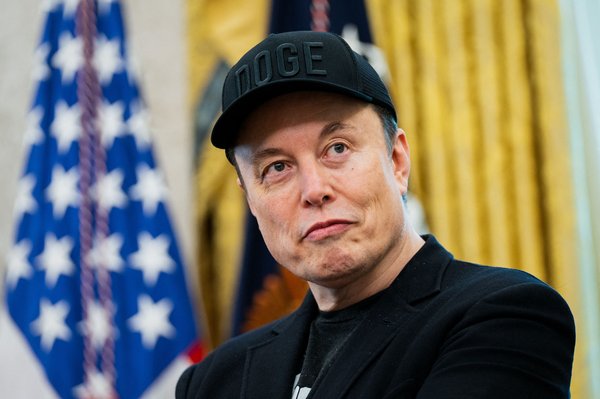
The U.S. government’s Department of Government Efficiency, commonly known as DOGE, has officially disbanded, failing to achieve its ambitious goal of significantly reducing federal spending. According to a report from Reuters on Sunday, DOGE no longer functions as a unified entity within the federal government, highlighting the challenges faced in its mission.
Scott Kupar, head of the U.S. Office of Personnel Management, confirmed the dissolution of DOGE, stating that its core objectives remain integral to various federal agencies. In a social media post, Kupar noted, “The truth is: DOGE may not have centralized leadership under @USDS, but the principles of DOGE remain alive and well: deregulation; eliminating fraud, waste and abuse; reshaping the federal workforce; making efficiency a first-class citizen.”
Once a prominent initiative during the Trump administration, DOGE began to lose traction starting in June, following public disputes between its architect, Elon Musk, and former President Donald Trump. Despite efforts to mend their relationship, DOGE never regained the authority it had initially to implement layoffs, terminate government contracts, or close agencies.
Ten months after its establishment, DOGE serves as a case study in the Trump administration’s struggle to cut government spending amid various legal and political obstacles. The White House did not provide immediate comments regarding the initiative’s conclusion.
Musk initially championed DOGE as a pioneering force for eliminating waste and saving taxpayer money. With support from the Trump administration, he assembled a team of staffers to pursue aggressive cost-cutting measures. Despite these efforts, DOGE’s reported savings of approximately $214 billion have faced skepticism from experts, who argue that these figures are inflated and contain inaccuracies, including double-counting.
Jessica Riedl, a policy expert at the Brookings Institution, criticized the organization, calling it “spending cut theatre” that misjudged the primary drivers of the national deficit. She referenced entitlement programs, such as Social Security and Medicare, which account for a significant portion of government expenditures. According to the nonpartisan Congressional Budget Office, discretionary spending by Congress comprised around 26% of the federal budget last year.
Bobby Kogan, senior director of federal budget policy at the Center for American Progress Action Fund, described DOGE’s failure as “profound,” noting that overall government spending is projected to increase in the fiscal year 2025 compared to the previous year. In August, Kupar indicated that the federal government was reducing its workforce by approximately 300,000 employees, or one in eight civilian government workers, largely due to buyouts and a deferred resignation program initiated by DOGE. Some employees have since returned to their positions.
Although DOGE has ended its operations, Musk remains active in the political realm. Recently, he attended a dinner with Saudi Crown Prince Mohammed Bin-Salman at the White House, further indicating his continued influence and engagement in U.S. politics.
As the fallout from DOGE’s disbandment unfolds, the implications for federal spending and efficiency initiatives remain to be seen.