UPDATE: In a swift response to community concerns, officials in Norway, Maine have initiated urgent repairs to a dam critical for preventing potential catastrophic failure. Following a summer marked by low water levels in Pennesseewassee Lake, engineers discovered serious structural vulnerabilities that could lead to disaster during future high-water events.
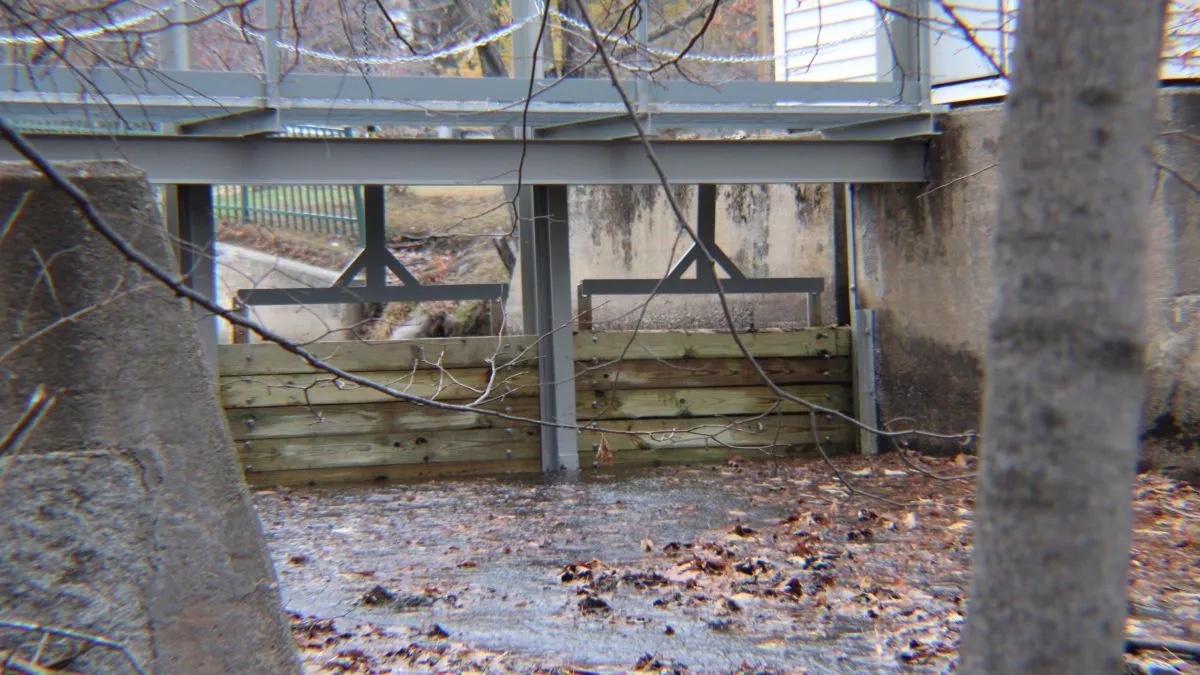
Just last month, engineers inspected the dam connecting Pennesseewassee Lake and Pennesseewassee Stream after residents voiced alarm over unusually low water levels. The inspection revealed no significant water leakage but did uncover a faulty spillway and other critical issues. Had water levels remained high, these problems may have gone unnoticed, putting the entire community at risk.
Over a three-week period in October 2023, Bancroft Construction Corp. of South Paris undertook vital repairs costing approximately $91,000. The work included fixing leaking timber boards and reinforcing concrete beams. Interim Town Manager Jeffery Campbell emphasized the importance of these repairs, stating, “The repairs will ensure that the gates will not fail during high water.”
However, the bad news endures for local residents and recreational boaters who suffered through a summer of extremely low water levels. This summer’s drought conditions exacerbated the situation, prompting increased calls from concerned citizens. Sarah Carter-Hill, vice chair of the Norway Select Board, noted, “The town was receiving a lot of calls from concerned citizens saying, ‘Oh, we see the water is really low, and we see leaking in the dam.’”
While engineers confirmed that leakage was not responsible for the low lake levels, the diminished water allowed for easier access to repair the dam’s vulnerabilities. “The significant reduction of the lake level was due to the extreme lack of rain this past summer,” Campbell explained.
The repairs were executed in two key phases. First, boards visible above the waterline were addressed, followed by underwater sections that were sealed using advanced techniques. Without these critical repairs, at least one board might not have endured the spring melt, potentially leading to disastrous consequences.
“Failure would have resulted in increased flow of water over the dam, but the main concrete structure of the dam is in good condition,” Campbell reassured the community. “There was no risk of flood or mass water loss of the lake.”
Despite the repairs, the situation remains precarious for property owners around the lake. Carter-Hill acknowledged that while the town had been proactive about dam maintenance, the recent uptick in public concern accelerated the project. “These were issues we knew we needed to fix anyway,” she said.
The repairs were timely, made possible by the low lake levels, which negated the need for a temporary cofferdam typically required for such work. “It made for perfect timing to do the repairs,” Carter-Hill stated.
To further mitigate future issues, the town is exploring additional methods, such as using bark mulch, to reduce leakage during dry months. The water levels of the lake are governed by a consent agreement between the Norway Lakes Association and the town.
Sal Girifalco, president of the Norway Lakes Association, articulated the challenges of maintaining target water levels. “It’s a very challenging operation to keep the water levels right,” he said. “If they guess wrong and there’s too much water, some areas flood. If they guess wrong and there’s not enough, and it doesn’t rain, then the lake stays low.”
As Norway prepares for the upcoming spring runoff, the community remains vigilant. The recent repairs bring hope, but the enduring issues of water management continue to demand attention.
Residents are encouraged to stay informed as updates develop. This situation highlights the delicate balance between nature and community infrastructure, underscoring the importance of proactive measures to safeguard residents and their environment.