
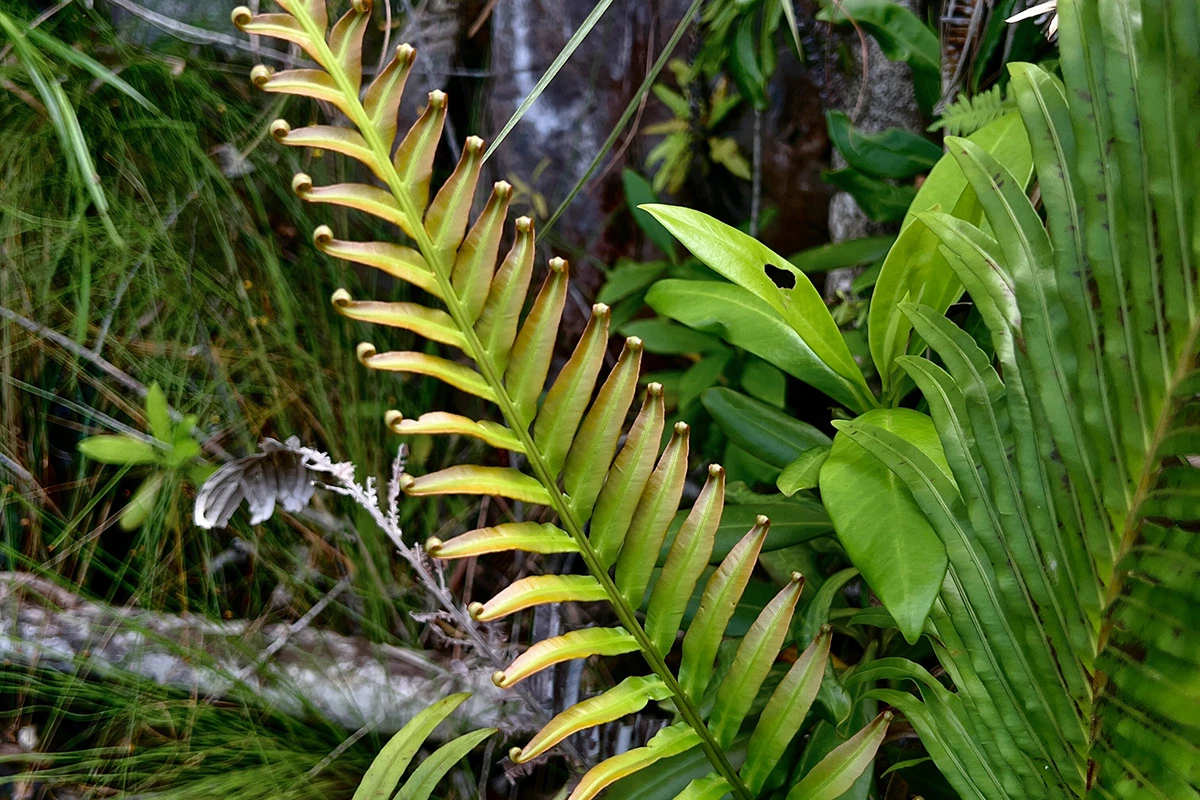
A team of scientists in China has uncovered a groundbreaking method for extracting rare earth elements (REEs) using a common fern species known as Blechnum orientale. Led by geochemist Liuqing He from the Chinese Academy of Sciences, this research, published in the journal Environmental Science & Technology, reveals the fern’s ability to crystallize REE minerals within its tissues under ordinary conditions.
Rare earth elements are vital for the production of numerous technological products, including electric vehicles, smartphones, and wind turbines. Traditionally, these elements are obtained through destructive mining processes that result in significant environmental degradation. The discovery of the fern’s capabilities could drastically reduce the need for such methods, offering a sustainable alternative for sourcing these essential materials.
Unprecedented Discovery in Plant Biology
The research indicates that Blechnum orientale acts as a hyperaccumulator plant, meaning it can thrive in soils with high levels of heavy metals, which are typically toxic to other species. This fern absorbs these elements through its roots, and what is particularly remarkable is its ability to produce the mineral monazite, a prominent source of REEs. He explained, “This fern can facilitate REE mineralization, specifically the mineral monazite, which was previously known only to occur in rocks subjected to high temperatures and pressures deep within the Earth.”
Monazite, which contains valuable REEs, is usually found in small quantities within certain types of igneous rocks. The presence of this mineral in a plant growing under normal surface conditions opens up possibilities for a process called phytomining. This method utilizes hyperaccumulator plants to extract metals from soil, potentially leading to a more environmentally friendly approach to sourcing REEs.
Implications for Technology and Environmental Sustainability
The implications of this research extend beyond just academic interest. The demand for rare earth elements is surging as the world increasingly turns to renewable energy technologies. For instance, neodymium, dysprosium, and praseodymium are essential components in the powerful permanent magnets used in electric vehicle motors. Additionally, REEs are integral to various components in smartphones, from displays to camera lenses.
While the ferns are not yet producing REEs in significant quantities, the study underscores the need for further exploration into phytomining techniques. Researchers aim to determine whether B. orientale is the only species capable of organizing REEs from various elements or if other plants can perform similar functions. They also plan to develop methods for extracting monazite and breaking it down into its constituent REEs with minimal loss.
“This discovery reveals an alternative pathway for monazite mineralization under remarkably mild conditions and highlights the unique role of plants in initiating such processes,” the researchers concluded. As countries worldwide grapple with securing supplies of rare earth elements, the potential of Blechnum orientale could represent a significant step towards more sustainable practices in the extraction of these essential materials.


