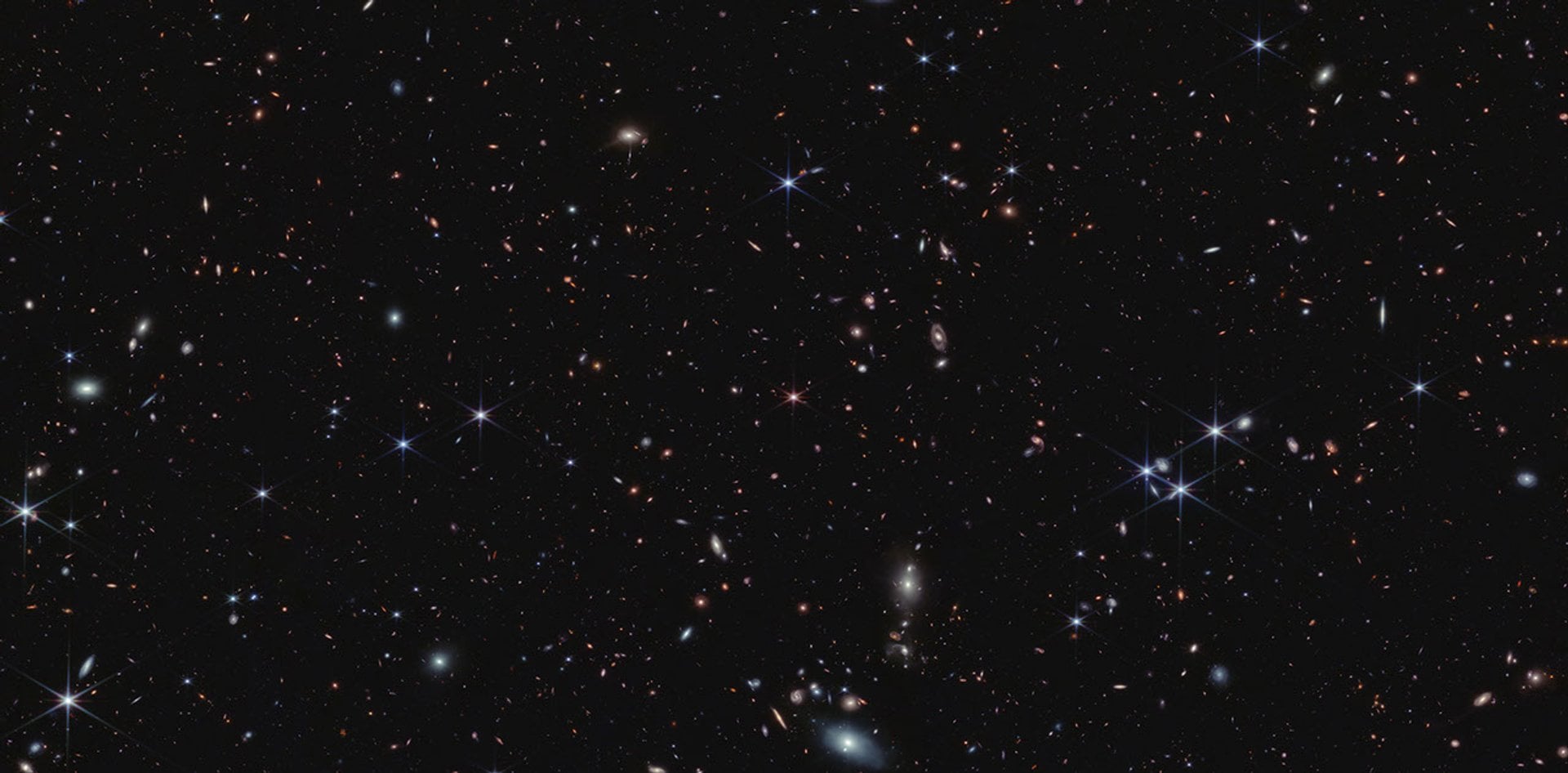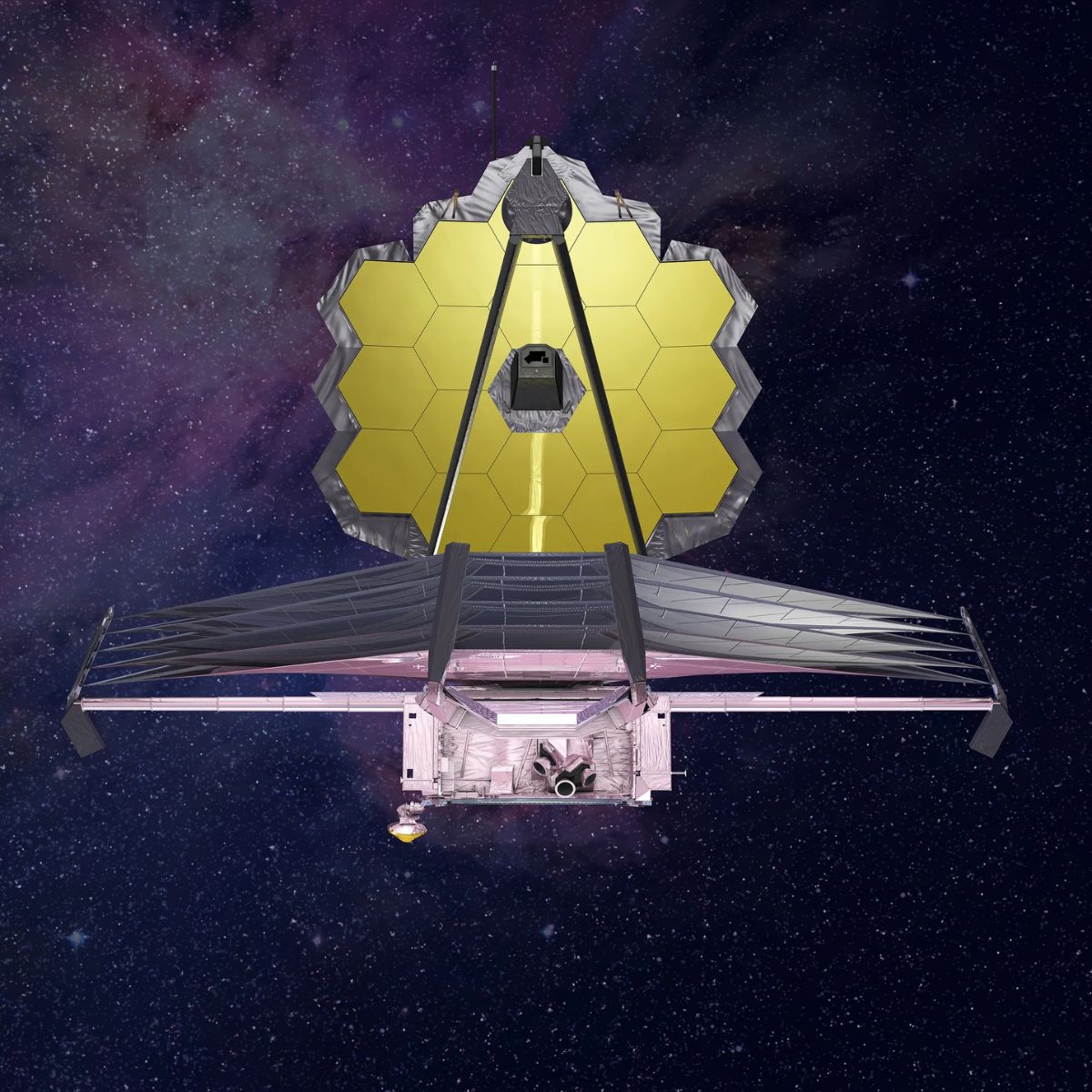
The James Webb Space Telescope has made a groundbreaking discovery, identifying a supermassive black hole that is growing at an unusual rate in the early universe. This black hole, located approximately 13.1 billion years ago, challenges existing theories about cosmic evolution and the formation of such massive entities.
Researchers from the European Space Agency (ESA) have reported that this black hole is not only one of the earliest known but is also expanding at a pace previously thought to be impossible during its formative period. The findings, published in a recent study, underscore the capabilities of the Webb Telescope in observing distant celestial phenomena.
Unveiling the Early Universe
The existence of this supermassive black hole raises significant questions about the processes that led to its rapid growth. Scientists had long believed that such massive black holes could not form and grow at such a rate in the early universe. The discovery suggests that there may be unknown mechanisms at play that facilitated this extraordinary growth.
The black hole in question is estimated to have a mass equivalent to more than 1.5 billion times that of our Sun. Its size indicates that it was able to consume vast amounts of surrounding material, allowing it to grow exponentially in a relatively short time frame. This observation provides new insights into the environment of the early universe, which was characterized by high levels of gas and dust.
Researchers utilized the advanced capabilities of the Webb Telescope to capture light from this black hole. The telescope’s ability to observe in the infrared spectrum allows it to see through cosmic dust, revealing objects that were previously hidden from view. This technological advancement has enabled astronomers to delve deeper into the cosmos and uncover details about its evolution.
Implications for Cosmic Understanding
The discovery of this rapidly growing supermassive black hole could have profound implications for our understanding of cosmic history. It challenges existing models of black hole formation and suggests that the process may have been more complex than previously thought. The findings prompt a reevaluation of how early galaxies and black holes interacted and evolved in the universe.
Scientists believe that understanding these early black holes is crucial for piecing together the broader narrative of cosmic evolution. They are essential not only for the formation of galaxies but also for the influence they exert on the surrounding space. The growth of supermassive black holes like the one identified by the Webb Telescope may shed light on the conditions that existed when the universe was still in its infancy.
As research continues, astronomers are eager to explore more about this black hole and others like it. Future observations may reveal more about their characteristics and the environments in which they developed. The James Webb Space Telescope will play a pivotal role in these endeavors, pushing the boundaries of what we know about the universe.
In conclusion, the identification of a supermassive black hole growing at an unprecedented rate in the early universe marks a significant milestone in astronomical research. As scientists continue to analyze the data provided by the Webb Telescope, we may soon uncover more about the enigmatic processes that shaped our universe billions of years ago.