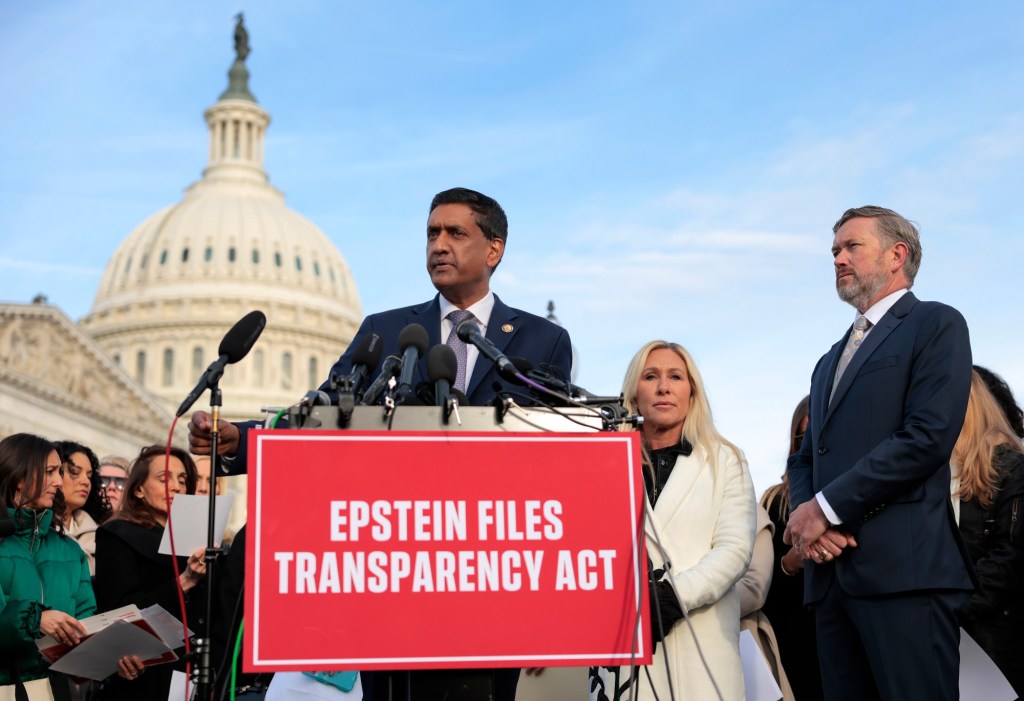
UPDATE: In a stunning political maneuver, Rep. Ro Khanna has successfully navigated bipartisan support for his bill aimed at uncovering records related to convicted sex trafficker Jeffrey Epstein. The legislation passed the House of Representatives by an overwhelming 427-1 vote on Tuesday, followed by a unanimous Senate approval just hours later. President Donald Trump signed the bill into law on Wednesday, marking a significant triumph for Khanna and a rare moment of cross-party collaboration.
This development comes as Khanna, a Democrat representing Fremont and parts of Silicon Valley, faced skepticism from his own party. Critics dismissed his focus on the Epstein files as a distraction from pressing issues. However, Khanna’s determination has not only led to the passage of this pivotal legislation but has also highlighted a growing rift within the Republican Party, particularly with Trump’s attacks on former ally Marjorie Taylor-Greene.
Khanna’s bill, which seeks to expose the documents from the U.S. Department of Justice investigations into Epstein, has resonated with many Americans who demand accountability for the powerful individuals involved in Epstein’s network. “There was real anger about an ‘Epstein Class’—rich, powerful men who could reportedly rape children without facing justice,” Khanna stated. His remarks underscore the emotional weight of this issue for victims and their advocates.
The path to this legislative victory was anything but straightforward. Khanna faced significant pushback, even from members of his own party. “When I initially brought it up, people rolled their eyes,” he recalled, emphasizing the initial indifference towards the Epstein files. However, the situation shifted when Rep. Thomas Massie initiated a discharge petition in July, allowing Khanna’s bill to bypass a Republican majority intent on stifling the vote.
As the legislation now moves forward, the implications are vast. While some within Khanna’s party, such as Sen. Chris Coons of Delaware, express concerns about potential delays in record disclosures due to ongoing probes, Khanna remains optimistic. He believes that a majority of the requested files do not pertain to active investigations, making it difficult for the U.S. Attorney General to justify withholding them.
This unprecedented collaboration between Khanna and Republican lawmakers has raised questions about the future political landscape. “Americans say they want more bipartisanship. Here’s an example of what working together across party lines can accomplish,” stated Larry Sabato, director of the University of Virginia Center for Politics.
As the fallout from this alliance continues, Khanna’s success could pave the way for more bipartisan efforts. Yet, it’s crucial to monitor how the Trump administration responds to this new legislative reality, especially with the former president’s history with Epstein complicating the issue further.
In the wake of this significant achievement, Khanna has also sparked discussions about future legislative priorities. Can he build on this momentum? Only time will tell, but one thing is clear: the fight for justice for victims of child sexual abuse is a unifying cause that transcends party lines.
Stay tuned for further updates as this story develops. The implications of Khanna’s bill and the ensuing political dynamics are sure to unfold in the coming days.