Research from the University of Massachusetts Amherst and Shandong Agricultural University has unveiled crucial insights into plant breeding that could lead to the development of new crop species. This breakthrough was published in the journal Science on November 21, 2025, providing a clearer understanding of how flowering plants manage pollen compatibility and reject incompatible pollen grains.
One of the challenges in plant biology is understanding how plants distinguish between compatible and incompatible pollen, especially given the vast amounts released simultaneously by various species. The study focuses on a mechanism known as “interspecific incompatibility” (ISI), which prevents the fertilization of one species by the pollen of another, such as broccoli and kale within the Brassicaceae family. The researchers aimed to explore how this mechanism operates and its implications for agricultural innovation.
Understanding Interspecific Incompatibility
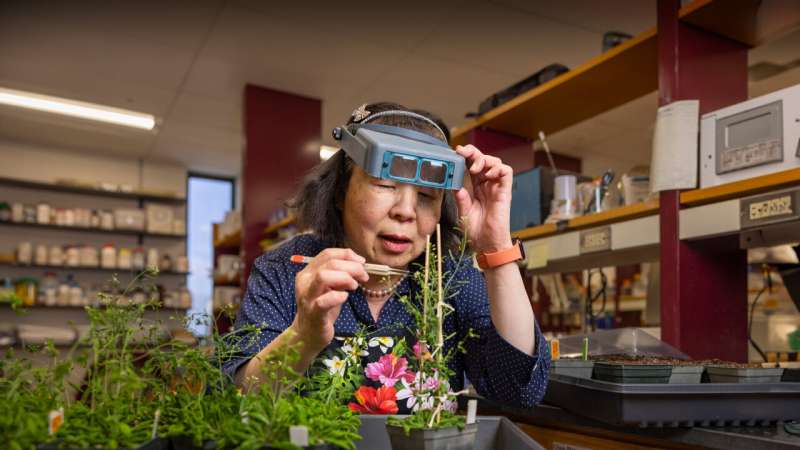
Many flowering plants possess a trait known as “self-incompatibility,” which helps them avoid inbreeding by preventing self-fertilization. However, the interaction between more distantly related species within the same family remains less understood. Alice Cheung, a Distinguished Professor of Biochemistry and Molecular Biology at UMass Amherst, is a senior author of the paper. She emphasized the importance of this research in addressing food security through the development of new crop varieties.
The research team utilized the Brassicaceae family, which includes common vegetables such as cabbages, broccoli, and canola. By investigating the mechanisms behind ISI, the team sought to uncover the molecular interactions that determine pollen acceptance or rejection. Cheung noted that the molecular workings of ISI were largely opaque compared to the well-understood systems of self-incompatibility.
Breakthrough Discoveries
The findings reveal that a protein known as SRK plays a pivotal role in the pollen rejection process. This protein, located in the stigma—the pollen-receiving surface of the female reproductive organ—recognizes a specific chemical signal, termed SIPS, present on the pollen grains of different Brassica species. When the SRK protein detects SIPS from an incompatible pollen grain, it triggers a response to reject that pollen.
The study also highlights the involvement of another enzyme, FERONIA, which interacts with the SIPS-SRK complex. This interaction results in the production of a highly reactive chemical known as ROS (Reactive Oxygen Species), which acts to block the pollen from entering the pistil. This discovery marks a significant advancement in the understanding of interspecific barriers in plant reproduction.
In addition to elucidating these mechanisms, the research team proposed a new breeding strategy designed to facilitate successful crosses between distantly related Brassica species. This approach could potentially accelerate the development of new crop varieties with enhanced traits, contributing to agricultural resilience and food security.
The implications of this research extend beyond academic interest, offering practical applications for crop breeding. By unlocking the secrets of pollen compatibility, scientists aim to harness the genetic diversity within the Brassicaceae family to create crops that can better withstand environmental challenges.
The full study can be found in the journal Science, authored by Yunyun Cao and colleagues, titled “Pan-family pollen signals control an interspecific stigma barrier across Brassicaceae species.” This research represents a significant step forward in agricultural science, paving the way for innovations that could benefit global food systems.